A Mission to Set High-Achieving Women Free from Good Girl Syndrome – Interview with Julie Vander Meulen
What happens when a woman builds a life that everyone admires, yet privately struggles to feel fulfilled? For Julie Vander Meulen, the answer lies in a pattern she calls Good Girl Syndrome: the tendency to measure our worth through achievement, approval, perfection, and how much we do for others. Drawing on her own experience, years of writing, and her work with ambitious women, Julie explores why success can coexist with profound inner suffering, how women can reconnect with themselves, and what becomes possible when they stop living by expectations they never consciously chose.
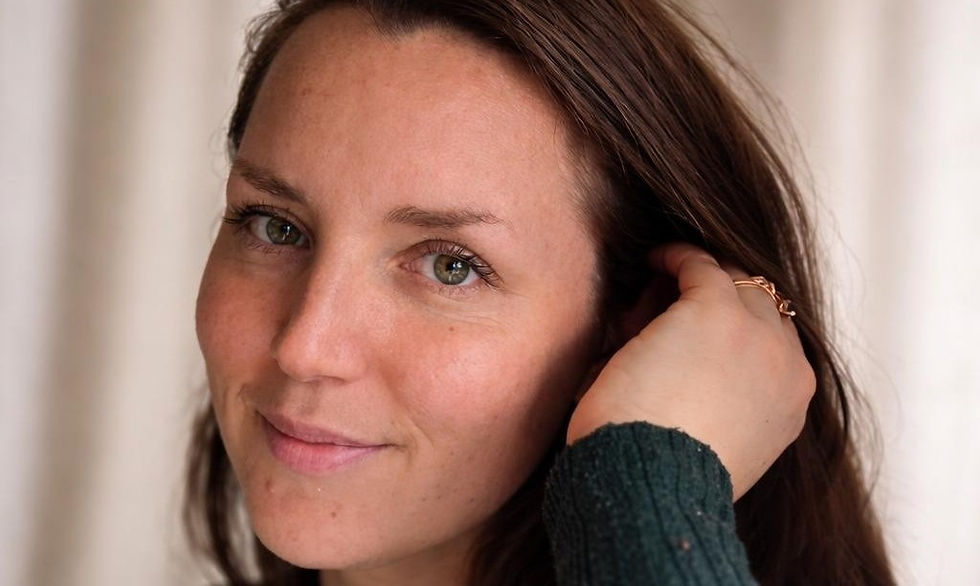
Julie Vander Meulen, Empowerment Coach for Ambitious Women
Part I – The woman behind the mission
You have spent years exploring Good Girl Syndrome and helping ambitious women understand it. What first made you realize this was a problem worth dedicating your work to?
It started with a personal realization: I was a good girl. At the time, I was a researcher in political science, and everyone seemed to be talking about imposter syndrome. I remember thinking, “No, that's not what I have. What I have is Good Girl Syndrome!”
I initially used the term almost as a joke. When I started researching it, I discovered that a psychologist had already used the expression, but I couldn't find a developed framework that explained the experience I was trying to understand.
I began documenting my own patterns. Then I noticed something: I was surrounded by highly educated, intelligent, ambitious women who were impressive in so many ways, yet many seemed to struggle with similar patterns.
I realized it wasn't just me.
What made this a mission, however, was recognizing the depth of the suffering. I experienced a period of chronic depression and anxiety when I felt completely lost in my own life. I was overworking, seeking approval, and pursuing a direction that didn't feel right to me. The person I presented to the world and the person I was experiencing internally felt very different.
Not every woman experiences the same level of distress, but the suffering can be profound. From the outside, everything may look wonderful. You might see a successful professional, a loving partner, or someone who seems to have everything under control. You don't necessarily see the self-criticism, the pressure, or the way she speaks to herself when nobody is around.
I believe people should not have to suffer silently. I also understand this particular struggle because I've lived it. That's what makes the work so meaningful to me.
What did your own academic career teach you about the difference between achieving success and choosing a life that feels like your own?
It taught me that success cannot simply be what other people admire.
If your only definition of success is external achievement, you can end up making decisions that look impressive but feel terrible inside. You might spend years trying to please people whose approval shouldn't determine the direction of your life.
Today, I define success through fulfillment. Am I moving in a direction that feels right to me? Can I be both more fully myself and the best version of myself? Do I enjoy what I'm doing? Does it make a difference in the world in a way that matters to me?
Success doesn't have to be measured in achievements. It might mean building a business, becoming an exceptional parent to your children or pets, spending time with the people you love, writing poetry, or simply enjoying your life.
There is no universal answer. The important thing is that we get to define success on our own terms.
Why does your mission need to go beyond helping women become more confident?
Because I don't think confidence is the real goal. I believe it often emerges naturally when we become more connected to ourselves.
My work is about alignment: allowing ourselves to be who we truly are, internally and externally, and removing the restrictions we've imposed on ourselves.
Ultimately, I would love to contribute to a cultural transformation in how women experience themselves and operate in the world. I want future generations of women to have more freedom to be themselves, rather than feeling they must look impressive on the outside while suffering silently within.
Part II – Understanding Good Girl Syndrome
For someone hearing the term Good Girl Syndrome for the first time, how would you explain it?
Good Girl Syndrome is a pattern of disconnection from ourselves. We become so focused on what the world expects us to do, and on who we believe we should be, that we lose touch with our own needs, desires, and feelings.
We stop listening to our internal compass.
A woman can be kind, responsible, considerate, and ambitious without experiencing Good Girl Syndrome. Those qualities are not the problem. The question is whether she chooses them freely or feels compelled to embody them to remain lovable and worthy.
For example, nurturing others can be a beautiful expression of love. But when we constantly care for others out of obligation, resentment, or fear of disappointing them, something changes.
We may be trying to control our environment by making ourselves indispensable. Somewhere underneath, we may believe that if people need us enough, they will love us enough.
At its heart, this pattern often involves a struggle with self-worth. We become extremely critical of our appearance, our achievements, our behavior, and the person we believe we should be. There is always another standard to meet.
The work is to reconnect with ourselves, listen to our hearts, respect our bodies, and stop allowing the mind's endless list of shoulds to dictate every decision.
How does a girl learn to become a good girl?
We learn through what we see around us. We observe our mothers, grandmothers, and other women, and we absorb cultural expectations about how women should behave.
Nurturing and caring for others are not the problem. I see those qualities as beautiful. The difficulty begins when we learn that we must always put others first, make everything look effortless, and never express the resentment or exhaustion we might feel.
There is also a second element: perfectionism and control.
Many high-achieving good girls want to be irreproachable. They want to be the best, do everything correctly, and avoid criticism. Beneath that drive is often a desire for certainty: if we do everything perfectly, perhaps we can guarantee that we will be loved.
But this creates a painful equation. We begin to believe that our worth depends on what we do for others and how well we perform.
Why is Good Girl Syndrome so difficult to recognize when these behaviors are often praised?
Because the rewards can be immediate.
A woman who constantly helps others may be praised for being wonderful, generous, reliable, and extraordinary. That praise can feel incredibly good, particularly when she struggles to feel worthy without external validation.
At the same time, she may be trying to avoid criticism and disappointment. She is both seeking pleasure through approval and protecting herself from the pain of rejection.
Changing the pattern means risking the loss of those familiar rewards. People might not understand her decisions. They might criticize her. She may no longer receive the same recognition for being endlessly available.
In the short term, staying the same can feel safer. But over the long term, the cost can be enormous.
Breaking free offers something different: greater self-trust, inner peace, and the ability to live according to your own values. You gain something profound, even if the transition is uncomfortable.
Can a woman have Good Girl Syndrome if she is outspoken, successful, and comfortable taking charge?
Absolutely. Many of the women I work with don't look like traditional people-pleasers at all.
They lead teams, make difficult decisions, and appear to have everything under control. They are the women others wonder about: How does she manage to do so much?
Yet they may advocate strongly for their teams while struggling to advocate for themselves. They can be decisive professionally but feel lost in their personal lives.
Sometimes, the pattern becomes visible when something forces them to stop. They experience burnout, struggle with their mental or physical well-being, or face a challenge in their relationships.
Eventually, they begin asking themselves whether they genuinely want the life they have built or whether they have become attached to the identity of being the woman who can do everything.
Part III – The high achiever's hidden struggle
How can Good Girl Syndrome affect career progression, salary negotiations, entrepreneurship, and leadership?
One common pattern is the need to be overprepared. A woman wants to be absolutely certain she can do something before she puts herself forward.
She may also expect others to notice her work and reward her without her having to ask. She wants to be recognized for being exceptional, but asking for a promotion, negotiating a salary, or making her ambitions visible can feel uncomfortable.
The result can be resentment when other people receive opportunities she wanted but never clearly pursued.
People cannot always know what we want. Communicating our desires is not arrogance. It is part of taking responsibility for our lives.
How can a woman distinguish healthy ambition from the need to prove she is good enough?
I think the distinction begins with asking where the desire comes from.
I am ambitious myself, and I don't believe we need to stop pursuing meaningful goals. But I have learned to question my own ambitions, particularly when I feel exhausted or overwhelmed.
Am I pursuing something because it genuinely excites me, or because I believe I should want it? Am I moving toward something that feels joyful, or am I trying to prove something about myself?
Two people can pursue exactly the same outcome for entirely different reasons.
Consider body image. One woman might pursue a physical goal because she believes she isn't good enough as she is. Another might make similar choices because she wants to feel stronger, healthier, and more comfortable in her body.
The external result might be identical. The internal experience is not.
One approach reinforces the belief that she must constantly fix herself. The other comes from caring for herself.
I think we should become more curious about what feels joyful, exciting, and genuinely meaningful to us. The question isn't simply what we want to achieve. It's how we want to feel while living our lives.
What happens when a woman spends years being reliable, accommodating, and available to everyone else?
She can lose herself.
If you believe you must always be reliable, you might ignore your own exhaustion or sadness because someone else needs you. If you are always accommodating, you repeatedly put other people's preferences ahead of your own. If you are always available to everyone else, you may become unavailable to yourself.
Eventually, you can lose touch with who you are beyond the role you perform.
That role may bring praise, but it doesn't necessarily bring fulfillment. It can create resentment, loneliness, and the feeling that nothing you do is ever enough.
And because you have spent years being that person, you may struggle to imagine another way of living.
Part IV – Breaking the pattern
What is the first sign that a woman may be living according to expectations she never consciously chose?
Often, it is resentment, anger, sadness, or loneliness.
She feels taken for granted. She feels that nobody understands her. She believes that no matter how much she does, it is never enough.
Sometimes, she assumes other people are making her feel inadequate. Of course, some people are genuinely critical or demanding. But it is also worth asking whether she has developed such high internal standards that she is continually judging herself.
Three questions can help:
What would feel like joy? Who am I really? Who would I love to be if I were at peace?
Many women feel guilty when they establish boundaries. How can they change that without becoming cold or abandoning the people they love?
First, we need to challenge the belief that saying no means being cold or abandoning someone.
Other adults are not helpless children. When we constantly overhelp people, we may believe we are doing something generous, but we can also be satisfying our own need to feel indispensable.
We feel significant because we are the person who saves everyone. Meanwhile, the other person becomes accustomed to being rescued.
This dynamic can prevent people from developing their own independence and confidence. Allowing someone to handle their own challenges can be a genuine act of care.
Boundaries do not mean we stop loving people. They mean we stop assuming that love requires us to carry everything for everyone.
What should a woman do when the people around her are uncomfortable with the changes she is making?
She doesn't need to explain every discovery to everyone.
In the beginning, reconnecting with yourself can be a delicate process. You are learning to hear your own voice, and it can be difficult to maintain that connection when everyone around you has an opinion about what you should do.
Find one or two trusted people who understand the process, whether that's a friend, therapist, or coach. Create space to explore your thoughts without immediately seeking approval.
As your self-trust grows, other people's reactions become less overwhelming. You can make changes gradually, without needing everyone to understand them first.
What practical exercise would you recommend to a woman who wants to begin today?
Spend 10-15 minutes a day reconnecting with yourself.
You can journal, sit quietly with your hand on your heart, or simply ask yourself a few questions:
How am I really feeling today?
What's going on inside me?
What do I want?
What do I need?
Is there anything I'm doing today that I don't actually want to do?
You don't have to act on every answer immediately. The first step is simply to begin having an honest conversation with yourself.
Part V – From individual change to cultural change
What could change if we stopped teaching people that they must earn their worth through achievement and self-sacrifice?
I think this is a societal issue, not exclusively a women's issue. Men experience their own versions of these patterns, even if they look different.
In Western society, we have become accustomed to confusing achievement with worth. We measure performance, productivity, and success, often without asking how people actually feel.
What would happen if we separated those things? I believe we could create a world with more honest conversations, greater fulfillment, and people who feel less disconnected from themselves.
We might also start questioning the systems we have inherited instead of automatically following the same path.
How should leaders rethink success in the workplace?
I used to be a big fan of performance indicators and metrics. I still believe accountability matters, but I question what happens when efficiency becomes the priority above everything else.
When we value numbers above human well-being, we risk rewarding people for abandoning themselves to achieve results that may not ultimately bring them fulfillment.
Our careers and businesses can be meaningful. But they are not the entirety of our lives.
I believe we need to put fulfillment and well-being much closer to the center of how we define success. That doesn't mean becoming lazy or abandoning ambition. It means recognizing that people are human beings, not machines.
The rise of AI makes this conversation even more important. Many people understandably worry about jobs disappearing, and I believe the coming changes to work deserve serious attention.
But I also see an opportunity. If machines take on more of the work humans currently perform, we could begin asking bigger questions about our lives.
What if we had more freedom to choose our work? What if we needed to work fewer hours? What would give our lives meaning if our identity were no longer so closely tied to our jobs?
I believe we should begin exploring these questions now, rather than waiting until change forces us to confront them.
After years of writing and working on this subject, what do you most want women to understand about themselves?
That everything they feel is human.
We all have thoughts and feelings that we may consider selfish, dark, uncomfortable, or unacceptable. We don't have to judge ourselves for having them.
The goal is to experience life fully and allow ourselves to be whole human beings.
When we play the good girl, we often show only a fraction of who we are. We hide parts of ourselves because we fear that, without the role we perform, there will be nothing left.
But beyond that role is a world of possibility. There is room to discover who we are, what we want, and what we are capable of becoming.
Part VI – Finding your way forward
For a woman who recognizes herself in this conversation, how can she begin working through Good Girl Syndrome with your support?
I've created resources for women at different stages of this journey.
If you prefer reading, I've spent the past three years writing extensively for Brainz Magazine. My Brainz contributor page brings together my articles on Good Girl Syndrome, including topics such as boundaries, perfectionism, leadership, mental health, and self-worth.
You can also read my previous interviews: Empowering Women to Embrace Their Desires and Empowering Women Beyond “Shoulds”.
If you prefer watching or listening, my Good Girl Syndrome Show is available on YouTube and Spotify. Across more than 85 episodes, I explore real questions about boundaries, ambition, relationships, identity, and self-worth.
You can also submit a question through the show's Google form. If you're not ready for a private coaching session, this is a way to ask for guidance and potentially hear your question addressed in a future episode.
I also recommend beginning with my free Good Girl Syndrome quiz. It helps you explore how these patterns show up in your life and where you might begin. From there, you can explore additional resources and quizzes.
And if you're ready for more personalized support, you can explore working with me. You can discover the coaching options available and decide what feels right for you.
What would you say to the woman who knows something needs to change but is afraid of what might happen if she stops being the person everyone expects her to be?
I would tell her that she's jumping too far ahead.
Recognizing that something needs to change and actually changing it are two different moments. You don't have to transform your entire life overnight.
The first step is reconnecting with yourself, and you can do that privately. Nobody else needs to know. You can take things one day at a time, allowing your self-trust to grow gradually.
You don't have to do this alone, either. You can explore the resources I've created or reach out for personalized support when you're ready.
You have time. Take the first step, then the next one. You will find your way.
Finally, if every ambitious woman reading this could take away one idea that changed how she sees herself and her future, what would you want that idea to be?
Everything you need begins within you.
You don't necessarily need to learn more, achieve more, or become someone else. You need to begin removing the restrictions you've imposed on yourself.
As you do, you can discover that many of the answers you've been searching for are already within you.
That is the heart of my work: helping women release the patterns that have kept them disconnected from their greatness and their truest selves.
You are already worthy. You don't have to earn your right to exist, to have desires, or to create a life that feels good to you.
You can begin right where you are, exactly as you are, and discover what becomes possible when you finally give yourself permission to be fully yourself.