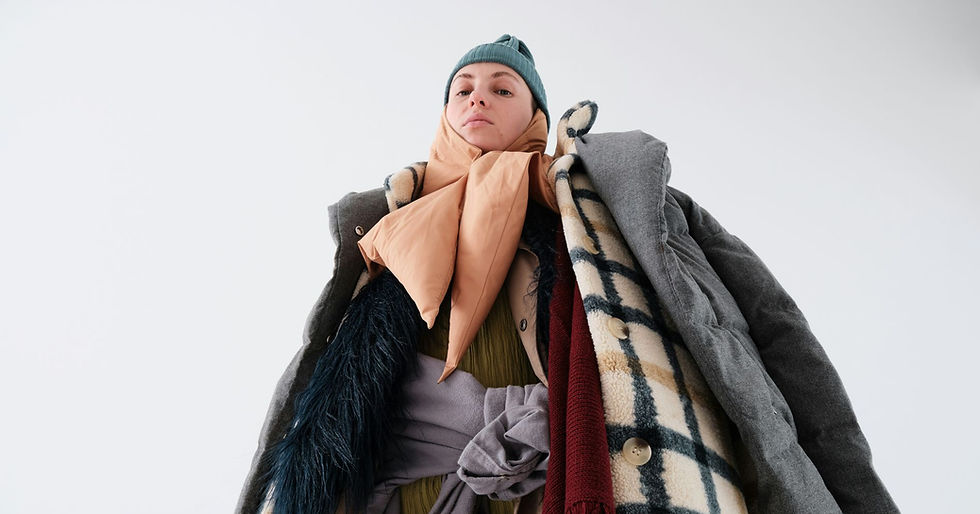
When Clothes Become Armour, Are You Dressing to Hide or Be Seen?
Written by Stephanie Vaughan, Personal Stylist
Stephanie Vaughan is an award-winning personal stylist and speaker specialising in intentional personal style, confidence and visibility. She is the founder of Infinite Styling and creator of the Visible Woman philosophy, helping women confidently embrace who they are and how they show up.

Have you ever wondered whether the clothes you wear are helping you express who you are or helping you hide? Our clothes can give us confidence, help us feel seen and express something about who we are. But they can also become armour, protecting us when we feel vulnerable, uncertain or disconnected from ourselves. So how do you know which role your clothes are playing?

How personal style shapes who we are
Personal style is about far more than the clothes we put on each morning. What we wear can influence how we feel, how we carry ourselves and what we communicate about who we are. As we move through life, our bodies change, our roles shift and our priorities evolve. Yet our wardrobes don’t always evolve with us. That’s when getting dressed can start to feel disconnected from the woman we’ve become.
Research into clothing and psychology has even explored how what we wear may influence our thoughts, feelings and behaviour. Intentional style invites us to pause and ask whether our clothes still reflect who we are today. Because when our outer expression feels aligned with our inner identity, getting dressed becomes less about looking “right” and more about feeling like ourselves.
Can the clothes you wear affect your confidence?
Absolutely, although perhaps not in the way we often think. Confidence doesn’t come from owning the perfect wardrobe, wearing the latest trends or reaching a certain size. But what we wear can influence how we feel, how we carry ourselves and how we experience ourselves.
Researchers have explored this through a concept known as “enclothed cognition”, the idea that the clothes we wear, and the meaning we attach to them, may influence our psychological processes. The original research suggested that both the symbolic meaning of clothing and the physical experience of wearing it can matter. Clothing can influence our experience of ourselves, but intentional style is about the relationship between the garment, its meaning and the woman wearing it.
Think about the difference between wearing something that makes you constantly adjust, cover yourself or wonder what other people are thinking, and wearing something that allows you to forget about your clothes and simply get on with being yourself. When our clothes feel aligned with who we are, they can support us rather than distract us. We may stand differently, participate more freely, agree to be in a photograph or walk into a room thinking less about how we look and more about why we’re there. The clothes haven’t magically created confidence. They’ve simply stopped getting in the way of it.
Why do we use clothes as armour?
Sometimes we use clothes to express ourselves. Other times, often without realising it, we use them to protect ourselves. I know because I did exactly that. At 41, I was diagnosed with young-onset Parkinson’s disease. For the next nine years, I hid my diagnosis from almost everyone. I was afraid that if people knew, they would see Parkinson’s before they saw me.
During those same years, I was working as a personal stylist, helping women feel confident, express themselves and become more visible through what they wore. Yet I was doing the opposite. I became very good at using my own style as armour, carefully presenting the version of myself I felt comfortable allowing others to see while protecting the parts I wasn’t ready to reveal.
Armour isn’t always obvious. It might be dressing to disappear because your body has changed. Wearing the same safe outfits because you’ve lost your confidence. Holding onto a wardrobe that belongs to an earlier version of yourself. Or following every style rule because getting it “right” feels safer than trusting yourself. Research into clothing choices and body image has also found links between body dissatisfaction and using clothing as a form of camouflage.
Sometimes that armour has served us. It may have helped us through a chapter when we genuinely needed protection. The question isn’t whether we should ever wear armour. It’s whether we’re still wearing it long after we need it. Perhaps that’s where intentional style begins, not by asking “What should I wear?” but with a much more interesting question, “What am I ready to reveal?”
How do you know if your clothes are hiding you?
A wardrobe that hides you doesn’t necessarily look boring, outdated or badly put together. You can receive compliments, look polished and still feel as though the woman everyone sees isn’t quite you.
One sign is having a wardrobe full of clothes but repeatedly reaching for the same few “safe” outfits. You may avoid certain colours, shapes or styles because you’ve decided they’re too bold, too young or simply “not for someone like me”. You may also be dressing for a version of yourself that no longer exists, a previous body, career, lifestyle or stage of life.
Sometimes hiding sounds like constantly asking, “Does this make me look slimmer?” instead of “How do I feel in this?” Sometimes it’s much simpler. You’ve stopped feeling excited about getting dressed. None of this means you’re doing style wrong. It may simply be a clue that your outer expression hasn’t caught up with the changes happening on the inside.
Try standing in front of your wardrobe and asking, “If I met myself exactly as I am today, would I choose these clothes for her?” You might be surprised by the answer.
How can clothes become self-expression?
Clothes become self-expression when we stop dressing primarily for approval and start becoming curious about what genuinely feels like us. That doesn’t mean ignoring colour, fit and proportion or styling principles. These can all be useful tools. But they should give us more confidence and freedom, not become rules we’re afraid to break.
Self-expression might mean wearing the bright colour you’ve always loved even though someone once told you it wasn’t “your colour”. It might be choosing something feminine after years of trying to look serious, experimenting with a bolder shape or finally wearing the beautiful pieces you’ve been saving for “good”.
It doesn’t have to mean becoming louder or more noticeable. For one woman, authentic style may be vibrant and expressive. For another, it may be simple, understated and beautifully considered. The point isn’t what other people see when they look at you. It’s whether you recognise yourself. Instead of asking “What should a woman like me wear?”, try asking, “What do I want the way I dress to say about me now?”
How do you dress with more intention?
Intentional style doesn’t require throwing everything out and starting again. It begins by paying more attention to the choices you’re already making and becoming curious about whether they still reflect you.
Start with how you want to feel
Before asking, “What should I wear?”, ask, “How do I want to feel today?” Confident? Relaxed? Creative? Feminine? Powerful? Visible? Choose three words and use them as a guide when getting dressed or shopping. They can be far more useful than trying to fit yourself into a particular style category.
Shop your wardrobe first
Before buying something new, spend time with what you already own. Notice the pieces you repeatedly reach for. What is it about them that works? Is it the colour, shape, comfort or simply how you feel when you wear them? Then look at what you consistently avoid. Instead of judging yourself for not wearing it, get curious about why. Your wardrobe already contains valuable clues about the woman you are now.
Question the rules
Many women carry an invisible list of style rules. I’m too old for that. I can’t wear that colour. My body shape shouldn’t wear this. I need to cover my arms. Research into body image in midlife women suggests that beauty ideals and social expectations can continue to influence how women experience their bodies as they age. Style guidelines can be useful, but they should be tools, not rules. If something makes you feel wonderful, don’t immediately dismiss it because it breaks a rule you’ve been carrying for years.
Dress the woman you are now
Our wardrobes can become time capsules. They hold previous careers, different bodies, old lifestyles and earlier versions of ourselves. You don’t need to reject those women. They’re part of your story. But you don’t have to keep dressing for them either. One question I often encourage women to ask is, “If I saw this in a shop today, would I still choose it?” If the answer is no, it doesn’t mean the garment was a mistake. It may simply mean you’ve changed.
Experiment before you edit
You don’t need to overhaul your wardrobe overnight. Try combinations you’ve never worn. Add a colour you’ve been avoiding. Wear the jacket with jeans instead of saving it for an occasion. Take photographs of outfits that make you feel good. Give yourself permission to play. Personal style isn’t something you discover once and then get it “right” forever. It gets to evolve as you do.
Choose one visible thing
Finally, choose one small way to express yourself more intentionally. Wear the colour. Put on the lipstick. Choose the statement earrings. Stop saving the beautiful dress. Be in the photograph. Sometimes becoming more visible doesn’t begin with a dramatic transformation. It begins with one small decision that says, “This feels like me.”
Being seen starts with being yourself
In conclusion, intentional style isn’t about having the perfect wardrobe or following every style rule. It’s about recognising when your clothes are helping you express who you are and when they may have quietly become armour. By becoming more curious about what you wear, how it makes you feel and whether it reflects the woman you are today, your wardrobe can become a powerful tool for confidence, identity and self-expression.
You don’t need to reinvent yourself or become someone new. Perhaps it’s simply time to let more of who you already are be seen. If your wardrobe no longer feels like you, and you’re ready to explore what intentional personal styling can look like for you, reach out and let’s start a conversation about reconnecting with your style, confidence and the woman you are today.
Read more from Stephanie Vaughan
Stephanie Vaughan, Personal Stylist
Stephanie Vaughan is an award-winning personal stylist, speaker and founder of Innfinite Styling, specialising in intentional personal style, confidence and visibility. Diagnosed with Young Onset Parkinson's at 41, Stephanie experienced firsthand how life changes can challenge a woman's confidence, identity and sense of self. Her journey inspired The Visible Woman philosophy and a deeper approach to personal styling that goes far beyond clothes. Today, she helps women reconnect with who they are becoming and confidently allow themselves to be seen. Through styling, speaking and education, Stephanie is changing the conversation around what personal style can mean in a woman's life. Her mission is to help women become visible.