Why Small Daily Rituals Matter More Than Big Wellness Goals
Drawing on her own healing journey through cancer, Sarah Hurst is a coach and creator of the Mind Medicine Movement™. She helps people calm the nervous system, reconnect with themselves, and take back their power to heal body, mind, and soul.

Wellness can easily become another project. We make ambitious plans, create new routines, buy the journal, download the meditation app and decide that from Monday everything will change. Then life happens, energy dips, illness interrupts, and suddenly the very things that were meant to support us become another reminder of what we are not managing to do.
I have become far more interested in something smaller: the ordinary practices we return to again and again, not because we are trying to perfect ourselves, but because they help us pause, reconnect and remember that we matter. A daily ritual does not need to be impressive to be powerful.
What makes a ritual?
We often use the words habit and ritual interchangeably, but there is a subtle difference that matters to me. A habit is something we repeat often enough that it can begin to happen more automatically. Brushing our teeth is a habit. Making coffee when we walk into the kitchen each morning may become a habit. Habits are incredibly useful because they reduce the amount of conscious effort required to repeat a behaviour.
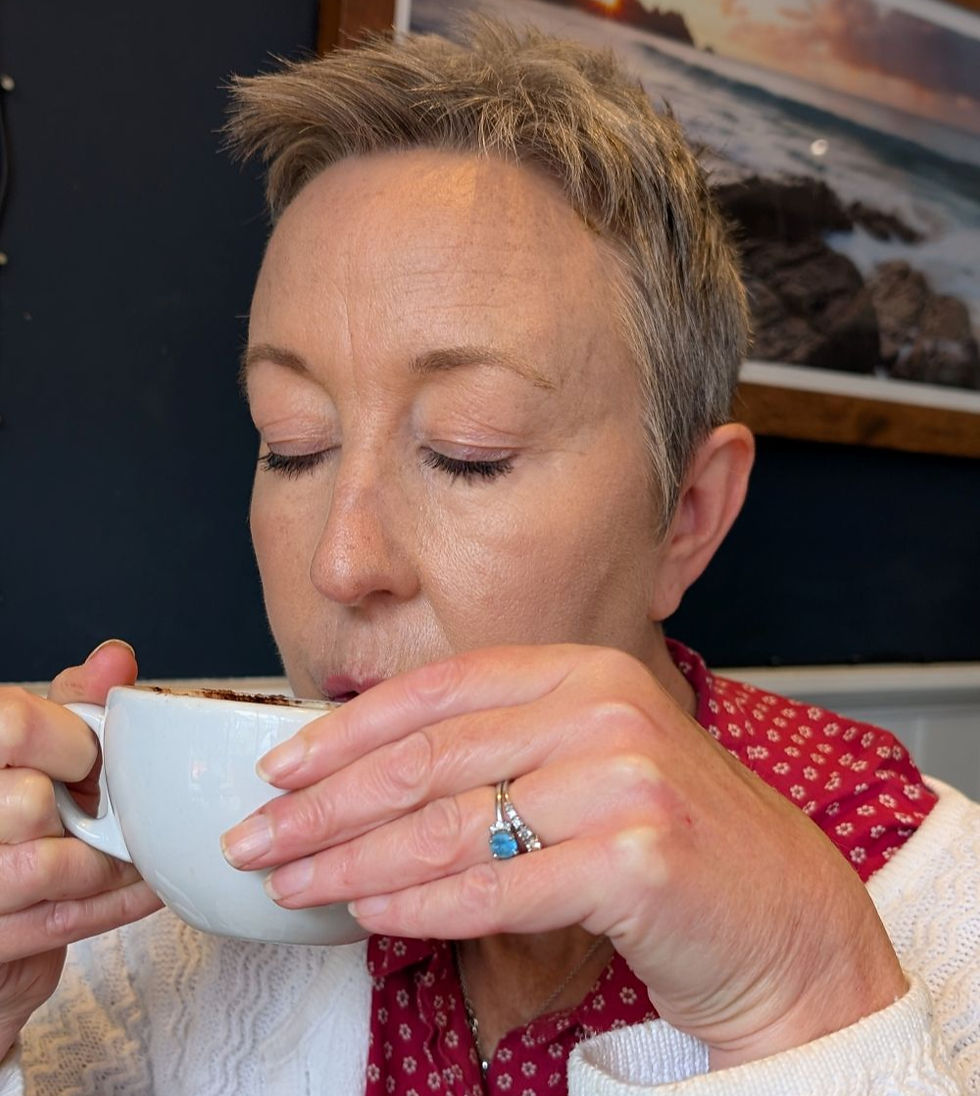
A ritual can contain something else: meaning. Imagine making a cup of tea. You could make it while scrolling through your phone, barely noticing that you have drunk it. Or you could use exactly the same few minutes to feel the warmth of the cup, notice your breathing, look out of the window and ask yourself, “How am I actually feeling today?” The action has hardly changed, but the experience has.
Psychologists have been increasingly interested in this distinction. A broad review of the psychology of rituals identified roles for ritual in regulating emotion, supporting goals and strengthening social connection. The meaning we bring to a repeated action appears to be part of what makes ritual psychologically significant.
For me, that is what turns a routine into a Mind Medicine moment. It becomes less about completing an activity and more about meeting yourself within it.
Why big changes fail
There is something wonderfully seductive about a fresh start. We convince ourselves that we need the perfect morning routine, an hour of meditation, daily exercise, better food, journalling, breathwork and perhaps a cold shower before breakfast. For someone already exhausted, stressed or dealing with illness, that can be an extraordinary amount of pressure disguised as self-care.
Behavioural science also suggests that habit formation is far less neat than the popular idea that something magically becomes automatic after 21 days. A recent systematic review of health habit formation found enormous variation between individuals and behaviours. Habit formation could take months rather than weeks, and the researchers specifically concluded that the familiar rule of 21 days is not supported by the evidence.
That matters because unrealistic expectations create an easy route to self criticism. We miss a few days and decide we have failed, when in reality behaviour change has always been far more individual and messy than wellness culture sometimes suggests.
I would rather someone meditate for three minutes in a way they can genuinely return to than commit to forty-five minutes and give it up within a week. The smaller practice may look less impressive, but if it can live comfortably inside real life, it has the opportunity to become part of that life.
Why repetition matters
There is something reassuring about repetition. When so much around us is unpredictable, familiar actions can become small points of steadiness.
This is particularly relevant after cancer, trauma or another major life change. Much of the distress can come from uncertainty. Appointments change, bodies change, plans change and suddenly the future we assumed was waiting for us feels less certain.
A familiar ritual cannot remove that uncertainty, nor should we pretend it can. What it can do is give us one small experience that feels known and chosen.
Perhaps every morning you sit beside the same window for five minutes before the rest of the house wakes. Perhaps you step outside and take three slower breaths. Maybe you make tea after treatment, write a few lines before bed or walk the same route through the park.
The power is not necessarily in the tea, the notebook or the walk. It lies partly in the repetition of the message: here is a moment in which I return to myself.
In my article Why Healing Begins With Gentle SIPS™, with SIPS™ standing for Slow Down, Identity, Purpose and Self Love, I explored why slowing down sits at the beginning of my SIPS™ framework. We need space before we can really hear ourselves, and a simple ritual can become one of the ways we create that space.
Rituals create predictability
When the nervous system has spent a long time responding to uncertainty, predictability can feel deeply reassuring. I want to be careful with language here. A morning cup of tea does not magically “heal the nervous system”, and having a bedtime routine does not mean you will never feel anxious. Human nervous systems are far too complex for that.
What repeated, familiar experiences can offer is a cue of predictability. We know what is happening next. We have chosen the environment. We can slow down enough to notice where we are.
This is closely connected to what I have previously written about in The Nervous System and Healing. Regulation is not about forcing ourselves to remain permanently calm. It is about increasing our capacity to notice our state and gently find our way back when we become overwhelmed.
A ritual can become one of those return points. The same piece of music before sleep, the familiar smell of an essential oil, feet on the grass, the first few breaths of a meditation or the sensation of warm water in the shower can gradually become associated with slowing down.
It is not about tricking the body. It is about giving ourselves repeated opportunities to experience a little more presence and predictability.
Habits shape identity
This is the part I find particularly fascinating because it connects daily behaviour with the Identity pillar of SIPS™. We tend to think that our identity drives our behaviour. If I believe I am a runner, I run. If I see myself as someone who meditates, I meditate. But the relationship may work in both directions.
A 2025 systematic review and meta-analysis of habit and identity looked at 19 studies involving more than 13,000 participants. Researchers found a substantial positive relationship between habits relating to health and identity, while also noting that the direction of influence may be reciprocal rather than simply one causing the other.
In everyday language, what we repeatedly do may gradually become part of the story of who we believe ourselves to be. There is a subtle but powerful difference between saying, “I really should meditate” and beginning to experience yourself as someone who says, “I am someone who makes a little space for myself.” Likewise, “I should get outside more” can slowly become, “I notice when my body needs air and movement, and I respond.”
That is why I am less interested in using rituals to create the perfect routine and more interested in what those rituals quietly communicate about our relationship with ourselves. Each small act can become a vote for an identity, not an identity based on productivity or perfection, but one rooted in listening, self-respect, and care.
Meaning changes everything
There are countless things we could turn into ritual, but I do not think we need to keep adding more to our lives. In fact, for many people I work with, adding less is probably the more healing choice.
Instead, look at what already exists. You already wake up. You already shower. You already make a drink. You already travel somewhere, eat, get dressed or get into bed. Somewhere within those ordinary moments is an opportunity to create a small point of connection without finding another twenty minutes in the diary.
Your morning shower might become a place where you deliberately notice the sensation of water and take three slower breaths. Making tea might become two minutes without your phone. Getting into bed could become the moment you ask yourself what went well enough today, rather than mentally rehearsing everything still undone.
A walk can become a chance to look for one glimmer. A commute can include a piece of music that helps you arrive rather than simply rush. Putting moisturiser on your hands can become an act of touch rather than another item on the bathroom checklist.
None of these actions is inherently profound. The meaning is in the attention. When we repeatedly bring presence to something ordinary, the ritual starts saying, I am here. I am listening. I matter. For me, that is where ritual becomes much more interesting than routine.
Rituals need flexibility
There is a trap here, particularly within wellness culture. Practices intended to support us can very easily become another measure of whether we are doing life “properly”.
You missed meditation today. You did not journal. You stayed in bed instead of walking. Suddenly a practice designed to cultivate self-compassion has somehow become evidence against you. That is not the purpose.
If missing your morning ritual leaves you feeling guilty, anxious or as though you have failed at healing, then something has shifted. The practice has stopped supporting your life and started becoming another standard against which you measure yourself.
This matters enormously for people living with cancer, fatigue, chronic illness or changing health. Capacity is not identical every day. A practice that feels nourishing on Monday may be completely unrealistic by Thursday.
Flexibility is part of self-connection. Sometimes your meditation will be twenty minutes. Sometimes it may be three conscious breaths while lying in bed. Sometimes the walk will happen, and sometimes resting will be the more respectful response to what your body is telling you.
Consistency does not have to mean rigid repetition. It can mean repeatedly returning to the intention beneath the ritual, even when its form changes. Perhaps the intention is simply: Today, I will listen.
Rituals are not medicine
I also think it is important to distinguish supportive wellbeing practices from medical treatment. Meditation, journalling, movement, breathwork, meaningful routines and sensory rituals can support emotional wellbeing, stress management and quality of life. They are not substitutes for appropriate medical or psychological care, and no one should feel that their illness occurred because they failed to live well enough.
This distinction is particularly important within cancer support. There can already be enormous pressure to eat perfectly, think positively, reduce every possible source of stress and follow increasingly complicated wellness protocols. Self-care should not become self-blame.
The Mind Medicine approach I use is not about trying to control every outcome through behaviour. It is about recognising the places where we do have choice and using those choices compassionately.
A ritual cannot guarantee what tomorrow brings. It can change how we meet ourselves today.
Start with one
If you want to create a daily ritual, I would resist the temptation to design an entirely new routine. Choose one ordinary moment that already happens most days.
Perhaps it is your first drink in the morning. For the next week, when you pick up the cup, leave your phone where it is. Feel the cup’s warmth, notice one breath and ask yourself one question: What do I need from myself today?
You do not need to answer perfectly. You do not even need to change anything afterward. The ritual is simply the pause.
Or perhaps your moment is stepping outside, turning off the bedside lamp, sitting in the car before you walk into work, applying hand cream or waiting for the kettle to boil. The specific action matters far less than your willingness to inhabit it. Then keep it small enough that it does not become another burden.
Over time, something quietly important may begin to happen. You are no longer simply trying to build a wellness habit. You are practising the experience of turning towards yourself. Perhaps that is one of the most meaningful rituals we can create.
If you have spent so long caring, coping or simply getting through that you have forgotten what it feels like to listen to yourself, you can explore my coaching and the Mind Medicine Movement™. You do not need to overhaul your life to begin. Sometimes one gentle, repeated moment is enough to start changing the relationship you have with yourself.
Read more from Sarah Hurst
Sarah Hurst, Coach & Creator of the Mind Medicine Movement™
After walking her own path through cancer, Sarah Hurst discovered that true healing isn’t just physical, it’s emotional, spiritual, and deeply personal. She went on to create the Mind Medicine Movement™, helping others calm their nervous systems, rediscover purpose, and reconnect with themselves through her SIPS™ framework: Slow Down, Identity, Purpose, Self-Love. Today, Sarah supports people living with or beyond cancer and anyone seeking calm, clarity, and wellness through her coaching, meditation, and touch therapy practice in Hove, East Sussex. She also offers an online coaching service.