Everyone Thinks They're the Hero
Darlene Meissner is a radical and intersectional feminist strategist, author, and women’s rights advocate with nearly three decades of experience supporting women activists and leaders in high-stakes justice work. She helps women navigate structural forces and sustain their work without self-erasure or burnout.

Everybody loves the hero. We cheer when Princess Leia and Luke Skywalker fight the Empire, admire the X-Men for resisting persecution and discrimination, and celebrate Wonder Woman, Batman, Spider-Man, Black Panther, and Storm for confronting villains and defending others. We want the heroes to win, the villains to lose and justice to prevail. Somewhere along the way, we begin to imagine ourselves as those heroes. We believe we would have their courage, make their choices and stand up against the same injustices.
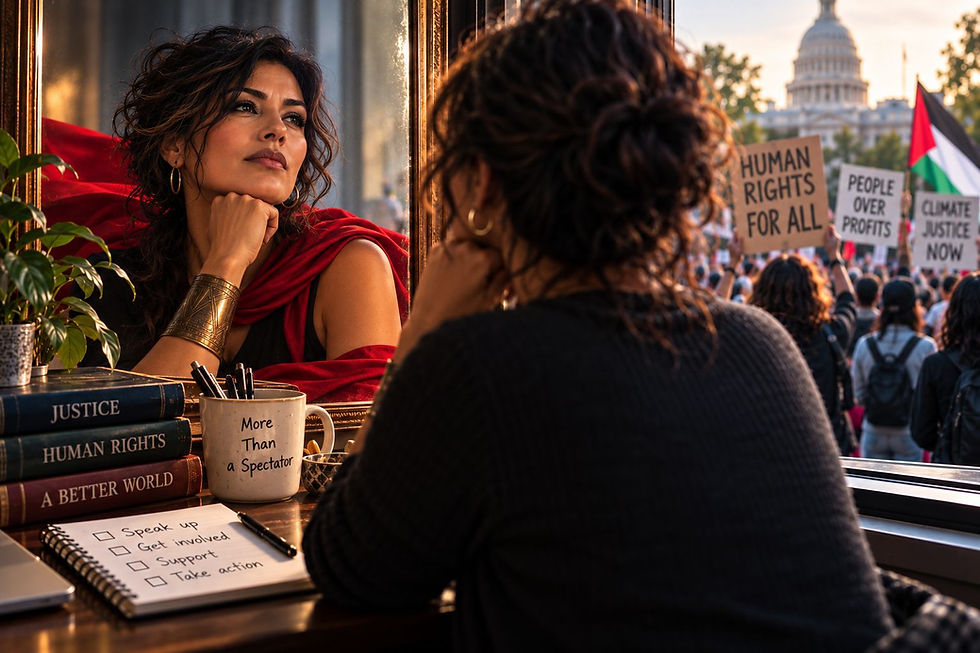
Of course we would have fought the Empire, defended the mutants and stood against fascism, racism and persecution. We know who the villains are when we're watching a movie, and we're quite certain which side we would have chosen.
But what happens when those same choices confront us outside the cinema? When the government restricting people's rights is our own, the company benefiting from exploitation is one we regularly support, or the person being discriminated against is standing in front of us? Suddenly, those choices become considerably less appealing.
People who imagine themselves fighting the Empire may support political leaders and policies that restrict other people's freedoms. People who celebrate the X-Men's resistance to discrimination may remain silent when racism, misogyny, or transphobia appears in their workplaces or communities. People who admire superheroes for risking everything to protect others may criticize real protesters for disrupting traffic or making them uncomfortable.
Some don't even recognize the contradiction. They believe they would have resisted oppressive governments and protected persecuted communities throughout history, yet they have opportunities to make those choices now. They have votes, voices, money, professional relationships and social influence. They can challenge discrimination, question the institutions they support, contribute to movements or stand beside people taking greater risks. Instead, many leave the responsibility to someone else while continuing to imagine themselves on the side of the heroes.
Consider Wicked. Audiences love Elphaba, the witch with green skin who challenges the Wizard's oppressive rule and fights for those being persecuted. Meanwhile, Glinda, the witch with white skin, is celebrated as good even as she benefits from the system Elphaba is challenging. Elphaba is branded wicked for refusing to cooperate, while Glinda is rewarded for her proximity to power.
We recognize the injustice on screen. But when real women challenge powerful institutions, expose wrongdoing or refuse to remain silent, how quickly do we start treating them as the problem?
For centuries, accusations of witchcraft were used to persecute people, disproportionately women, through religious and legal institutions shaped by patriarchal power. Today, the witch has become a symbol of female independence and rebellion. Yet some of the adults celebrating that image still dismiss feminists, police women's anger and defend institutions that restrict women's rights. The symbolism is easy to celebrate. The politics are apparently too much trouble.
Even Scooby and Shaggy showed up
Scooby Doo and Shaggy were frightened of practically everything, yet they still joined their friends in investigating wrongdoing and confronting the people responsible. They complained, panicked and sometimes ran in the opposite direction, but they kept showing up.
Do people who condemn protesters while claiming to support human rights recognize the contradiction? Do they consider themselves politically engaged because they agree with a cause, follow the news or occasionally discuss injustice with friends? At what point does believing the right things become a substitute for doing anything about them?
You don't have to be fearless to participate. Scooby and Shaggy certainly weren't. But even they understood that being frightened didn't mean leaving everyone else to solve the problem.
Movements cannot survive on admiration alone. When people who have the ability to contribute repeatedly choose not to, the responsibility falls on those already doing the work. The same activists are expected to organize, protest, educate, challenge institutions and withstand the consequences, often without meaningful support from people who claim to share their values. They become exhausted not simply because oppression is powerful, but because too many others leave them to confront it alone.
Participation doesn't require everyone to lead a protest. It can mean contributing resources, challenging harmful behaviour, questioning where your money goes or refusing to cooperate with institutions that perpetuate injustice. The question is whether you're willing to do any of it.
Before you put on the hero’s cape
For people whose lives and communities are shaped by activism, resistance is not a costume, a fictional adventure or an identity to borrow for an evening. It is something they practice, often at considerable cost. Celebrating its symbols while condemning, dismissing or refusing to support the people doing the work deserves far more scrutiny than the protesters themselves receive.
You cannot celebrate resistance in fiction while spending the rest of your life resenting the people who practice it or leaving them to carry the responsibility alone. If you admire fictional heroes for fighting injustice, who do you stand up for? What injustice have you challenged? Where have you contributed your time, resources or influence? What have you been willing to change when doing the right thing became inconvenient?
Perhaps instead of imagining yourself as the superhero, you should consider Where's Waldo? At least then you'd be dressed for the role you've chosen: another face in the crowd, hoping nobody notices you're missing when it's time to stand up for someone else.
Read more from Darlene Meissner
Darlene Meissner, Intersectional Feminist Strategist & Coach
Darlene Meissner is an intersectional feminist strategist, author, and longtime women’s rights advocate with nearly three decades of experience in advocacy and feminist analysis. She works with women activists and leaders to understand the structural forces shaping exhaustion, strengthen political clarity, and sustain their work without compliance, collapse, or self-erasure inside patriarchal systems. She is the author of Preventing Activist Burnout and writes under Women Who Refuse, where she explores refusal, clarity, and sustainable resistance.