

Healing Yourself with Freestyle Painting
Updated: Jan 11
Asha Carolyn Young offers remote energy healing and emotional processing sessions for well-being. She teaches online Quantum-Touch® workshops and broadcasts self-healing information on News For The Soul radio. She also coaches freestyle painting.

If you’re stuck in lower emotions, like depression, grief, anger, or fear, there’s an easy way back to better feelings, freestyle painting. The grouch in you might shrug, but consider freestyle painting as a uniquely amusing and highly effective emotional remedy. Few supplies are required, set-up is quick, and you’re likely to feel much happier when you’re done painting.
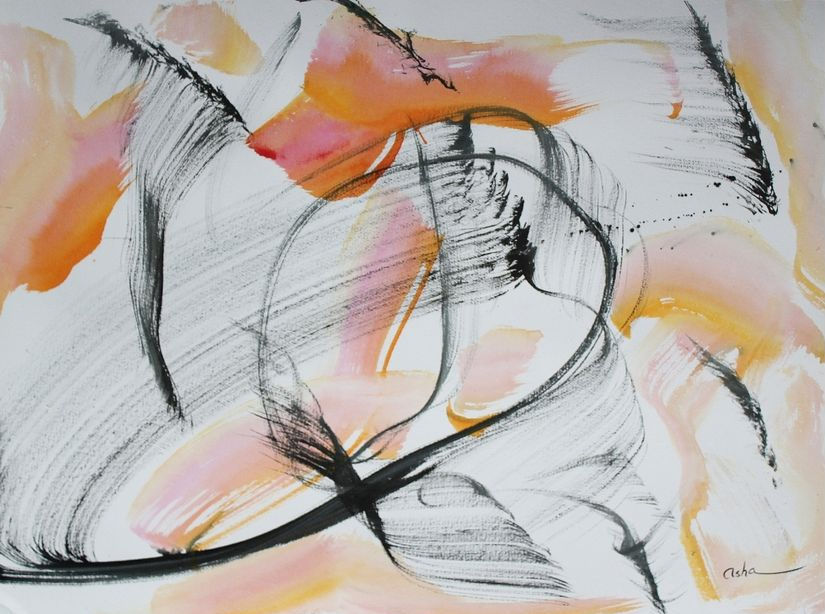
Painting with water-based paint on wet paper
For chasing away the blues, I recommend painting with water-based paints, such as watercolor or ink, and using dampened watercolor paper as your surface.
The wet paper makes it impossible for you to control the outcome, so you have to let go. The wonder and fun of watching your brushstrokes move in directions of their own will engage you, and as you bring in more colors and strokes, your painting will become more interesting.
As you let go, allowing the paint to flow wherever it will, you simultaneously inspire your deeper subconscious to let go, bringing the possible release of heavy emotions and catharsis.
What supplies do you need?
All you need are:
Several watercolor brushes of various bristle sizes, such as small, medium, and large
Watercolor paints or inks in various colors
A bucket of water
A tray for mixing colors (a glass casserole dish works well)
A couple of watercolor paper pads
Schedule it in
After you have your supplies together, the last step is to schedule your painting session. Tell your loved ones, “I’ll be busy for a bit,” and close the door. Play music or just be silent. Turn off your devices.
Remember, you are painting to bring healing to yourself, and you are worthy of receiving this love. A gift of love from yourself to yourself. Freestyle painting promotes emotional release and happiness, and that is what you want.
So, keep the date.
Start painting
Begin by dipping the bristles of all your brushes into your bucket of water and letting them soak for a few seconds. Then, very gently press the bristles to remove excess water and lay them down.
Select a large wet brush to lightly but thoroughly dampen your sheet of watercolor paper.
Choose a color and use a small brush to put a bit of it in your mixing tray. With your intuition, pick a color you feel like starting with. Don’t question your choice, go with it.
Add a dab of water and blend it with the paint or ink to stretch the color. Notice you can gradually lighten the hue by adding a bit more water and then testing the color on a scrap of paper. For bold colors, use very little water. For pale colors, more water.
Select a brush. I recommend a large one, and dip it into the paint you chose.
Now, paint! Paint without censoring yourself. Paint freely, with spontaneity and abandon. Run your brush in whichever direction and speed you like. Let the dampened paper absorb and spread your strokes unpredictably.
What have you got?
A little paint goes a long way on dampened paper. So, you might want to pause and see what you’ve got. Stand back and enjoy the color as it spreads without you being able to control it. Watch and see what it turns into.
If you want, pick another color and try adding some of it to your painting. Paint freely, with whimsy, without planning. Let strokes of this second color blend with the first color, creating new hybrid colors.
You can stop any time or continue longer if you like, layering paint colors and letting parts blend. You might play with using smaller brushes atop earlier broad strokes that are starting to dry.
When you’re finished, let the paint and paper dry completely before removing them from the watercolor pad.
Painting on two pads simultaneously
Having at least two watercolor pads enables you to paint on both surfaces at once. This allows you much more opportunity to express yourself without having to wait for the paper to dry.
Continuous painting helps put you into the alpha brainwave state, which, because it silences your analytical mind, helps keep your critical voice at bay, giving you more freedom to express yourself fully.
The traces you leave
Make your mark. Leave tracings of your mood. Let it all out. Then, after your paintings are dry, sit back and contemplate them.
What do you see? The paintings, like sponges, have absorbed some part of you. They embody those old feelings that used to be yours. Now those feelings have transformed into something different, something lighter in you.
Since your paintings bear markings of your more troubled emotional state from back then, you might want to thank them for their service. Your painting has absorbed your depression, your sorrow.
And if you’re like me, you’ll enjoy looking at what you’ve created. Whether it’s gloomy or joyful-looking, it is your creation, coming from your past mood, emotions, and thinking.
And you might get the sense that you didn’t paint alone, but rather with forces of nature directing pigment flow, as if spirits in the magical universe came to play with you as you painted. Sometimes, you will find unintended patterns and repeated shapes. These make you wonder, “Who planned that?”
Signs of catharsis
You might not be able to see the depths of what is contained in your own freestyle paintings, but another person looking at them might quickly sense exactly how you felt when you painted them.
Many years ago, when experiencing some emotional upheaval, I tried painting with watercolors on dampened sheets of paper for therapy. I let loose and painted about eight paintings, one after the other. The process worked to chase away my depression.
Some months later, a friend with exceptional empathetic and psychic capabilities saw the paintings and instantly felt the emotional pain I had felt and released while painting them. She teared up and shared what she felt.
Only then did I realize how much sadness I had released into those paintings. The painting process had liberated me emotionally, and apparently, the paper still held tracings of my past suffering.
The advantage of painting freestyle on wet paper is that you're guaranteed a loss of control. As you let go of needing to control the outcome of your painting, your subconscious can release its hold on lower emotions.
Freestyle painting is cathartic, allowing the release of lower emotions. It worked for me, and it can help you, too.
Science backs painting benefits
Freestyle painting, like many creative activities, alters your brainwave levels from fast beta waves to slower alpha waves as you move away from analytical thinking to imagining and sensing.
The slower wave patterns of alpha are immediately beneficial to your physiology, according to researchers like Joe Dispenza and his team, who study brainwaves of meditators. Slower brainwaves like alpha and theta are known to improve human health in a myriad of ways, beginning with greater brain coherence.
Findings from researchers for The Guardian magazine also indicate that engaging in any of the arts can improve your immune system, gene expression, and blood pressure, and make you more resilient to dementia, to name a few benefits. Activities like playing musical instruments, crocheting and sewing, and going to concerts are, like freestyle painting, highly beneficial, physiologically and emotionally.
Painting as a path to healing
The joys and thrills of creating and the meditative aspects of painting make it indeed highly beneficial for people. Additionally, our self-esteem rises when we create. “I painted that,” we can say and feel a sense of happiness and empowerment simply from having been a creator.
And since our first, experimental, freestyle paintings might look funny and strange, we can laugh at ourselves, which, of course, is also very healing.
Help with beginning to paint
If you want help getting started, consider seeking guidance from a painting coach.
You can soon be on your way to painting and healing yourself in a pleasurable way. You might even discover that painting is so fun, you never want to stop.
Visit my website for more info!
Read more from Asha Carolyn Young
Asha Carolyn Young, Instructor and Practitioner of Healing Arts
Asha Carolyn Young is a practitioner of intuitive energy healing and emotional processing. She offers remote sessions for people and pets, teaches online workshops for Quantum-Touch®, and bimonthly broadcasts self-healing information on News For The Soul radio. A painter and author of three art-related books, Asha also guides people to engage in creative expression for health and happiness.



