An African Christian Psychologist And Writer – Exclusive Interview With Dr. Ajabeyang Amin
Updated: Oct 24, 2022
Dr. Ajabeyang Amin is a psychologist, Christian counselor, and blogger. She founded the blog African Mind Healer, where she writes on mental health, culture, and faith. She is dedicated to helping people heal from their traumas, get unstuck from their past, blossom into authenticity, and do the things they are called to do. She has helped multiple individuals and couples work through various life challenges. She is inspired by her faith, her clients, her experiences living in multiple countries (Cameroon, Senegal, Ghana, France, El-Salvador) and 5 U.S. states, and by being a highly sensitive person. She holds a PsyD in counseling psychology from Northwest University, an MPH from the University of Michigan, and a BS from Penn State University. As you read her writing, her unique background and perspective might just inspire you to take a pause and think about your life.
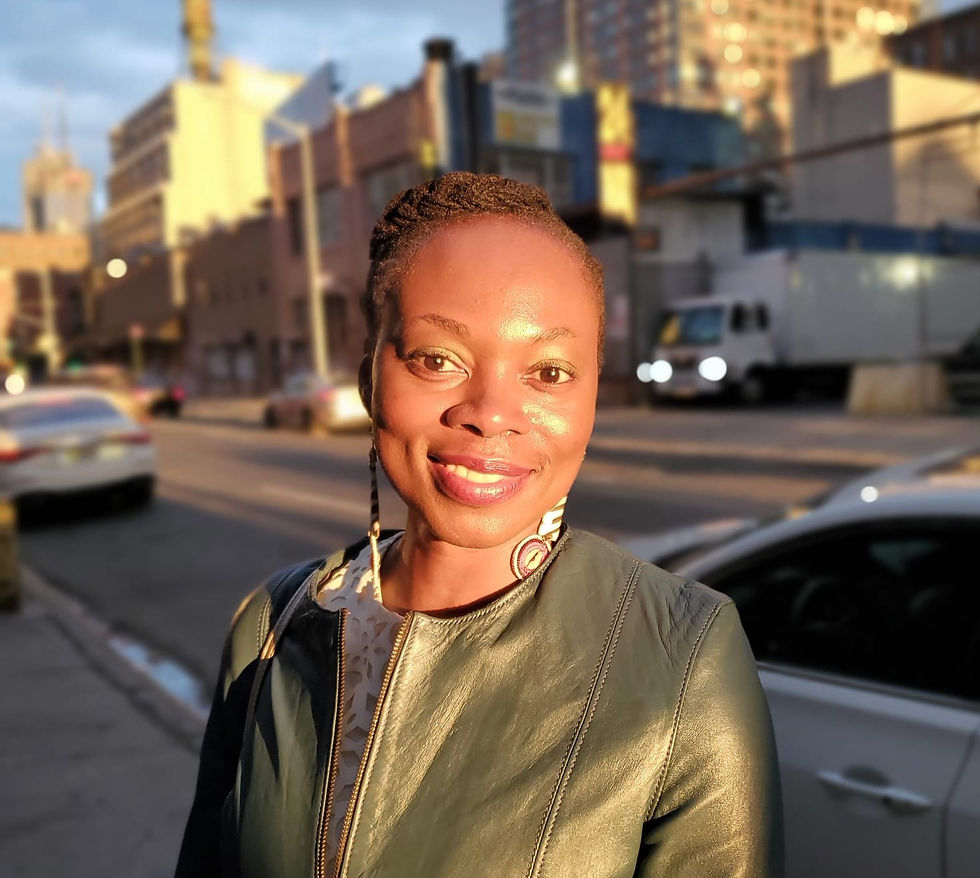
Dr. Ajabeyang Amin, Psychologist and Writer
I haven’t heard of many psychologists who are African and Christian. How did you get into this profession?
You are right about that. Studies in the U.S. in 2009 and 2007 (respectively) said that a higher number of psychologists don’t believe in God as compared to people in the top 20 academic disciplines and psychologists are more likely to consider religion unimportant as compared to the general population. Hence, it points to a need for believers in the profession. Not to talk of the need for African psychologists. Growing up in Cameroon, I had never heard of psychologists, and I still didn’t hear much about the profession for my first 9 years after migrating to the U.S.
But to answer your question, I always knew I wanted to be in a helping field, however becoming a psychologist didn’t come to mind until 2013. If you have African parents, you know that the first thing we think of when you say you want to help people is to become a medical doctor. So, I considered it until my first semester in college, when I concluded it wasn’t what I wanted. I found another major, Biobehavioral Health which was somewhat like a college degree to become a public health professional. I went all the way to obtaining a Master’s in Public Health. Then God literally changed my purpose (or you can say showed me my purpose) after that degree, which was also around the same time that I decided to truly become a Christian and live my life for Jesus. I had various experiences when I traveled back to Cameroon and Ghana and I went through my own soul searching, which brought me to Counseling Psychology. Once I understood what counseling psychology was, it was very clear to me that this is what I wanted to do.
You have been writing consistently on the topics of mental health, Christian faith, and African culture for the past 3 years. Can you tell us more about African Mind Healer and why you created it?
When I first created African Mind Healer, I was thinking of Africans living in the U.S. I had just obtained my Doctorate in Counseling Psychology and I felt privileged because I had learned so much. And I had data from interviewing African immigrants during my dissertation. I felt there had to be a way for me to share my knowledge because there was so much that I wouldn’t have known had I not gone through my program. Therefore, I knew that my fellow Africans wouldn’t know either. I created African Mind Healer as an avenue to raise awareness on mental health, speaking directly to issues that Africans in and out of America face. But the more I wrote, I realized that I wasn’t only speaking to Africans, I was also speaking to immigrants in general, third culture kids, Black people, or anyone who struggles with mental issues, which is all of us depending on the day. Being a Christian, it only seemed fair to write about what you know. The intersection between mental health, faith, and culture is very real. Most of us do what we do because of what we believe or don’t believe (faith) and because of how or where we were raised (culture) and this all affects our wellbeing (mental and emotional health). I am very in tuned to how these aspects influence each other, hence why I write about them.
I noticed that you like to write about psychotherapy and the process of seeking help, can you tell us more about that?
Psychotherapy is not an everyday topic for most people. For African immigrants, even more so. Many Africans were raised in societies where they dealt with mental issues through gatherings with family and friends, prayer, traditional healing, various cultural practices, and the spiritual realm. The notion of psychotherapy and what it looks like is somewhat new. Therefore, I write a lot about that to educate people on the process. My general goal is to educate people on mental health and help seeking because when we understand it, we will find it less scary, and we will hold less stigma towards it. Many of us are afraid of the unknown, but if you know, it takes some of the fear away.
So, do you provide counseling? If I am looking for a therapist, how do I know if I am a right fit with you? Who are your ideal clients?
Well yes! I just started a private practice in the state of Pennsylvania where I work with adults. You can find more at www.ajabtherapy.com I am looking to expand to other states soon. If you can connect with anything I have said so far, then those are the types of clients I am looking for.
I also have to say that I am not only looking to work with African immigrants or Christians. In fact, the majority of the clients I have worked with for the past 6 years have not been African or immigrants or Christians. I have worked with adolescents and adults of various ethnicities and religious backgrounds. I look for people with whom I can connect and vice versa. I also look for people whose issues I am knowledgeable about. My style is collaborative and client centered. I believe it is my role to guide my clients and not to tell them exactly what to do. Sure, there are many times where I give my opinion or I make observations of patterns, provide insight on what has helped other people in similar situations, and provide education on the topic discussed. But ultimately, I want the client to be able to develop into their authentic selves and make their own decisions.
Now there is a slight difference when I am working with someone who wants Christian counseling versus those who don’t. With people who want Christian counseling, the standard is Jesus. Therefore our goal is to help them to deepen their understanding of God so that they can allow Him to heal them and transform them to look more like Christ.
If I am not a good fit for the person, I refer them to another counselor. My resources page on my website has information that could be helpful for finding mental help.
What are common problems you address with your clients?
Some of the common issues that come up are depression, anxiety, self-esteem and self-worth issues, identity issues, relationship challenges, grief & loss, family conflict, cultural and life transitioning e.g. transitioning from being a college student into the work force, moving to a new country/culture/environment, marital problems, church hurts, issues related to aging, people who identify as highly sensitive persons, people who have high mood fluctuations, dealing with trauma, ADHD, career decisions and work stress.
What do you hope to see in the next few years in your work?
I hope mental issues and psychotherapy would be more of an everyday conversation among African immigrants and Black people in general. I hope there is less stigma toward mental disorders and more people would be open to seeking help. I would like to have an even higher case load of African immigrants, Black people, and Christians seeking my services as their counselor. And I hope African Mind Healer would be a resource for a lot more people seeking mental health knowledge and counseling services.
All work aside, how do you manage your own mental health? Do therapists need therapists too?
Good question! Yes, therapists need therapists too. We are human! What helps me are the same things I say to my clients: time out with the world and time inward with myself, dancing which is my gift from God that keeps me sane, writing which is a great way that I process my thoughts, cooking, going out in nature and taking long walks, praying, reading the Bible, and spending time with my family, my friends and my church. I feel very fortunate for the people in my life that help me to laugh and play, listen to my random thoughts, and give me solid advice when I need it.
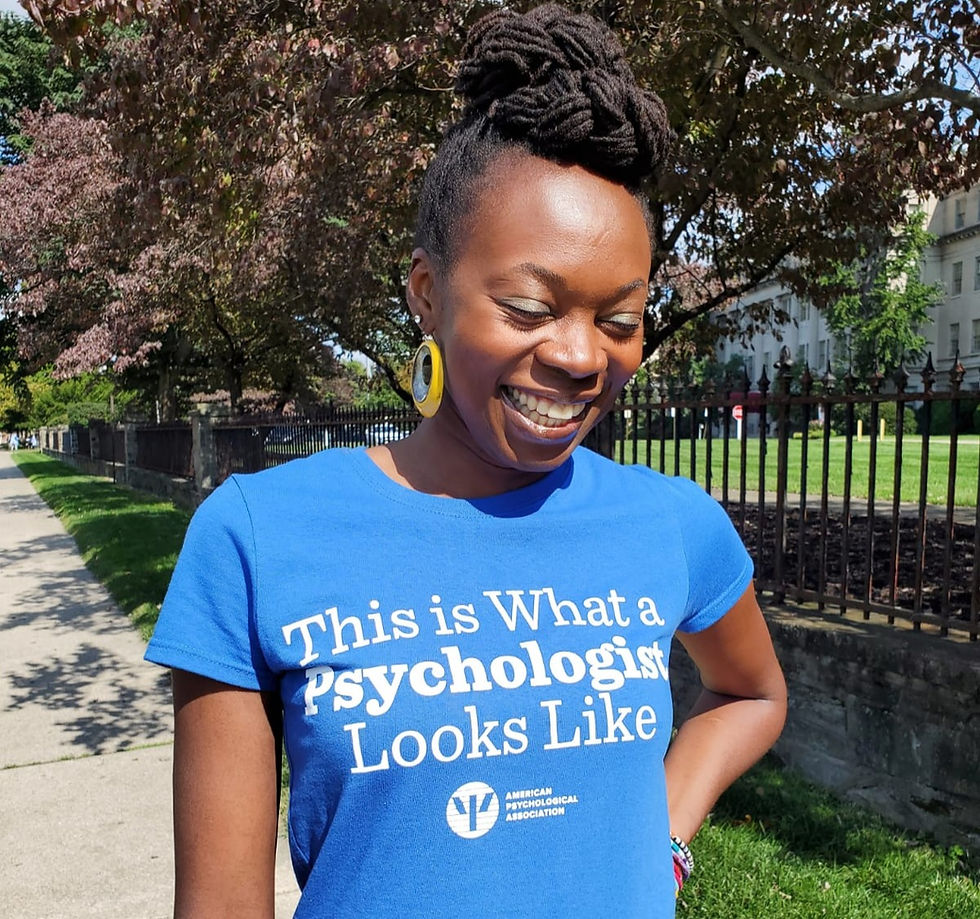
Follow me on Facebook, Instagram, LinkedIn, Twitter, and visit my website for more info! Read more from Dr. Ajabeyang!