

Why Owning Your Health Plan Can Transform Your Business – An Interview with Charles W. Gragg
Updated: Jan 2
Charles Gragg is a healthcare innovator, strategist, and speaker dedicated to transforming the way organizations approach healthcare. For too long, companies have been trapped in a cycle of unjustified rising costs, higher deductibles, and declining outcomes, a system that fails employers and employees alike. With extensive experience analyzing flaws of today's healthcare economy, Charles brings executive-level insights and patient-centered solutions to create a disruptive new vision for corporate healthcare.
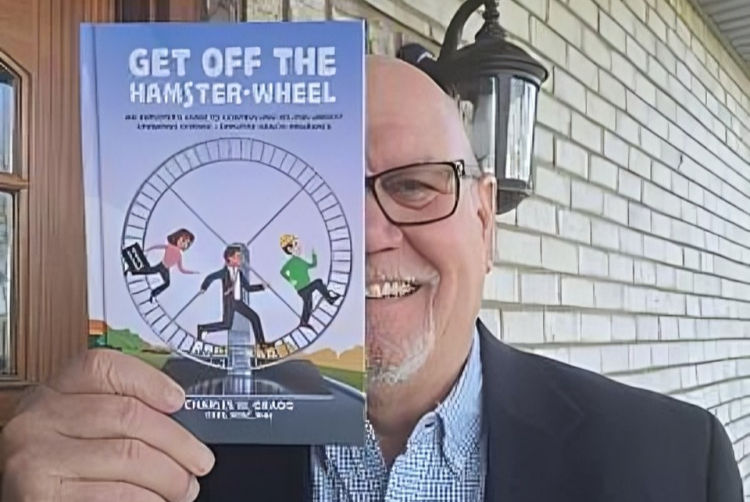
Charles W. Gragg, Healthcare Innovator, Strategist, and Speaker
Who is Charles W. Gragg?
Charles W. Gragg, a Health Insurance executive, author, and public speaker, is recognized as an alternative solutions expert focused on providing sustainable, forward-thinking health plan solutions that transform runaway health insurance expenses into valued assets to the corporate balance sheet. His message is driven by years of experience in providing these solutions to thousands of employer groups across the country, who took the path of self-funding as their financial vehicle, and began to take control of health care spending inside their own plan as opposed to renting one from the nationally known carriers. These customizable solutions have saved those employers literally millions of dollars by simply taking control of this otherwise uncontrollable expense. His mantra is that you should own your health plan and run it like any other segment of your business in order to keep not only the costs of your plan under control, but to continually focus the outcomes of your healthcare expenses on the well-being and mindset of those it serves – your employees and their dependents.
What inspired you to start helping businesses with financial planning and strategic consulting?
Early in my career, I saw the need to offer something different than the traditional method of offering corporate employers the same-old insurance company solution, chasing rate-increase after rate-increase year after year. Advisors that are tuned into real solutions call that “running on the hamster wheel.” The problem with offering that solution was, and still is today, that the focus in on the wrong piece of the puzzle. Where most advisors and employers focus on lowering their costs by lowering benefits paid by the plan, or shifting the costs to the employees by raising deductibles or shifting payments to spending accounts and raising out-of-pocket limits of their “plan design”. Those sleight-of-hand magic tricks only put more financial burden on employees to carry the weight of rising costs, and totally miss the mark of the true culprit in this charade.
How do you define success for the clients you work with?
Those who succeed in transforming their health plan strategy and results start with a change of mindset and vision of the primary reasons for offering a health plan for their workforce in the first place. That reason is, 99% of the time, employers want their employees to have the security and peace-of-mind that their employer cares about their well-being and health as a fundamental value of the workplace. He wants the very “best” healthcare possible for his employees, and not just “more” healthcare with unnecessary spending and frivolous experiences. He is willing to invest in the lives of his employees by providing better methodology of accessing the best healthcare for them. Another factor is the mindset change, whereby the successful company understands that it runs a health plan as the 2nd largest operating expense on its corporate balance sheet. And the traditional method of “buying” health insurance from an insurance company is merely “renting that expense” from them and subsequently turning his checkbook over to that carrier to run his plan for him. The mindset change is to “take control of that expense”, leave the insurance company, and run that health plan like any other segment of the business, as a unit and an asset versus an uncontrollable expense.
That takes the form of a “self-funded” health plan that ensures the employer that he now controls the deliverables, and the “outcomes” of every feature of his customizable plan. An asset through and through, both on the balance sheet and in good faith to offer better solutions and outcomes of better health for his employees, all at lower costs and higher quality. That corporate asset is transferable both in culture and financials as a corporate legacy.
What are the most common challenges your clients face before they work with you?
There are a number of pushbacks the employer faces. Number one is belief in what I profess from my 50 years of experience working in every phase of this business. Then, the decision whether to listen to peers, his own benefits advisor, the health insurance community (of carriers), and sometimes his own executive staff, who may fear that this is an overwhelming task to tackle. However, once he understands that this “elephant in the room” is not to be eaten all in one setting, but rather one bite at a time. He can then digest the problem with his largest issues one at a time, and build a plan tailor-made for his taste and operational capacity. He should not fear that this approach is a matter of “taking on enormous amounts of risk”, as some would say. This insurance segment of the industry has matured over the past 50 years so that the “risk” element is extremely small compared to the gains, and rate increases he faces today without this solution. And there are numerous alternatives for that “risk” element that can also be translated into assets versus expenses as well. More control, more assets on the balance sheet. Win-Win proposition.
How do you approach solving complex financial and pricing strategy problems?
You might ask: “How does an employer approach solving these complex financial and pricing strategy issues?” The solution is: “We cannot begin to talk about lowering costs or pricing until we address ‘lowering claims’ costs. I'm not talking about taking anything away from employees who have claims. I am referring to lowering the cost of claims currently being incurred. The issue in American healthcare is not “getting more healthcare”; it is “getting better quality healthcare”, and at a “better, often negotiated price”. Putting best practices into place to offer those solutions to his employees wins both battles – Higher quality healthcare, at Lower prices overall. Again: Win-Win!
Your follow-up question might be: How does he make that happen? The easy answer is that “ultimately” his goal is to divorce completely the Insurance “network” of providers and develop his own “high performance network of providers and facilities”: to offer that care to his employees. By negotiating higher quality healthcare, and most often at lower costs per unit of care, he will provide both better service to the employees, and both parties save money in the process. Some in the industry call that “the Walmart model” because that is what that industry giant began doing at the beginning of this. 21st century. The proof is in the pudding: Walmart has improved healthcare quality and saved millions of dollars as a result.
To answer that question directly, an employer does not try to take on all of this process within his own staff. He hires these processes out to “fiduciary” providers of service. A term the insurance carriers admonish and do not subscribe to; because premiums to them is now “their money” and no longer the employers’ In essence, a fiduciary is someone who is bound to look after your money, and business affairs with a greater degree of care than that of his own, An employer acting upon those principles has some assurance that his affairs are being attended to with much greater integrity.
Can you share a story of a client who transformed their business with your guidance?
I could tell many a story here. Rather than dig into the weeds with too many details, let me just say that over the course of 45 years, I was involved with some phase of this solution to over 1000 employers around the country. Most of those employers saved anywhere from 10%, 20%, and even 50% over what they were spending in any given year prior to moving away from the traditional insurance community. You can only imagine what those savings produced inside their companies where more financial investment was made to expand and grow their business rather than preserve the culture and happiness of the employees by offering “insurance with a “big-name” insurance carrier. The irony is that those who made the move accomplished both goals in the process. Conversely, I can attest that within that same 1000+ employer community, I can only name less than a handful (-5) or so that made a switch back to the traditional insurance route of coverage while I was engaged with their businesses; and those that did make the move had extenuating circumstance involved, like selling off the majority of their business, along with most of their employee population, or the business went bankrupt from an operational standpoint outside of the health plans, etc. And that reason being that the health plan was not a contributing factor to other troubled business issues.
What makes your consulting approach different from other advisors in your field?
I look at this way of consulting with an employer much like that of a physician, to take the clinical approach. Do not prescribe before you diagnose. You must dig into the mindset and goals of an employer, and determine his commitment and ability to process and construct his custom-made solution. Also, consider the population of employees and dependents covered by his plan, and consider their current health conditions before addressing how those conditions need attention from the health plan. Most advisors have decided the solution(s) they are going to bring to the table, and often have proposals prepared for those solutions long before ever discussing with an employer regarding his goals, both short and long-term, and his “why” to begin with, as to his purpose of providing a health plan solution for his employees. Both of those factors play into any solution that should be brought to light to a client (employer group team) before presenting any solutions willy-nilly. Secondly, my approach is purely consultative in nature. There is no “sales pitch”, nor any products to sell, nor commissions to be earned from the employer based upon amounts of services being bought; much less the idea of “renting his health insurance from a carrier”. The only true solution for an employer that wants to solve this horrific financial burden is to “own” his own version of a health plan that fulfills his goals and provides the best accompanying outcomes to his employees.
How do you tailor your services to meet the unique needs of each business?
Very simply, the employer must begin to “build” his own plan and solution, whereby I diagnose just how far the employer is willing to take his solution down a new, untraveled road, and then begin to help him plan the route and timeline to accomplish that journey. Some employers want to crawl before they walk, and walk before they run into a new and unique solution. Others want to and do simply dive in head-first into the midst of the journey from day one. Either way is good, and not an issue as long as the journey begins now. Otherwise, an employer is merely practicing as the definition of “insanity”; that is, to continue to do the same things as in the past, but expecting a different result. And that habit will not provide a different result, period, drop the mic. I helped that employer start and build a health plan of his own, then turned the project of managing it over to his executive teams and administrative vendors.
What trends are you seeing now that business owners should pay attention to?
The “trends” that I see in this Insurance industry segment are the solutions that I see every day now being offered by the new generation of health plan solution subscribers. The final product is one of customization. Because there are many moving parts to the development and administration of a health plan, no two are necessarily exactly the same, nor using the same fundamental pieces or parts toward building that client solution. In the past, most of health plan products were “off-the-shelf” box policies. There may have been 4-5 different provisions or benefits alternatives offered, but the engine, the chassis of the products, were all the same. In fact, the real differences were all merely cost-shifters. That is, they moved plan costs and benefits from the Insurance Company’s responsibility to either the Employer’s premiums cost, or the Employee’s “out-of-pocket” costs. They accomplished absolutely nothing in lowering the overall spend or cost of healthcare, and took no consideration what-so-ever to “outcomes” of that healthcare provided.
The new generation of health plan spending accomplishes just the opposite, and clearly defines the “access” to better healthcare, usually at a lower cost, and with better “outcomes” of the service provided before it has even begun, by discerning the best possible providers of care on the front-end of the process, and steers the patient toward those solutions.
What measurable outcomes can clients expect when they work with you?
Bottom line, an employer who follows this path can expect to see measurable, sustainable savings from their health plan spend year after year, from the very beginning. That is, IF he engages the strategies that I endorse, and he takes the time and effort to educate his employees as well, and holds them accountable to the system and methodology I bring to the table. That bottom line is better quality healthcare solutions, and at lower overall costs to both parties’ pocketbooks, with more satisfaction for all from their health plan. In metric terms, that is 10, 20, 30-50% savings accumulating year after year.
How do you help clients make confident decisions in uncertain economic conditions?
If by that, you mean circumstantially uncertain times, then the answer is, what better way to weather tough times in a business than to have happier, healthier employees and save money as a bonus. If you mean globally uncertain economic times, then similarly, by helping his own company’s financial and employment situation, then he is easing the load for the balance of our economy as well.
If a business owner is on the fence, what would you say to convince them to reach out to you today?
Get started now. This solution or methodology of solutions is a process, and not an overnight, one-size-fits-all fix to solving a complex healthcare issue plaguing our nation. The idea is not to push some easy button and all is fixed. But rather to “get started” on a path toward finally solving this age-old dilemma. An employer is starting to take control of a part of his business and run it like any other part or form of business, and that sometimes takes some preparation, planning, and education for all involved to get the process working effectively. Once started, he will see immediate changes in the shape and financial impact of his decisions to control this beast. Within a year, two years, five years, he will wonder why he did not do this many years ago. I can promise, everything else being the same, he will not turn back to the old form of providing healthcare for his valued employee workforce, Guaranteed!
Let me paint a picture for you. If you could take a blank canvas and draw the perfect health plan, with the perfect solutions and a perfect price tag, what would that look like? Imagine 5 years down the road that you have built a healthcare solution as an asset to your company, its officers, its stockholders, and its employees. The health care provided to your population is better than it has ever been, and employee satisfaction with the company is at an all-time high, and subsequently with the lowest turnover rate in your company history. There is money in your trust to fund your health plan for a full year beyond where you are now, made up entirely from savings over the previous time period since making this move, and without investing another penny, if you would like. How would you feel about this solution then? Get started now!
Read more from Charles W. Gragg


