

What Does America’s Juneteenth Mean to You, Kneegrows?
Joseph C. Pledger Jr., EdS, is an accomplished master of the storytelling adventure. Though shunned by world affairs dinner table guests, it became his civic innovation that was sought and bought by justice reform. Thus, “The Microchip” appreciated the wrongfulness of his actions. A Microcomputer Systems Manager, AI Scholar, and JEDI Developer.

Ever since “Lift Every Voice and Sing” was penned by poet James Weldon Johnson and sung as the Negro National Hymnal, this is how composer Aaron Copeland’s “Fanfare for the Common Man” reckons traditional America with her foundational grounding in a dark and blackened history.
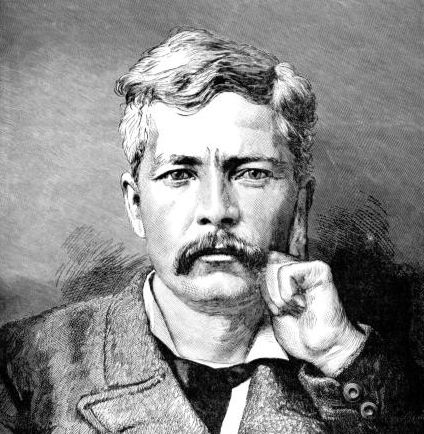
Irish-descended Chicagoan John Keehan and Welsh-born New Orleanian John Rowlands were two of the greatest showmen to ever influence the development of the Negro Diaspora.
Together, they are better known today as Spanish Count Juan Raphael Dante and Sir Henry Morton Stanley, the “Deadliest Man Who Ever Lived” and the “Indomitable Spirit of Savage Africa.” Count Dante’s Black Dragon Society and Savage Henry Stanley's Congo Society blended their common manliness with a gimmick born of profound, tortured loneliness. Each individual lifted himself up, breaking down inferior burdens and bringing forth the beast within himself. American captains of her brave new world.
These two men of Caucasian origin decided to rise above their stigmas of shame and regret. Declaring himself the undefeated champion of bloodsport fighting, John Keehan announced to the world that he was a better nobleman. One hundred years earlier, John Rowlands drafted himself out of his Civil War fighting uniform and stood up, assuming the name of his wealthy shipyard employer, because family engagement and entanglement had overcome them.
Breaking with their occupational traditions, shame and regret had handed each burnings at both ends of life’s candle. John Rowlands never received his natural affection from a destitute workhouse mother. John Keehan became convinced that the fighting arts were best suited for street combatants of any race or nationality. Altering connections with their private heritage, they crafted a gimmick of “nom de guerre,” a public identifying with the dignity of the Black man.
Because he journalized admitting himself to be a bigot to the core of his existence, Savage Henry Morton Stanley asked for public shame and for God to have mercy on his soul. He refused to canonize illustrations of indigenous ogres and trolls. Count Dante admitted that forty percent of “The Black Dragons” he taught his forbidden fighting art of “The Death Touch” to were actually American Negroes.
Juneteenth is more than a date on the calendar or a holiday to commemorate freedom. It is a reminder of the resilience, creativity, and complexity of the Black experience in America, and the ways history is intertwined with personal identity. The lives of Count Dante and Savage Henry Stanley, though complicated and controversial, illustrate how individuals navigate, appropriate, and confront cultural boundaries, prejudice, and opportunity. Their stories compel reflection on power, privilege, and the moral ambiguities of heroism and legacy.
As we mark Juneteenth, the question remains: What does freedom, history, and recognition truly mean to you? How do the lessons of the past shape our present and influence the paths we take forward? In asking these questions, we honor the struggles, the triumphs, and the intricate legacies embedded in the American story.
Read more from Joseph C Pledger Jr, Eds
Joseph C Pledger, Jr., Eds., Educational Specialist
Cited for his Strategic Expertise, "The Microchip" appears distinctly listed within the 76th edition of Albert Marquis' Who's Who in America for 2023. Trading business licenses with whoever purchases and browses such periodicals and literature to pick his brain.





