

11 Ways the Performing Arts Build Confidence and Practical Life Skills in Young People
Written by Helen Kenworthy, Artistic Director
Helen champions the arts as a tool for change. Now, as CEO of RYTC Creatives CIC and Give Get Go Education, she mentors young people, creates pathways for them to thrive in the arts, and helps launch successful careers.

There is something that happens when a young person steps onto a stage, speaks a line with conviction, moves their body through a rehearsed sequence, or delivers something they have worked on to an audience that is actually listening. Something shifts. It is not simply performance. It is a young person discovering, often for the first time, that they can hold space, that their voice carries, and that who they are is worth paying attention to.
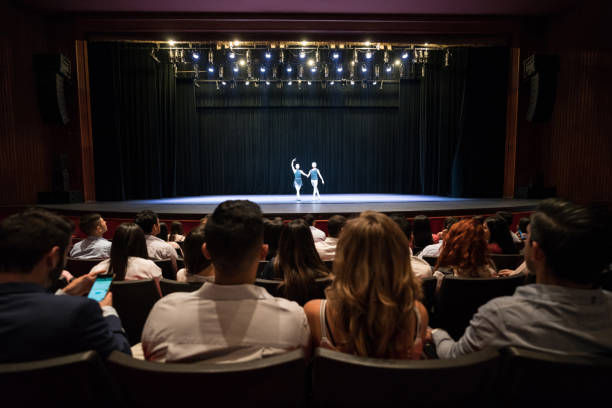
Confidence is one of the most talked about qualities in youth development and one of the least understood. It is often described as something a young person either has or does not have, as though it were fixed, innate, and beyond the reach of those who arrived without it. But confidence is not a personality trait. It is a lived experience. It grows through doing, through trying, through receiving honest feedback, through failing and returning, and through being trusted with something real enough to stretch what a young person believes they are capable of.
The performing arts offer one of the most powerful environments for this kind of growth. Drama, dance, music, spoken word, physical theatre, film, and storytelling all ask young people to bring themselves into the work. Not a polished, edited, acceptable version of themselves, but their actual presence, their actual voice, their actual body, imagination, and emotional life. This is both the challenge and the gift. It is uncomfortable in ways that matter and transformative in ways that last.
Beyond confidence, the performing arts develop something equally important, practical life skills. Communication, collaboration, discipline, adaptability, empathy, problem-solving, and the ability to be present under pressure are not incidental outcomes of creative training. They are at its very core. These are the skills that employers seek, that relationships depend on, and that young people carry with them into every room they enter for the rest of their lives.
Why confidence must be built, not assumed
Many young people are told they should be more confident. They are encouraged to speak up, put themselves forward, believe in themselves, and take up more space. But telling a young person to be confident without giving them the experiences through which confidence genuinely develops is like telling someone to be stronger without ever giving them anything to lift. The instruction is meaningless without the conditions that make it possible.
Confidence is built through accumulated evidence. A young person becomes more confident when they have enough real experiences of trying something difficult, managing it, receiving honest feedback, trying again, and gradually doing it better. Each of those moments becomes a piece of evidence they carry with them, evidence that they are capable, that effort leads somewhere, and that the discomfort of being seen is survivable and often worth it.
The challenge for many young people is that the environments they move through do not consistently offer this kind of experience. Academic settings reward correct answers more than courageous attempts. Social environments punish vulnerability. The young people who most need experiences that build confidence are often the ones who have the fewest opportunities to access them. The performing arts interrupt this pattern. They create structured, supported spaces where trying is the point, where growth is visible, and where a young person’s presence and contribution genuinely matter.
What the performing arts really develop
It is tempting to think of the performing arts primarily in terms of talent, those who can sing, act, dance, or perform at a level that impresses. But this misses almost everything that makes creative arts education genuinely valuable for young people. The performing arts are not primarily about producing polished performers. They are about developing whole human beings through the experience of creative practice. In a well-designed performing arts environment, a young person develops:
Deep listening to a director, to fellow performers, to an audience, and to themselves.
The ability to receive and act on feedback without collapsing under it.
Preparation and consistency, the discipline of showing up and doing the work.
The capacity to support others within a shared creative endeavour.
Resilience under pressure, managing the vulnerability of publicly performing something that required courage to attempt privately.
Emotional range and the confidence to bring their full self into a space.
An understanding of the relationship between practice, effort, and genuine progress.
These are not soft skills. They are foundational human capacities that shape how a young person functions in relationships, workplaces, communities, and their own inner life. That knowledge does not stay on the stage. It travels with them everywhere they go.
Creative expression as a pathway to self-discovery
For many young people, the performing arts offer something they cannot easily find elsewhere, a legitimate space to explore who they are. Adolescence is a period of identity formation, of trying on different versions of the self, and of asking questions about values, belonging, purpose, and voice. Most environments do not make room for this exploration in any structured or supported way. The performing arts do.
Through character work, physical practice, storytelling, improvisation, and creative collaboration, young people encounter aspects of themselves they might not have known were there. They discover an emotional range they had not previously expressed. They find that they can be funny, moving, commanding, or tender in front of others. They learn that their perspective has value and that their imagination is a genuine creative resource, not something to be managed or suppressed.
This is especially significant for young people who have struggled to find belonging in more traditional educational or social settings. For those who have been overlooked, underestimated, or defined by what they find difficult rather than what they are capable of, a performing arts space can become the first environment where they feel genuinely seen. Being seen, truly and generously, is one of the most powerful catalysts for confidence and growth that a young person can experience.
How the Creative Pathway Methodology brings this to life
Through RYTC Creatives CIC, The RYTC, Education Selection Box, ESB, and Give Get Go Education, GGGE, the Creative Pathway Methodology creates a living example of what it looks like when performing arts, education, and career development are brought together with the whole young person at the centre. It does not treat creative expression as an enrichment activity that sits alongside more serious learning. It treats it as a core environment through which young people develop confidence, capability, and a credible sense of their own future.
The RYTC is at the heart of this creative work. It offers young people access to high-quality, brave, and inclusive performing arts experiences that are designed not only to develop their craft but also to develop them as individuals. Through rehearsal, performance, production, and the daily practice of creative participation, young people build the confidence, discipline, communication skills, and self-awareness that carry them far beyond the stage. The RYTC understands that what happens in the rehearsal room is preparation not only for performance but also for life.
ESB supports the learning dimension of this journey, holding educational development and mental wellness alongside each other. It recognises that a young person’s ability to engage with creative practice, or any practice, is shaped by how they are doing on the inside. By attending to both learning and wellbeing, ESB creates the conditions in which young people can show up to their creative work with greater openness, stability, and readiness to grow.
GGGE connects the confidence and skills built through the performing arts to real-world opportunities. It helps young people understand that the qualities they are developing through creative practice, including communication, presence, adaptability, resilience, and the ability to collaborate and lead, are exactly the qualities that open doors professionally. Through GGGE, creative growth becomes the foundation for career confidence, and young people begin to see a future in which their talent, voice, and contribution have a genuine place.
Together, these three strands ensure that the confidence built through creative expression does not remain confined to a single space or moment. It becomes part of a wider journey, one that holds learning, creativity, wellness, and future opportunity together as inseparable parts of what it means to help a young person genuinely thrive.
How to know if the performing arts are the right pathway for a young person
The performing arts are not the right fit for every young person in the same way, at the same time, or through the same route. But they are often the right fit for more young people than anyone initially expects, including the young people themselves. Recognising the signs that a young person might thrive through creative expression is one of the most important things an educator, mentor, or parent can do.
The performing arts may be the right pathway for a young person who:
Finds it easier to express themselves through movement, storytelling, or performance than through traditional academic formats.
Has a vivid imagination and a natural tendency to inhabit characters, stories, or other ways of seeing the world.
Struggles with confidence in formal settings but comes alive in more creative or expressive environments.
Has energy, presence, or a quality of attention that traditional classrooms do not know what to do with.
Is drawn to music, film, drama, dance, or any form of performance, even without formal training or encouragement.
Feels a strong desire to be seen, heard, and understood but has not yet found an environment where that feels possible.
Responds well to feedback when it is delivered within a relationship of trust and genuine care.
Is looking for a community of peers who share a creative orientation and a sense of purpose.
Has experienced difficulty in more traditional educational settings but has not lost their curiosity or will to try.
Needs a space that values who they are becoming, not only what they can currently produce.
These are not prerequisites for entry into the performing arts. They are invitations to look more closely at a young person and ask whether a creative pathway might offer them something that other environments have not. The answer, more often than not, is yes.
11 ways the performing arts build confidence and practical life skills
It gives young people a reason to use their voice: The performing arts create structured, purposeful opportunities for young people to speak, express themselves, and be heard in ways that most environments never offer. Over time, a young person who practises using their voice in creative spaces begins to carry that capacity into every other area of their life.
It builds confidence through repeated, real experience: Confidence is not built through encouragement alone. It is built through the accumulated experience of trying, managing, reflecting, and trying again. The rehearsal process gives young people exactly this kind of repeated, real practice in a space where growth is the goal and mistakes are part of the work.
It develops deep listening and present moment awareness: Performing arts training asks young people to listen to directors, fellow performers, the energy of an audience, and themselves. This quality of attention, practised consistently through creative work, becomes one of the most transferable and valuable skills a young person can develop.
It teaches discipline and the relationship between effort and outcome: Preparing for a performance requires showing up consistently, working through difficulty, and understanding that quality emerges through practice rather than talent alone. Young people who experience this connection between effort and outcome in a creative context carry that understanding with them into education, work, and life.
It strengthens communication across every register: Through performance, young people learn to communicate not only with words but also with their bodies, timing, expressions, and presence. These are dimensions of communication that most formal education never explicitly develops, and they are precisely the ones that matter most in real human interaction.
It builds empathy through character and storytelling: Stepping into a character, exploring a story from the inside, or giving voice to an experience that is not one’s own develops the capacity to imagine other lives with genuine curiosity and care. This is not only an artistic skill. It is one of the most important human qualities a young person can develop.
It develops resilience through the practice of trying in public: Performing in front of others requires a particular kind of courage, the courage to be seen attempting something, to receive feedback, and to return and try again. Young people who develop this capacity through the performing arts build a form of resilience that extends far beyond the creative space.
It teaches collaboration and the value of shared endeavour: Theatre, dance, music, and film are almost always collective practices. They require young people to bring their individual contributions into relationship with others in service of something shared. Learning to collaborate generously, support others, and subordinate ego to the work is one of the most practical and lasting lessons the performing arts offer.
It creates a safe space to take creative and emotional risks: In a well-supported performing arts environment, risk is not only permitted. It is encouraged. Young people are invited to try things they are unsure of, explore emotional territory they have not visited before, and discover what becomes possible when they move beyond what feels safe and familiar.
It connects creative identity to professional possibility: The performing arts open young people’s eyes to a wide range of creative and professional pathways in performance, production, direction, writing, design, education, events, media, and beyond. When a young person begins to see their creative identity as something with professional value, their relationship with their own future changes.
It helps young people believe they are worth watching: Perhaps the most profound gift of the performing arts is the experience of standing in front of others and discovering that what you bring is enough, that your presence, voice, imagination, and effort matter. For young people who have spent years doubting this, that discovery can be genuinely life-changing.
Conclusion
Confidence is not a gift that some young people are born with, and others must do without. It is something that grows through experience, practice, being trusted with something real, and discovering, again and again, that the effort was worth making. The performing arts offer one of the richest environments for this growth found anywhere in education or youth development.
When young people are given access to high-quality, inclusive, and well-supported creative arts experiences, they do not only become better performers. They become more confident communicators, more empathetic collaborators, more resilient individuals, and more purposeful human beings. These are not outcomes that stay on the stage. They travel with a young person into every space they enter and every future they build.
Through the Creative Pathway Methodology, across RYTC Creatives CIC, Education Selection Box, and Give Get Go Education, young people are supported in discovering what becomes possible when creative expression is taken seriously as a route to confidence, capability, and a life they can genuinely imagine themselves living. The performing arts are not a luxury for the few. They are a pathway for the many, especially for those who have been waiting, sometimes for a very long time, for a space that was made for them.
To explore more about how the performing arts build confidence and life skills in young people, visit here.
Helen Kenworthy, Artistic Director
Helen Kenworthy’s career embodies the transformative power of the arts, from her early roles in the prestigious West End with Bill Kenwright to her impactful work in regional theatre. As manager of the Oxfordshire Youth Arts Partnership, she created pathways for young people to thrive in the arts, with many going on to successful careers. Now at RYTC Creatives CIC and Give Get Go Education, Helen continues to inspire and mentor the next generation of theatre-makers and community leaders, offering invaluable opportunities for growth and professional development.





