Modular Homes as the Housing of the Future – Interview With Oleksandr Saveliev of Sava Ventures Inc
Updated: Dec 5, 2025
Written by: Henry Van Niekerk
According to estimates by Verified Market Reports, by 2028 the cargotecture market–buildings constructed from shipping containers–will reach USD 15.8 billion. The industry’s annual growth rate is 10.8%. Oleksandr Saveliev, founder and president of SAVA VENTURES INC, is convinced that such homes can become mass housing. Possessing extensive experience in construction and the development of engineering systems, Oleksandr Saveliev has developed a unique approach to converting containers into environmentally friendly and energy-efficient residential homes. By optimizing and standardizing the processes, Oleksandr proposed a methodology for modular home production that has no equivalents and that relieves end customers of a significant amount of “dirty” work–the only things left for people to do are to paint the walls and arrange the furniture. In an exclusive interview, Oleksandr Saveliev spoke about how this approach can change the U.S. housing market.

Oleksandr, how did you become involved in cargotecture and develop your own proprietary approach to transforming containers into residential modules?
My background is in telecommunications engineering, and my work has always been connected to construction and communications. For many years, I worked in Ukraine and Russia, oversaw the construction of buildings and facilities, and, of course, saw many site cabins over the course of my career. Work crews traditionally live in so-called temporary shelters, and construction companies often set up their site offices in them as well. Most often, these structures are made from decommissioned containers. I often thought about how such units could be properly equipped and turned into fully functioning homes.
After arriving in the United States, I began collaborating with Kaibay Corporation in Florida and met its director. As it turned out, he and I shared an interest in cargotecture. At that time, Kaibay had an interesting project in this area – they needed to build a recreation facility. But the company had no experience in upgrading containers to residential condition, and I was invited to take part in the project. I agreed.
We developed the design project together, tested various materials for the building façades, and examined both exclusive plastic panels and solutions that could be implemented using materials purchased in large construction retail chains. Having gained experience while building this facility, I formed a concept of how the range of such structures could be expanded and improved – from non-residential units to fully residential ones. These are precisely the structures that are now being created by SAVA VENTURES INC, the company I founded.
What makes the breakthrough concept you developed a potential solution to the housing challenge for Americans?
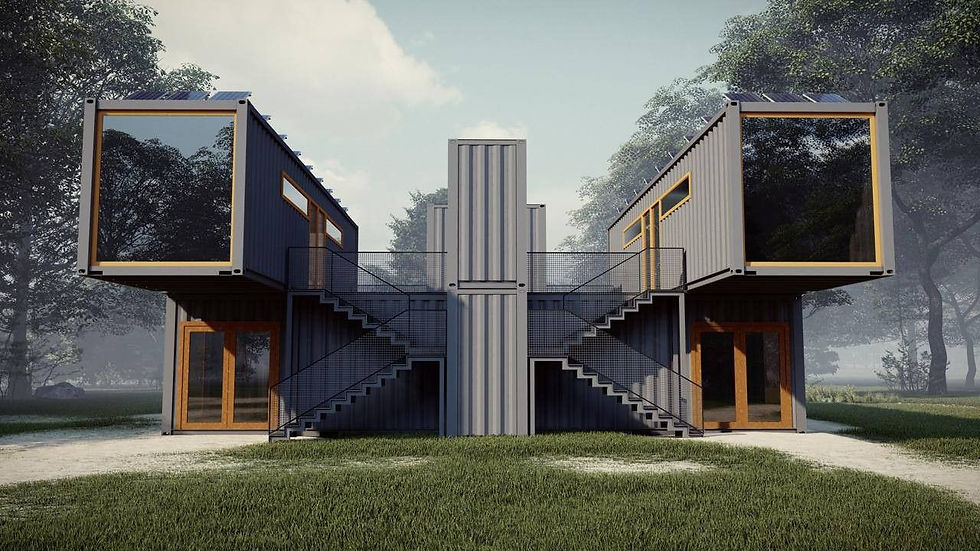
Cargotecture appeals to many people. The cost price of a house made from three forty-foot containers is lower than that of constructing a comparably sized frame building with an area of about 80 square meters. In previous years, the main challenge lay in the initial steps. A container requires the installation of windows and doors, the identification of “wet zones” followed by waterproofing, and it is essential to determine how water supply and drainage will be arranged, as well as to install electrical wiring and a ventilation system. If a person has never dealt with construction in their life, then after purchasing a container, they simply do not know what to do with it. I developed solutions precisely for this initial and most complex stage of work. That is, instead of buying a container, a person purchases a module for their future home, which only needs to be placed on the plot and connected to utilities. The new homeowners then only need to paint the walls in their preferred color and arrange the furniture.
What climate zones are your homes designed for?
I am currently entering the market in the southern states–Florida, North Carolina, South Carolina, and Georgia. But going forward, I plan to develop concepts for states with colder climates. Since I spent many years working in Ukraine and Russia, I have extensive experience with a wide range of thermal insulation materials and technologies, including those used for non-capital structures.
What sets your signature interior concept apart?
I put a strong emphasis on natural materials–stone, wood, and metal. They’re not only visually appealing but also environmentally friendly and make the space feel more comfortable. For example, porcelain tile and laminate flooring are much more practical for everyday living than linoleum. As an additional energy source, I recommend using solar panels, which can be installed either on the property or directly on the home.
How do you see the development of cargotecture in the coming years?
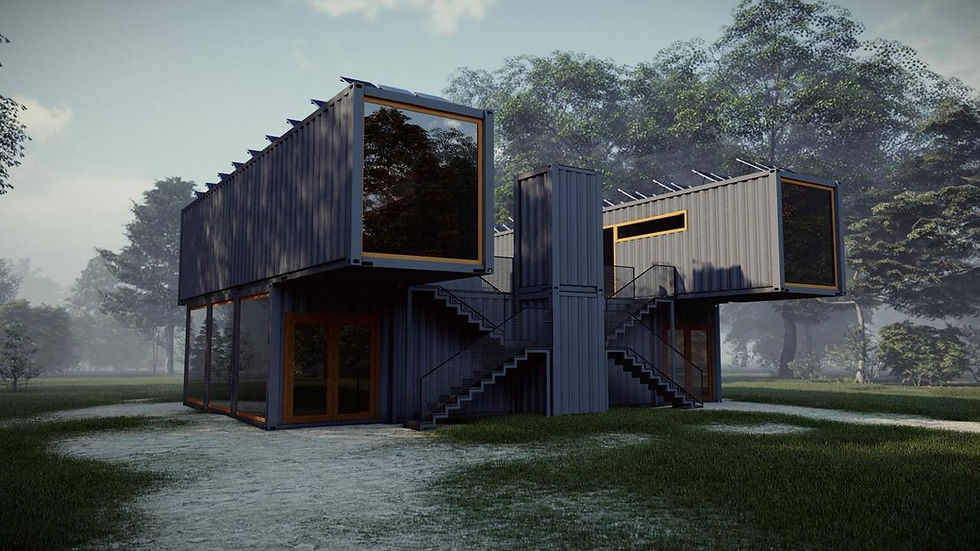
I believe the industry will grow primarily within the modular segment–people will increasingly purchase containers that have already been converted and finished to a pre-move-in stage. In this sense, the SAVA VENTURES INC concept reflects the main direction in which the sector is heading. As for demand, container homes will become a practical entry-level housing option for college graduates and young families.
At the same time, modular structures will start being used much more widely for garages, storage units, cafés, outdoor kitchens, and workshops. Right now, containers for these purposes are typically converted on a one-off basis. I think this slows the industry down because the cost is high when every project has to be created from scratch. I am currently working on a concept for standardized modules for non-residential buildings so that any family living in a single-family home can purchase a turnkey garage or set up a dedicated space for hobbies–without taking on a long-term loan.