5 Tips To Design A Healthy Work-From-Home Space
Even before the pandemic, the work-from-home setup appeared to be part of the long-term outlook of many organizations. In fact, 34% of surveyed business leaders shared their plan to have 50% of their workforce on a remote working set-up by 2020. The pandemic ensured this plan came to life, and it forced many organizations to adapt to the same work setup and highlighted the need for ergonomic spaces and furniture like an ergonomic office chair and standing desk. In Canada, businesses were quick to adapt.
For many employees, this initially seemed like a road towards achieving work-life balance. After all, being able to be with family while working seems to be the ideal working set-up, especially for parents or for people who are taking care of family members. However, many employees who shifted to working from home soon recognized its own challenges, from scheduling issues to the lack of the correct equipment like a sit-stand desk.
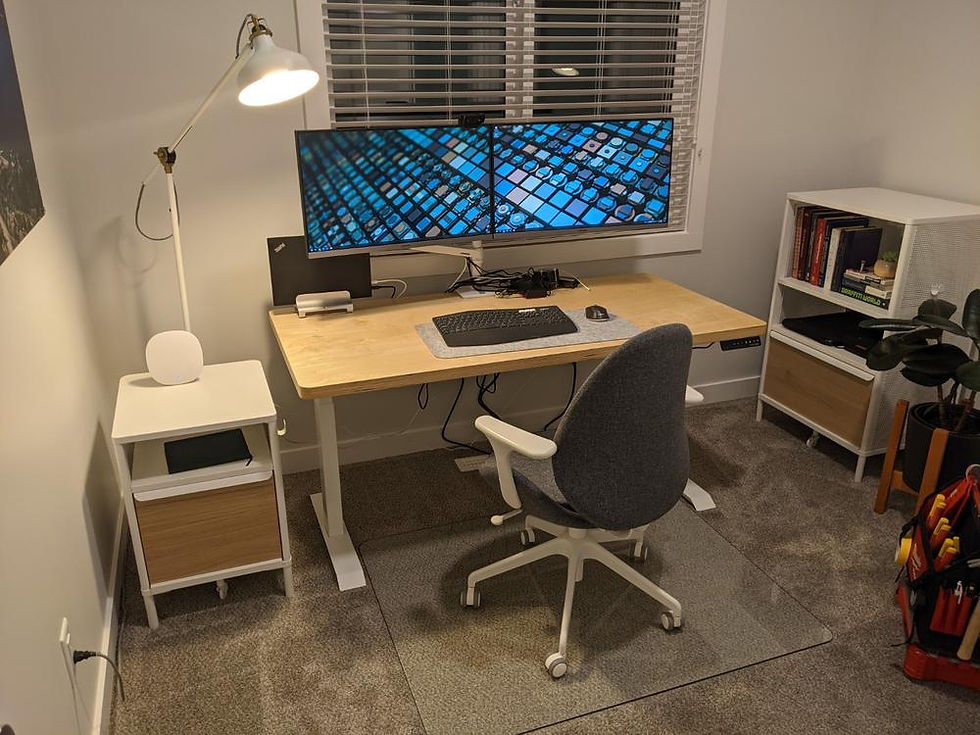
The lines between personal and professional life began to blur. Employees had to deal with distractions they wouldn’t have otherwise experienced in a normal office. Even worse, many had to make do with poor working conditions at home, leading to problems such as neck or back pain. Workstation setup appears to be one of the most common challenges of people working from home, with many complaining their workstation isn’t comfortable enough for work.
Ergonomics at Home
Many organizations have started to focus on ergonomics in recent years, recognizing the role it plays in keeping employees healthy and productive. However, with the work-from-home setup in place, employee wellbeing entails that we think of ergonomics in terms of individual unique needs—each workstation at home sufficiently designed to help every employee work to their optimum capability.
“We’re looking at ergonomics not only as a general concept, but piece by piece,” shares Andy Hsu, co-founder of the Canadian ergonomic furniture company MotionGrey. “And the question we ask ourselves is—what are the small pieces that make up an ergonomic workstation?”
How to Create an Ergonomic Space: Top 5 Elements to Check in Your Workspace
Ergonomics is all about designing a space that is safe, comfortable, and conducive to the work a person does, and this is achieved with a combination of tangible and intangible elements.
This builds the foundation of any workstation. This is where most of the work is done, and it houses all the equipment you use on a day-to-day basis. The question to ask is this—is your office desk positioned at the correct height? Is it capable of holding the weight of all your work equipment? Is it designed to keep you moving, not restricting movement in your space?
Today’s traditional office desks are slowly being replaced by standing desks, which can move up and down to match your sitting and standing height. A standing desk is an adjustable desk that is easily operated by a one-touch keypad, and they allow users to easily shift from sitting to standing as they work, helping them move more during the day.
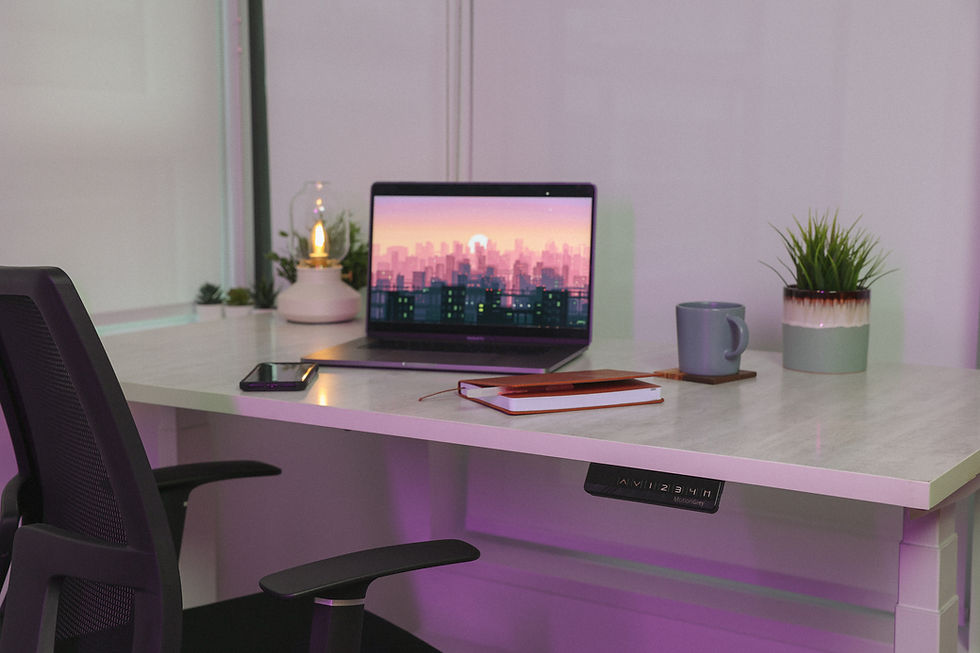
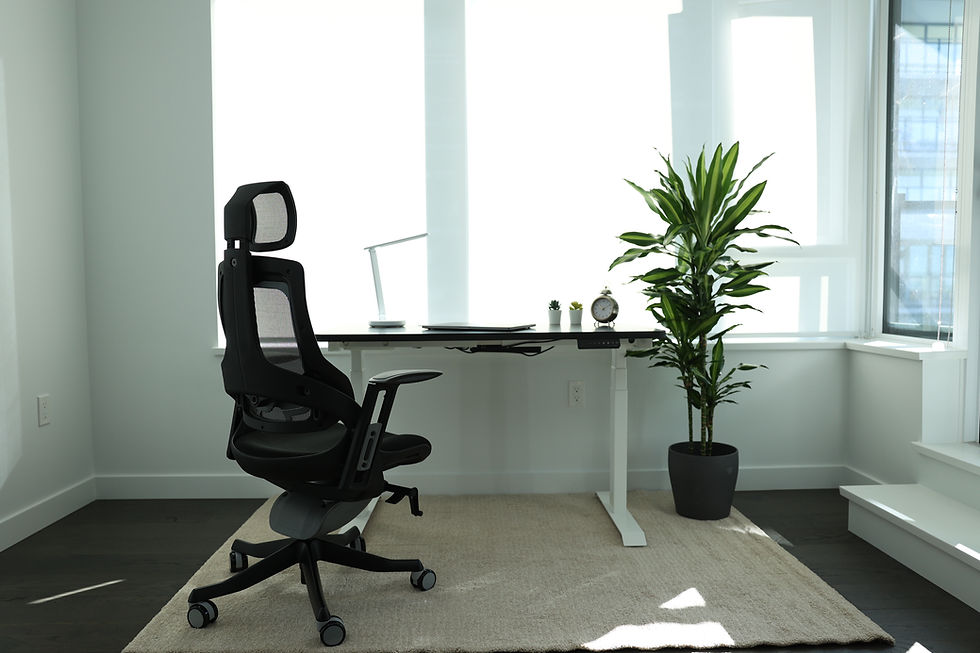
Next to the desk, the office chair determines the overall work-from-home experience of an individual. Does the chair offer complete support to the back, neck, head, arms, and legs? Does it allow complete adjustment of the chair height and the recline angle? Is it comfortable to use and does not restrict movement?
Ergonomic chairs have complete adjustability features, allowing users to freely move in their seat whether to work or to rest.
Monitor Placement
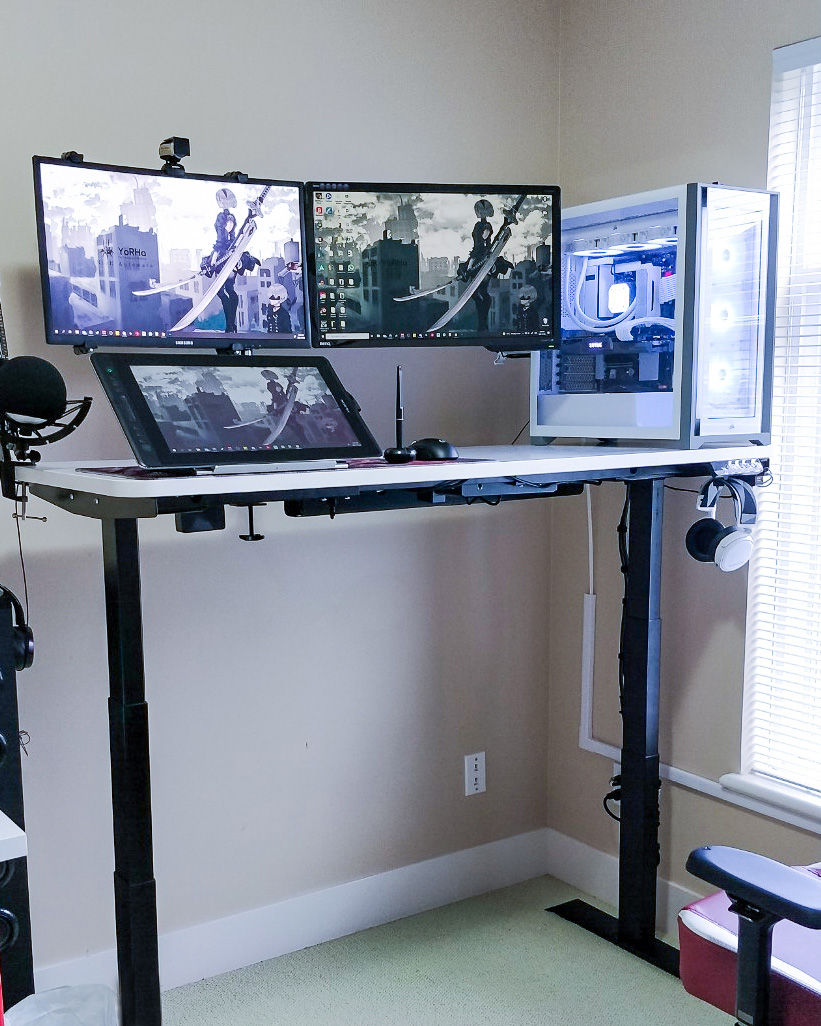
Your monitor height and monitor angle can significantly impact your energy and wellbeing at the end of a long day. A poorly positioned monitor can cause hunching and straining, which can lead to pain on your upper back and neck. It can also cause unnecessary strain to your eyes, something that may worsen over time if not properly addressed.
Apart from having the right desk, a set of monitor arms can help you easily adjust your monitors depending on your activity and need. These arms can be easily installed on the desk with no serious mounting process required.
Lighting and Ventilation
How much natural lighting do you get in your workspace? And if there is no natural light available, is your artificial light sufficient? Is your space too cold? Too warm? These are questions that you need to answer—and address, if need be. Incorrect lighting and temperature in your space can cause discomfort and distractions. They can determine your level of energy at the end of the day, as well as your productivity.
Getting some additional lighting source and adjusting your temperature may be all you need to create a cozy and conducive space.
Noise Cancellation
Noise appears to be one of the leading challenges people encounter when working from home. From noise caused by the television in the other room or by construction going on in the neighborhood, these types of distractions can get in the way of focus and productivity.
And while soundproofing your room might seem like the best solution, it can be quite costly to do. One alternative to try would be a set of high-quality earphones with noise-cancelling property so you can work in peace no matter how noisy your environment gets.
Creating an ergonomic space may initially seem daunting, but it can be done little by little. You can start by replacing one furniture and equipment at a time until you have upgraded your space completely.
Harnessing the Power of Movement in Your Space
A big part of ergonomics is keeping the body healthy through natural movement. Whether it’s a standing desk you’re adding to your space or an adjustable ergonomic chair, these are all designed to keep your muscles active and engaged in their natural state.
“It’s all about the science of natural movement,” says MotionGrey Founder Alex. “The goal is to keep people moving enough, which is a challenge in today’s digital workplaces. We at MotionGrey hope that the ergonomic solutions we offer will provide people with easy alternatives so they can move more, keep a good posture while working, and stay healthy.”
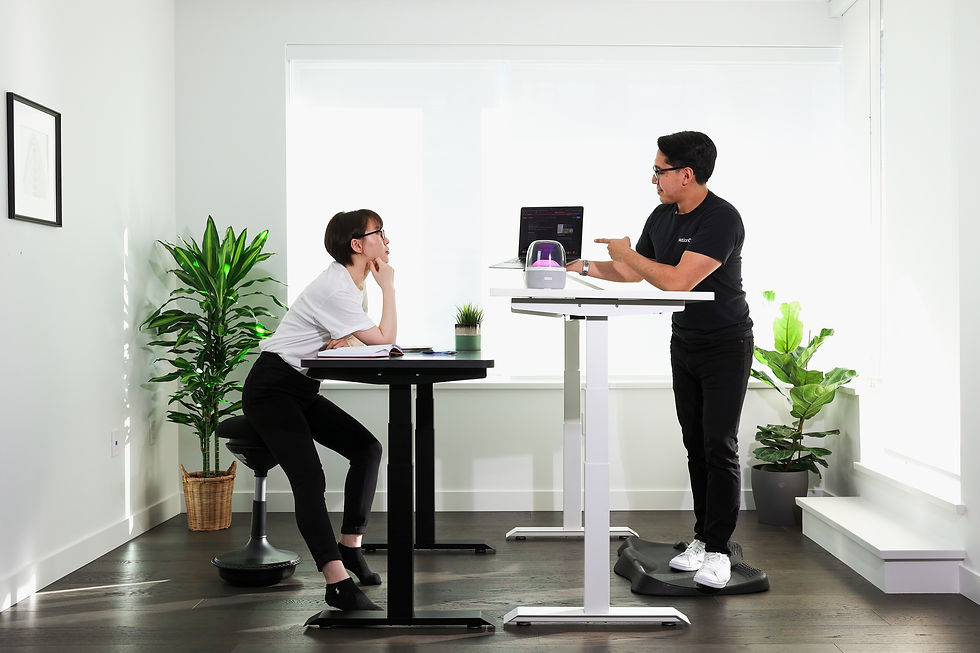
One secret is to be intentional when it comes to movement—find opportunities to move throughout the day, even if it’s as simple as walking to the water cooler every hour or standing when you take a call.
Another secret is to make it easy and natural, which is what solutions like standing desks and ergonomic office chairs help with. By making it easy to alternate between sitting and standing while working, it’s also easy to incorporate this practice in your day-to-day schedule and make it a habit.
What ergonomic elements do you need in your work-from-home space to make it a comfortable and healthy space? Even more important, what habits do you need to develop to live a healthier work life? Do you need to stand more? Do you need to invest in new equipment like a sit stand desk? In Canada, you’ll never run out of ergonomic options.
If you’re looking for ergonomic solutions for your office or work-from-home space, MotionGrey can help you. For years now, we have been helping organizations and individuals design a healthy ergonomic space to help them live their best life. You can check out what we do on our website or our Instagram page.