Reclaiming Migration from Crisis to Systemic Challenge
Written by Mark Durieux, Sociologist and Educator
Mark Durieux is a sociologist with over two decades of experience as a university instructor. Lead co‑author of Social Entrepreneurship for Dummies, he lectures, researches, writes, and publishes in environmental, economic, urban, and public sociology as well as research methods.

Mark Durieux is a sociologist whose research and writing focuses on popularizing and democratizing sociological imagination as true compassion. Here Mark examines global migration patterns, political economy, and social justice with an eye to exploring the intersection of individual lives and the structural forces shaping migration today.
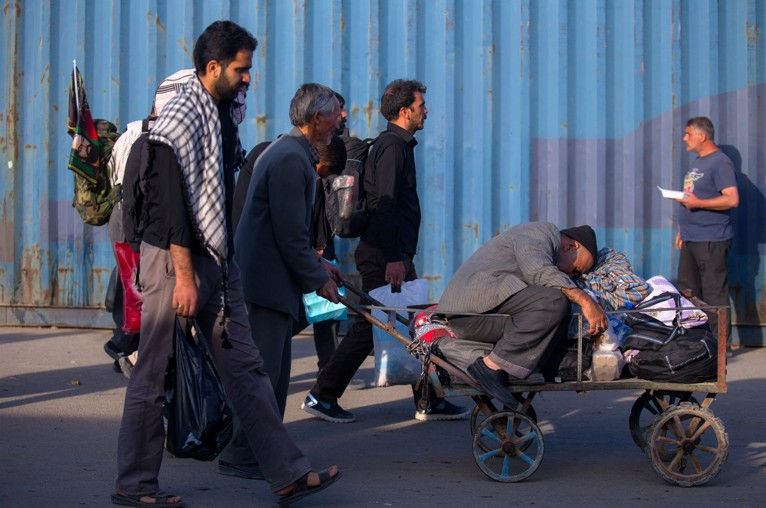
Migration is often framed as a "crisis," a sudden, overwhelming problem demanding border enforcement and emergency responses. Yet this framing obscures a more complex and consequential reality. The movement of people across borders is not an anomaly. It is a reflection of deep, intertwined historical, economic, political, and ecological forces that have been building for generations. To understand migration meaningfully, we must connect the individual stories of those who move with the broader social structures that shape their choices and constrain their futures.
Drawing on C. Wright Mills' concept of the sociological imagination, this article moves beyond surface-level narratives of migration as personal tragedy or security threat. It explores how global inequalities, historical legacies, and power dynamics compel millions to leave their homes, and invites us to rethink migration not as a crisis to be managed but as a systemic challenge rooted in the architecture of our global society.
From personal troubles to public issues
Mills famously described the sociological imagination as the capacity to link "personal troubles" with "public issues." The agonizing decision of an individual to migrate, fleeing violence, poverty, or environmental collapse, is not simply a private misfortune. It is embedded in larger systems of economic exploitation, political intervention, and ecological degradation. When we fail to make this connection, we reduce a structural phenomenon to an individual failing, and our policy responses follow suit. Walls, detention centers, and restrictive laws address symptoms while leaving root causes entirely intact.
The paradox is that the very nations most vocal about managing migration are often those whose historical and ongoing policies have contributed most to the conditions that produce it. Recognizing this is not an exercise in blame. It is a prerequisite for effective, humane, and durable solutions.
The architecture of displacement
Understanding migration requires a nuanced examination of the structural conditions and historical processes that generate displacement. These forces are complex and deeply interrelated.
Global economic inequalities and neocolonial legacies form the most enduring layer. Many countries in the Global South remain economically dependent on wealthier nations, serving as sources of cheap labor and raw materials within a global capitalist system that Immanuel Wallerstein's world-systems theory describes as structurally unequal.
International financial institutions such as the IMF and World Bank have frequently imposed austerity measures that dismantle social safety nets and privatize public services, undermining local economies rather than strengthening them. In Central America, for example, decades of U.S. intervention and the economic disruptions of trade agreements like NAFTA displaced local farmers and fueled migration northward, not as a spontaneous choice but as a rational response to structural collapse.
Political instability is another powerful driver, though it rarely emerges in isolation. Authoritarianism, violent conflict, and governance failures are frequently the downstream consequences of external geopolitical interests, including Cold War proxy wars, Western-backed coups, and ongoing military interventions that prioritized resource access or strategic advantage over local sovereignty. The resulting power vacuums and human rights abuses leave populations with few options beyond flight.
Climate change adds an increasingly urgent dimension. Environmental degradation disproportionately impacts regions least responsible for global emissions. Droughts, floods, and extreme weather events destroy livelihoods and render land uninhabitable, compounding existing vulnerabilities in communities already weakened by poverty and conflict. This is not merely an environmental problem. It is a climate justice issue where those who contributed least to the crisis bear its heaviest burden.
Transnational criminal networks thrive in precisely these conditions. In regions weakened by economic hardship and fragile governance, drug cartels, human traffickers, and armed groups exploit vulnerable populations, making daily life untenable. This violence is entangled with global illicit markets and the demand for goods and services in wealthier countries, a reminder that local conditions and global systems are never truly separate.
Theoretical lenses for a deeper understanding
Several sociological frameworks help illuminate what the "crisis" framing conceals. World-systems theory situates migration within a capitalist world economy divided into core, semi-periphery, and periphery nations, where migration flows reflect the economic dependencies and labor demands embedded in this system. Dependency theory extends this by emphasizing that underdevelopment is not a product of internal deficiencies but of historical and ongoing economic subordination.
Kimberlé Crenshaw's concept of intersectionality adds essential nuance. Overlapping identities such as race, class, gender, and nationality shape migrants' experiences, vulnerabilities, and motivations in ways that a single-axis analysis cannot capture. Women, LGBTQ+ individuals, and racialized minorities face compounded risks throughout the migration journey and upon arrival. Social reproduction theory, meanwhile, highlights the essential but often invisible labor sustaining communities. When economic or political pressures disrupt these foundations, social disintegration and migration often follow.
Together, these frameworks challenge us to see migration not as an aberration but as a patterned response to structural conditions, one that demands structural solutions.
Recognizing migrant agency
Migrants are too often portrayed solely as victims or threats. This overlooks their resilience, resourcefulness, and active contributions. Migrants send remittances that are vital to home economies, build transnational networks that connect communities across borders, and contribute culturally and economically to destination societies in ways that enrich rather than diminish them. Community organizations, mutual aid groups, and advocacy networks demonstrate migrants' capacity for self-organization and social change. Recognizing this agency does not minimize the structural forces at play. It insists on a fuller, more honest account of who migrants are and what they bring.
Toward equitable solutions
Addressing migration's root causes requires systemic change across multiple levels. At the global economic level, this means reforming trade policies to empower local producers, restructuring debt burdens, and transforming international financial institutions to prioritize sustainable development over extraction. On climate, industrialized nations must take meaningful responsibility through investment in adaptation, mitigation, and reparations for vulnerable countries. Diplomatically, the emphasis must shift toward conflict resolution and local peace-building, with a critical examination of the role that arms sales and military aid play in perpetuating the instability that drives displacement.
At the level of policy and law, developing humane, rights-based immigration frameworks means acknowledging human mobility as a historical constant and a fundamental dimension of human experience, not a problem to be contained. In origin countries, investing in education, healthcare, and social infrastructure builds resilient communities that make migration a genuine choice rather than a desperate necessity.
Questions worth sitting with
Who benefits from the global economic and political arrangements that produce migration pressures? How do our own consumption patterns and national policies contribute to the conditions compelling others to move? In what ways have historical events such as colonialism, Cold War interventions, and unequal trade shaped the current relationship between sending and receiving nations? What would a global system look like where migration is a choice, not a necessity born of desperation?
These are not rhetorical questions. They are the starting point for any serious engagement with one of the defining social phenomena of our time.
Conclusion
The sociological imagination reveals migration as a mirror reflecting profound structural inequalities and historical legacies. It challenges us to look beyond borders and emergency framings to the interconnected systems that shape human mobility. True solutions require dismantling the invisible architectures of injustice that span continents and generations.
This is not solely a policy challenge. It is a call to reimagine our shared humanity and our collective responsibility to one another. By embracing this perspective, we move toward a world where migration is understood not as a problem to contain but as a dynamic, complex process, one that, when addressed with honesty and structural imagination, can lead to more just and inclusive societies for all.
This article invites readers to reconsider migration through a sociological lens, fostering insight, empathy, and a commitment to structural change.
Mark Durieux, Sociologist and Educator
Mark Durieux is the developer of the increasingly popular Generative AI app, The Sociological Imagination, and the lead co‑author of Social Entrepreneurship For Dummies. He has researched and written extensively on introductory, environmental, economic, urban, and public sociology, as well as on research methods. Mark works with communities and organizations in Canada and abroad to advance social entrepreneurship, equity, and democratic engagement. His mission is to democratize sociological knowledge, thereby inviting the public into critical, hopeful conversations about how society can change for the better.