5 Effective Ways To Maximise Your Performance
Written by: Tomas Svitorka, Executive Contributor
Executive Contributors at Brainz Magazine are handpicked and invited to contribute because of their knowledge and valuable insight within their area of expertise.

If you're an ambitious and driven individual, you surely want to maximise your personal performance, whether it's at work, in the gym, or with your personal habits.
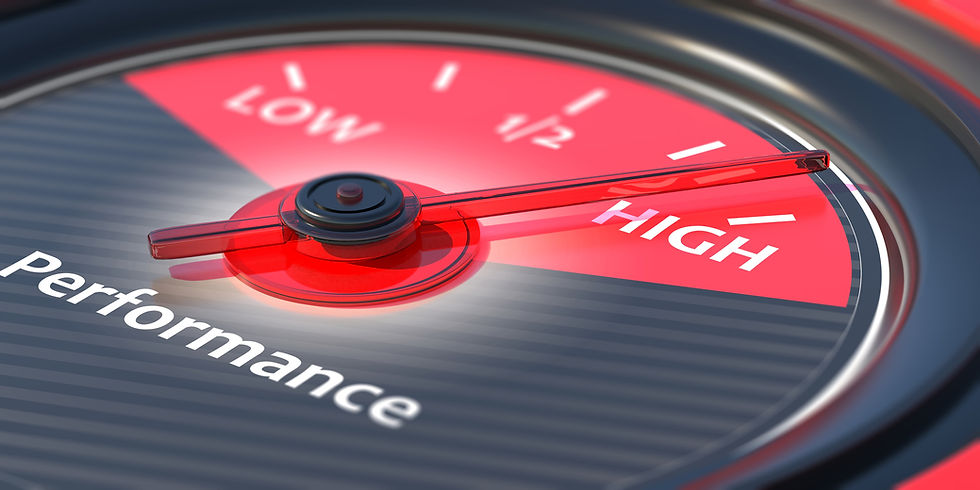
I assume you're already well versed in setting goals and milestones and have a good level of dedication and discipline. In this article, I want to share more advanced methods and tips you haven't heard 100x already.
With that said, you'll only benefit from them if you apply and practice them. Knowledge is worthless unless it's implemented.
1. Save Your Brain Power
Every day, you have a limited amount of cognitive power. Your brain simply gets tired of all the thinking and decision-making you do. To maximise your performance, you must "spend" your cognitive power on valuable tasks and move the needle of your results.
People often underestimate how tiring it is to spend time on irrelevant or low-value decisions, such as what to eat, what to wear, what others think, etc. If you study the top performers in the world, whether athletes, CEOs, or politicians, they outsource or pre-decide all such small decisions.
Albert Einstein and Steve Jobs wore the same clothes, so they didn't need to think about it.
Athletes have pre-determined meal plans, so they don't need to think about it.
Automate, pre-decide, or outsource as many of such small daily decisions. You'll be amazed how much headspace it frees up.
2. Learn to Control Your Emotions
Emotions are a double-edged sword. Useful emotions can push you forward and make you more driven, excited, and determined. However, detrimental emotions will mess with your head and focus and slow your progress.
Many people don't realise that we don't "have" emotions. We "do" emotions.
In other words, in most situations, we make ourselves feel the way we feel.
Our emotions are our body's reactions to what we focus on, what we think about, and how we interpret our experiences and the world around us.
If you're sceptical about this, next time you get angry, annoyed, happy, or excited, reflect on what you were thinking and saying to yourself in the moments leading to that emotional experience. You'll be able to see how you made yourself feel that way.
That said, practice self-awareness, particularly when experiencing stronger emotions, to learn how you're making yourself feel them.
Then, with that self-awareness and knowledge, you'll be able to either stop yourself from making yourself feel the detrimental emotions and replicate the thoughts, focus, and self-talk to trigger more beneficial emotions.
Both will help you perform better.
3. Practice Deep Work
You perform best when you're in the flow and fully immersed in your task.
Your brain operates on different frequencies (known as brain waves) during different activities. That is impossible if you keep switching tasks OR even jump on your thoughts from one topic to another. It takes 10-20 minutes to get truly into the zone.
For example, if you've tried meditation, you know it takes you a few minutes to get into it and enter deeper states of meditation. During that time, your brain is slowing down the frequency in which the neurons communicate.
In the same way, your brain needs time to "tune in" to certain types of tasks to work effectively. Problem-solving and executive tasks are very different from creative tasks.
Therefore, multitasking is detrimental to your performance, EVEN IF it may feel productive.
Allow your brain to dive deep into the task you're working on and see how it boosts your performance.
4. Get Coaches and Mentors
No single high performer you look up to or admire achieved their level on their own. They all had coaches, mentors, and guides who helped them grow faster, discover and correct their shortcomings and blindspots, and maximise their strengths.
As a high performer, you're competing with your competitors. Time is one of your most highly valued assets. Therefore, working with a coach or a mentor who shares their knowledge and expertise, helps you improve faster, and will push and encourage you when you feel like slowing down or giving up is one of the biggest advantages you can have over your competitors (and time).
5. Understand and accept that high performance includes suffering
We're not meant to operate at our highest level. We, as living creatures, have evolved to be efficient, which means as comfortable as possible with the least amount of effort and risk.
That is not high performance.
Therefore, when you're reaching new heights in your performance, you're very much out of your comfort zone and equilibrium. This is why you grow. That's why you're here.
This comes with discomfort, pain, resistance, tiredness, fear, doubt, and other ways your brain and body are trying to tell you to return to your comfort zone.
High performance is not easy or comfortable.
But, high performance is incredibly fulfilling and rewarding ‒ because it's hard.
The more firmly and wholeheartedly you accept this, the easier and more fulfilling the journey is going to be. Only very few can say they have performed at their highest level.
I hope these tips gave you some new ideas and inspiration.
Read more from Tomas!
Tomas Svitorka, Executive Contributor Brainz Magazine
Tomas is a peak performance coach, business mentor, speaker and award-winning entrepreneur. He is the founder of the OK is NOT enough coaching method and the Unbreakable Self-Discipline Bootcamp. He’s highly passionate about helping ambitious professionals and entrepreneurs achieve the highest level of personal and professional performance.
Tomas has built his reputation through coaching hundreds of clients, including industry leaders, billionaire entrepreneurs, Silicon Valley CEOs, rising stars in global corporations and influencers at the top of their game.
Tomas has been interviewed in dozens of podcasts, including The Unconventionalists and has been featured in various publications such as The Guardian, GQ, Virgin Media, Coach Magazine, and Vice.