Silver & Gold and the Alchemy of Human Experience in Homeopathy
Updated: Apr 9
Written by Jessica Almonte, The Seaweed Homeopath
Jessica Almonte, The Seaweed Homeopath, is a homeschooling mother and practitioner who combines her love of the ocean with expertise in homeopathy, kinesiology and seaweed therapeutics. Living by the sea on Vancouver Island, she forages seaweed, cares for patients at Intuitive Movement Clinic, and advocates for the healing potential of seaweed.

Throughout human history, silver and gold have carried meaning far beyond their material value. They have symbolized wealth and power, purity and corruption, the moon and the sun, the feminine and the masculine, intuition and authority.
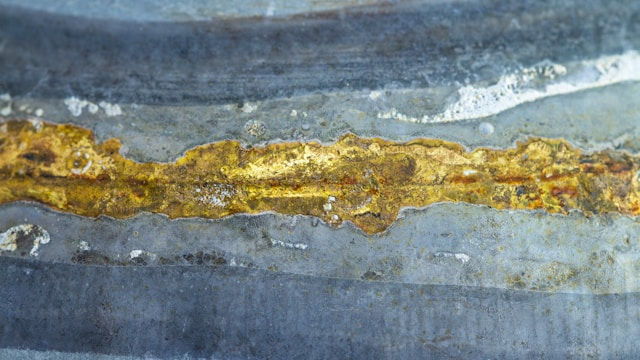
In homeopathy, these metals take on an even deeper significance. Through potentization, substances once prized for their physical brilliance are transformed into remedies that illuminate our fears, our identity, our despair, and our potential for transformation. Silver and gold are not only substances within the materia medica, but archetypes woven into the fabric of human experience.
This transformation is rooted in the work of Samuel Hahnemann, who observed that substances capable of producing symptoms in a healthy person could, in highly diluted form, help resolve similar symptoms in someone who is unwell. This principle, often summarized as “like cures like,” forms the foundation of homeopathy. Rather than suppressing symptoms, the remedy mirrors the individual’s experience, gently stimulating the body’s ability to rebalance and heal. In his Organon of Medicine, Hahnemann further described how these potentized substances act not on the material body alone, but on the vital force, influencing the dynamic state of the individual.
In this way, gold and silver are transformed from symbols of external value into remedies that speak directly to internal imbalance.
Gold (aurum metallicum)
The weight of purpose
Gold has long been associated with the sun, kingship, and divine authority. Ancient civilizations adorned their rulers with gold not merely for beauty, but to reflect a perceived connection to something higher. This symbolism is mirrored very clearly in the remedy Aurum Metallicum.
Aurum is a remedy that acts deeply on the mind, bones, and glands, often presenting with profound emotional suffering alongside physical pathology, particularly in degenerative or long-standing conditions.[1] What stands out most, however, is not simply pathology, but the internal experience of the person. Here, responsibility turns inward and becomes self-condemnation.
Boericke describes a picture of feeling utter worthlessness, hopeless despair, and a sense of failure so deep it may lead to suicidal thoughts.[1] Boger expands this further, describing a melancholic state marked by anguish, restlessness, and even a longing for death, often tied to disappointment or a loss of purpose.[2] In practice, this often presents more quietly than expected. It may look like someone who has lost motivation, who feels there is no point in trying, or who describes their own mind as something that turns against them, pulling them back into dark or painful experiences.
There is often a history of carrying a great deal. Many individuals needing Aurum have lived through trauma, loss, or prolonged periods of responsibility without adequate support. There is a strong moral center, a sense of being dependable or needing to be dependable, and when that identity fractures, the collapse is not superficial. It is existential.
Mary Tyler often speaks to the nobility within remedies, and Aurum embodies this clearly. These are individuals with depth, sincerity, and a strong inner compass. Sankaran describes this as responsibility turning into failure, where the internal dialogue becomes harsh and absolute.[3] The person feels they have not fulfilled their role, and from there, their sense of self begins to erode.
The body reflects the state
The physical body reflects this experience with remarkable consistency. There is often a sensation of pressure or constriction. The head may feel heavy, as though weighed down, interfering with clarity and focus. The chest can feel tight, sometimes accompanied by palpitations or a sense of emotional heaviness. Coldness is common, particularly in the extremities, alongside poor circulation and easy bruising. Symptoms such as tinnitus, vertigo, and hair loss often appear in the context of prolonged emotional strain.[1]
Aurum has a well-known affinity for the cardiovascular system, glands, and bones, particularly in conditions involving degeneration or deep pathology.[1]
Modalities further reflect this inward, heavy pattern. Symptoms tend to worsen at night, especially from sunset to sunrise, and from cold. They are often relieved by warmth and gentle movement, suggesting that even small amounts of activation can interrupt the stagnation.[1]
Clinical reflection
In my homeopathic practice, what stands out with Aurum is not just the depth of the experience, but the shift that can happen when the right remedy is given.
In one case, the person came in living with a heaviness that was difficult to ignore. There was a sense that life had lost its meaning, accompanied by low motivation and a quiet but persistent anxiety. She described a tightness around her head, almost like a pressure or weight, along with a general feeling of heaviness that affected both her thinking and her energy. Following a thorough case-taking process and remedy differentiation, Aurum was selected.
After taking Aurum, the change was not dramatic in the way people sometimes expect, but it was clear. She began to feel more hopeful. There was more motivation to engage with daily life, even in small ways. The tightness around her head lifted, and the heaviness she had been experiencing began to dissolve. Her anxiety softened, becoming less constant and less overwhelming.
The archetype of gold
Gold, in the human psyche, represents the ideal self, the need for purpose, recognition, and moral integrity. When balanced, these individuals can be leaders, visionaries, and deeply reliable people. When imbalanced, these same qualities collapse inward. The person becomes both a judge and critic of themselves. The fall is not from external status, but from an internal standard that feels impossible to meet.
Silver: Argentum Nitricum
The instability of perception
If gold is the sun, silver is the moon. It reflects rather than generates, and in doing so, becomes sensitive, perceptive, and easily influenced.
Where Aurum is heavy and contracting, Argentum is expansive and unstable. Boericke describes Argentum Nitricum as having marked effects on the nervous system, producing anxiety, impulsiveness, and lack of coordination between thought and action.[1] Kent emphasizes the anticipatory nature of this anxiety, where symptoms arise not from present circumstances, but from what might happen.[4]
Argentum individuals are often reacting to imagined outcomes with the same intensity as if they were real. There is frequently a paradox in this remedy. The mind is quick, perceptive, often creative and expressive, yet unable to stabilize itself. Thoughts move rapidly. Time feels distorted. There is a sense of urgency even when none exists.
When the body follows the mind
Clinically, this presents as anticipatory anxiety, impulsiveness, and a fear of losing control. There may be fears of crowds, enclosed spaces, or even an impulse to jump when looking down from heights.[4] The experience is not simply fear, but difficulty staying internally contained.
The physical body mirrors this lack of containment. The digestive system is particularly affected, with diarrhea, bloating, and gas appearing in anticipation of events. Cravings for sweets are common and often aggravate symptoms. There may also be trembling, weakness, and vertigo, particularly when navigating space or looking downward.[1]
Boericke notes this strong connection between the nervous system and these physical expressions. Modalities again reflect the underlying pattern. Symptoms are worse from heat, crowds, sweets, and anticipation, and better in open air or spacious environments.[1] There is a clear need for expansion, for room to breathe.
From a Sankaran perspective, Argentum reflects a state of loss of control and structure, where the system cannot regulate itself.[3] Mary Tyler might describe this as sensitivity without grounding, a person who perceives deeply but lacks the stability to process and integrate those perceptions.
Clinical reflection
In practice, Argentum Nitricum presents very differently from Aurum. Where Aurum carries weight, Argentum carries movement that cannot settle.
One of the clearest patterns I see is a person who has difficulty existing in the present moment. There is a constant sense of urgency, as though they are always slightly ahead of themselves. They describe feeling hurried, anxious, and restless, with a persistent pressure to complete tasks within a perceived timeframe, yet never feeling fully accomplished.[5] [6]
This often creates what has been described as an “atmosphere of turbulence,” not only within themselves, but in the space around them.[5] Their thoughts can become intrusive and overwhelming, looping in a way that drives them to keep moving, both mentally and physically. Mary Tyler captures this beautifully, describing a state where the individual is tormented by thoughts until they feel compelled to walk quickly, almost to escape them, continuing until they are physically exhausted.[6]
There is also a noticeable rigidity beneath the restlessness. Despite the hurried nature of the state, these individuals often try to maintain control through fixed ideas, routines, or specific ways of doing things. When this sense of control is challenged, anxiety increases, along with irritability and irrational fears.[4] Additional pressure tends to amplify the entire picture, leading to more agitation and less stability.
Physically, this internal state often manifests through the nervous and digestive systems, but it can also appear in more subtle expressions of tension and resistance within the body, including throat constriction, nasal symptoms, and digestive irregularities.[7] [8]
What becomes clear is that Argentum is not simply anxiety. It is a system that cannot settle, a mind that moves too quickly, and an ongoing attempt to regain control in the midst of internal instability.
The archetype of silver
Silver, in the human experience, represents the reflective mind, sensitivity to environment, and the tension between intuition and instability. When imbalanced, this becomes overthinking,
anxiety about the future, and a sense of fragmentation. It is the experience of being too open, too perceptive, and too aware without enough grounding.
Gold and silver across humanity
Across cultures, gold and silver are rarely separated. They appear together in currency, religious artifacts, mythology through sun and moon symbolism, and in alchemy, where the transformation of base metals into gold represents spiritual evolution.
In modern times, gold and silver continue to reflect these same themes, even within financial systems. Gold is often seen as a store of value, something stable, enduring, and trusted in times of uncertainty. It is turned to when there is fear of loss, inflation, or instability. Silver, while still valuable, tends to move more quickly and unpredictably, reflecting shifts in industry, demand, and speculation.
There is something striking in this parallel. Gold holds steady, carrying weight and long-term value, much like the Aurum state, rooted in identity, purpose, and responsibility, and often expressed as the weight of the past or despair when something has been lost or failed. Silver fluctuates, responding rapidly to external forces, much like the Argentum state, where perception, sensitivity, and anticipation dominate, often expressed as anxiety about what might happen next.
Together, they map an axis within human suffering. One is rooted in the past and what cannot be repaired. The other is oriented toward the future and what cannot be controlled.
Closing reflection
What becomes clear in practice is how common these states are. Most people will recognize moments of both. The weight of responsibility that becomes too heavy to carry. The racing mind that moves faster than the present moment can hold.
Homeopathy offers a way to recognize these patterns not as pathology alone, but as expressions of imbalance that can be gently supported back toward equilibrium. Gold and silver, in this sense, are not just remedies, but reflections of human experience.
Read more from Jessica Almonte
Jessica Almonte, The Seaweed Homeopath
Jessica Almonte founded "The Seaweed Homeopath" out of her passion for the ocean and her desire to create unique, nature-centered healing experiences. As a homeschooling mother, she integrates the nourishment and ancient wisdom of seaweed into both her work and personal life, supporting hormonal balance, digestive health and overall vitality. Based in Sooke, BC, Jessica enjoys snorkelling, harvesting seaweed, teaching cyanotype art and treating patients at Intuitive Movement Clinic. She holds a Homeopathy and Health Sciences Diploma, Bachelor of Science in Kinesiology, Sivananda Yoga Teacher Training, and Seaweed Therapeutics Certification. She presented at the 2025 International Seaweed Symposium on the therapeutic potential of seaweed.
References:
[1] Boericke, W. Pocket Manual of Homeopathic Materia Medica (1901).
[2] Boger, C.M. Synoptic Key of the Materia Medica (1915).
[3] Sankaran, R. The Soul of Remedies / The Sensation Method.
[4] Kent, J.T. Lectures on Homeopathic Materia Medica and Repertory of the Homeopathic Materia Medica.
[5]Gibson, D.M. Studies of Homeopathic Remedies. Beaconsfield Publishers. Hahnemann, S. Organon of Medicine.
[6] Tyler, M.L. Homeopathic Drug Pictures. B. Jain Publishers.
[7] Allen, T.F. Encyclopedia of Pure Materia Medica. B. Jain Publishers
[8] Schroyens, F. The Essential Synthesis. B. Jain Publishers.