

The Future Of Marketing Is Still Human
Brainz Magazine Exclusive Interview
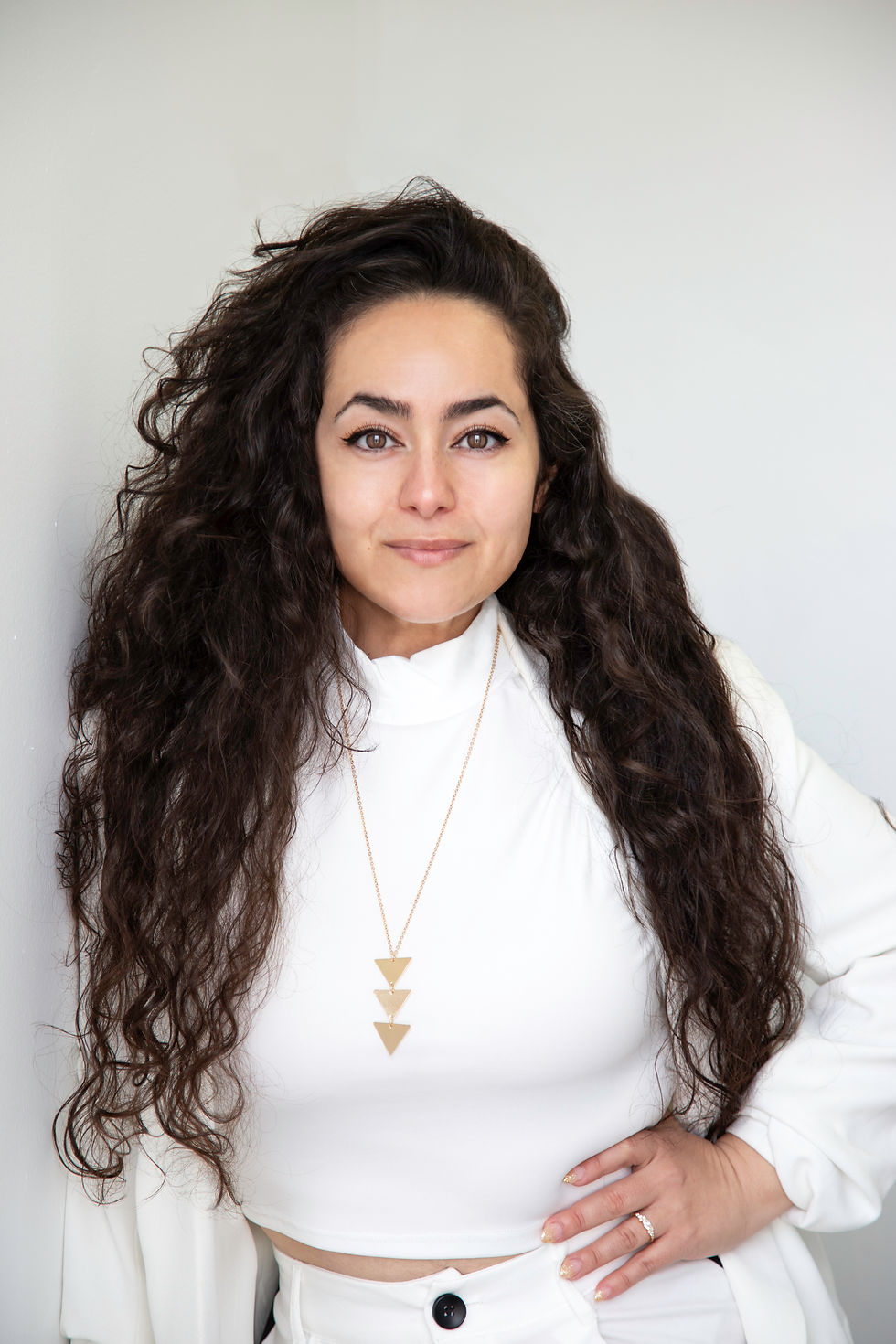
Ina Maria Toncescu is a marketing strategist with over 17 years of experience helping businesses grow with focus, purpose, and measurable results. Across small business, non-profit, and government sectors, she has led transformative marketing strategies, built systems that last, and landed multi-million-dollar deals using the same frameworks she teaches today.
As the founder of noLMIT Marketing, Ina works with clients through corporate marketing training, digital strategy development, website development, search and AI engine optimization, email marketing, and more.
At a time when artificial intelligence, automation, and digital noise dominate business conversations, Toncescu offers a refreshingly grounded perspective. Rather than chasing trends, she advocates for strong marketing foundations, authentic relationships, and systems that create sustainable growth. In this exclusive interview, she shares the lessons that have shaped her career and why the future belongs to businesses that never lose sight of the human connection.
Marketing trends come and go, but you've built your career on the belief that strong foundations always win. Where did that philosophy come from?
Honestly? It comes from years of watching business owners rush straight to the end. The selling. The pitch. The transaction. Or, if you're a non-profit, the ask. That final step gets all the attention, but the most important work is happening in the middle, in the steps most people skip past entirely.
There's also a personal piece to this. I'm a small business owner myself and a non-profit managing director, which means I've seen it all. I've felt those same aches and pains. And I genuinely feel it's my duty as a marketer to advise as many businesses as I can. Small businesses are the backbone of every economy. The stronger they are, the better we all do. So really, supporting them is selfishly in all of our interests. This is just my way of doing it.
"Small businesses are the backbone of every economy. The stronger they are, the better we all do."
You've helped businesses land major opportunities through strategic marketing. Was there a defining moment that changed the way you think about what truly drives growth?
There was. And it shaped everything I've done since.
About 12 years ago, I was hired as an administrator. I had mentioned that my real passion was marketing, so along with the admin work, they handed me all the marketing responsibilities too. Within three months, I had tripled the company's revenue—from $200,000 a year to $630,000.
One day, we sat down to talk about what we were doing differently. And the answer? It wasn't a clever campaign or a flashy ad. It was the systems I had put in place. It was the follow-ups with clients after they took the program. It was the newsletters that kept supporting their growth long after the sale was done. Back then, we would actually tweet responses to clients on Twitter if they were upset that a program started late. And suddenly, we were being shouted out on social media for our customer service.
That was all marketing. Every single move we made. And that realization is what set me on the path I'm on today because, once you understand that marketing is everywhere, you stop chasing tactics and start building businesses that actually grow on purpose.
In an age of AI-generated content and endless noise online, why do you believe authenticity has become a company's greatest competitive advantage?
Because people are exhausted. The digital world was already busy before AI showed up. Businesses were already struggling to maintain real connections with their followers—or even get in front of people in the first place—because everyone was already drowning in the amount of information flooding their feeds.
And in all that overwhelm sits something really important: a craving for the natural. For the unedited. For the behind-the-scenes. For the real. When businesses tap into that craving and simply lead with who they actually are—real, vulnerable, and unpolished—they are giving people exactly what they are looking for in this dense field of copy-and-paste AI content, AI videos, and more. They are also giving their audience a chance to disconnect from the lack of reality, even just for a moment.
We are deeply social animals. We want to connect. We crave community. And the businesses that tap into that opportunity and create spaces for real connection are the ones that will stand out from the crowd. Authenticity isn't just a nice idea anymore. In a world this saturated, it's the thing that actually cuts through.
You've said that "selling doesn't sell—marketing does." What do most business owners misunderstand about that distinction?
They think a direct ask is the strategy. It isn't. A direct ask—the "buy now" moment—only really works in certain environments. An ad placed in the right feed, in front of the right audience, at the right time? Absolutely. But that is not what builds a business. And it is certainly not what creates loyal customers.
What actually sells is everything that happens before that ask. The newsletter that drops into someone's inbox with a useful idea or a behind-the-scenes story and, once in a while, gently reminds them you offer something. The blog post that answers the question they were Googling at 11 p.m. The social post that made them laugh, nod, or feel seen. All of that is marketing. And all of it is quietly doing the heavy lifting.
So by the time someone is ready to buy, they already know you. They already trust you. You don't have to convince them of anything. They are not responding to a sales pitch; they are responding to a relationship you have already built. That is why marketing outperforms selling almost every time. Selling tries to close a stranger. Marketing makes sure there are no strangers left to close.
"Selling tries to close a stranger. Marketing makes sure there are no strangers left to close."
More founders and CEOs are stepping into the spotlight as the face of their brands. Why do you think people are craving that level of visibility and connection?
For the same craving I mentioned earlier. And honestly, the data backs it up in a way that's hard to ignore.
According to the Edelman Trust Barometer study, 82% of people are more likely to trust a company when its senior executives are active on social media. That one statistic alone tells you everything you need to know about where we are right now. People aren't just buying a product or a service anymore. They are investing in a brand, in its values, and in the people behind it.
The rest of the research only reinforces it. Companies with visible founders are generating more revenue. Consumers, especially Millennials, are willing to spend more on brands whose founders share their values. A meaningful portion of a company's actual market value is being tied directly to the CEO's reputation. And in B2B and investor circles, founder visibility has become one of the strongest signals of credibility and trust.
The story underneath all of those numbers is the same. People want to know who's behind the logo. They want a face, a voice, and a point of view. The companies winning right now are the ones whose founders are willing to show up, share the journey, and speak in insights rather than just updates.
But here's the catch: this only works when it's done with intention. Random posting isn't a strategy. Founder visibility has to be deliberate, aligned with the audience you actually want to reach, and grounded in the kind of perspective only you can offer. Done right, it compresses the sales cycle, builds organic loyalty, and creates the kind of inbound interest that paid ads can't manufacture.
Small businesses often feel like they're competing with companies that have bigger budgets and bigger teams. What's your advice for standing out when resources are limited?
Here's something most small business owners don't realize. The bigger companies get, the harder it becomes for them to stay authentic. There are exceptions, but the pattern is consistent. CEOs get busier. The pressure to sell is higher because the cost of investment is higher. The messaging tightens. The personality gets sanded down. And the brand starts to feel corporate in all the ways smaller businesses don't have to.
That is actually your advantage. Yes, resources are limited, but this is exactly why laying foundation systems for your marketing matters so much.
First, stop comparing. You are not a big company yet, so don't try to act like one. Be you. The unpolished, the in-the-moment, the human—that is the thing big brands are paying agencies millions to try and replicate.
Second, build systems that protect your energy. Batch your content for social media on your slowest day of the week. Record enough to keep you motivated, but not so much that you burn out, because if you burn out, none of this is useful. While you're driving, use AI tools like Claude to talk through content ideas out loud. Don't type them—just speak. By the time you get home, you will already have most of the thinking done.
Third, lean into the low-cost, high-impact moves. Comment on other people's posts. Engage with viral or local content. Be visible in the spaces your audience is already in. Send out newsletters that are genuinely helpful and supportive, not promotional. Blog aggressively about your first-hand experiences, and use those blogs to answer the exact questions your clients and potential clients are already searching for because the long game there is being cited by AI when someone else asks the same question.
None of this requires a big budget. It requires showing up, being yourself, and being consistent enough that the work starts to compound. Small businesses don't need to outspend the big players. They need to out-human them.
If you could give every entrepreneur one piece of marketing advice to carry with them over the next decade, what would it be?
Just one? Alright, I'll cheat a little, because mine is really two ideas that only work together.
First, think of your marketing like planting a seed. Patience is everything. You don't put something in the ground and expect a tree the next morning. You wait. You water it. You trust the process. The businesses that succeed long-term are the ones that understand growth takes time and that the work you do today might not pay off until next quarter, next year, or even longer.
Second, that same seed needs constant care. And marketing is no different. This is where I'd point every entrepreneur to the 1% rule from James Clear's Atomic Habits—the idea that tiny, daily 1% improvements compound into massive, exponential success over time. Didn't post today? No problem. Do one tomorrow and put the system in place. Wrote a few blogs you're not entirely happy with? No worries. Do better tomorrow. One percent better in marketing every single day will do wonders for you in a year. That kind of growth requires constant care, attention, and patience.
And the thread that ties all of it together is consistency. I can confidently say that your strategic consistency will pay off for you in this digital world. Not in a week. Not in a month. But it will pay off. The entrepreneurs who win the next decade aren't going to be the ones with the biggest budgets or the flashiest campaigns. They're going to be the ones who kept showing up when nobody was watching and built something real one "1%" at a time.
In an era of algorithms, automation, and relentless trend cycles, Ina Maria Toncescu makes a compelling case for what endures: the fundamentals. Authentic relationships. Strategic consistency. Systems built to last. Her message cuts through the noise with quiet conviction -sustainable growth isn't found in shortcuts or viral moments, but in showing up, serving people well, and building something worth trusting.


