

I Am Not Here to Inspire You
Written by Kelly Gunn, Lifestyle Guide
Kelly Gunn is a cancer survivor, certified personal trainer, and founder of Feinix Haus. A year after her double mastectomy, she competed in two bodybuilding competitions and then built the lifestyle brand she couldn't find anywhere else.

I am not here to inspire you. Which is unfortunate, because that's exactly what people expect from women who survive cancer. We're supposed to talk about resilience and gratitude. We're expected to emerge from catastrophe carrying a lesson for everyone else, proof that hardship can be transformed into hope if we simply choose the right perspective. The script is familiar enough that most people don't even notice it's a script. If I'm honest, it makes me deeply uneasy.
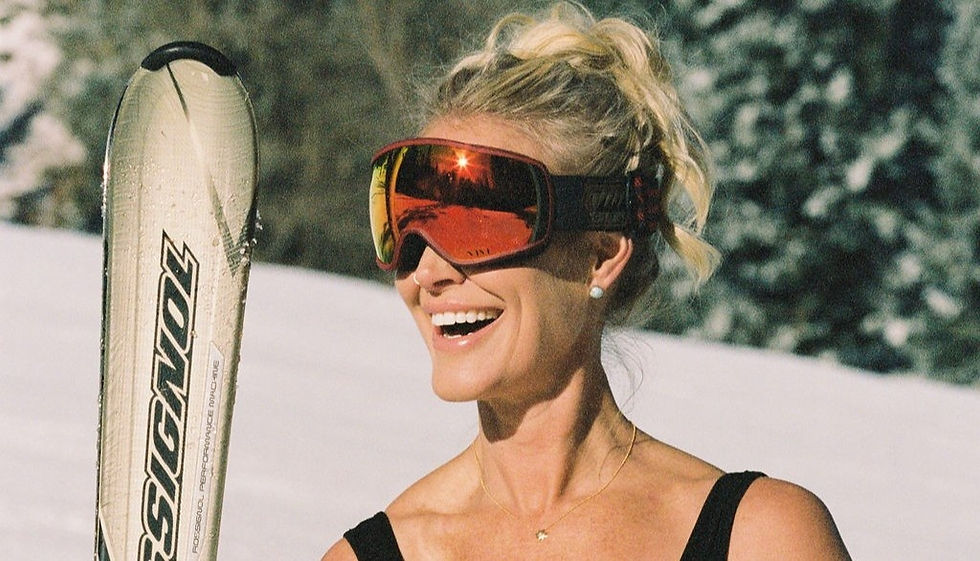
I didn't survive breast cancer so that my life could become evidence for someone else's. I survived because I wanted my own life back. And if my story inspires people, it leaves me with a question I can't stop asking: Why does it take something like cancer to convince us to start living?
Before my diagnosis, I lived the way many people do. I postponed things. I assumed there would be time later to circle back to the parts of myself I kept setting aside. I wasn't consciously wasting my life. I was simply participating in a remarkably common belief: that our lives are renewable. There will be time later. Things will calm down eventually. I'll get to that when the timing is better. Cancer doesn't create urgency. It exposes reality. It shatters the comforting illusion that "later" is guaranteed.
When people hear my story now, they almost always tell me it's inspiring. What they usually mean is that confronting someone else's mortality reminds them of their own. It reminds them of the dream they've delayed, the relationship they've outgrown, the conversation they're avoiding, and the version of themselves they've quietly kept on hold. But that reaction reveals something strange.
Most people already know what they want to change. They know the job that drains them. They know the relationship that no longer fits. They know the creative work they've convinced themselves can wait. They aren't waiting for clarity. They're waiting for permission.
For reasons I still struggle to understand, our culture often grants that permission only after catastrophe. Illness. Loss. Divorce. Near death. A disruption large enough to justify stepping outside the expectations that once shaped your life. Suddenly, people understand. "After everything she's been through, she deserves to live however she wants."
But why wasn't that true before? Why did suffering become the admission ticket to authenticity? I ask myself that question because I lived by the same rules. Cancer didn't make me wiser. It simply removed the illusion that I could afford to wait.
Once the illusion of "later" disappears, you begin noticing something else. You begin noticing the invisible rules. The ones so ordinary they've become almost impossible to see. The blueprint we're handed for what a successful life is supposed to look like. Be agreeable. Be productive. Don't disappoint people. Don't make anyone uncomfortable. Desire the right things. Age the right way. Be grateful. Stay within the lines.
I've never fit comfortably inside that blueprint. Even before cancer, there was a part of me that resisted it. I wanted a life that felt more honest than acceptable, more expansive than predictable. But wanting something different and giving yourself permission to choose it are not the same thing. Like most people, I still negotiated with expectations I never consciously agreed to.
Cancer didn't give me a new identity. It stripped away the need to perform one. The diagnosis didn't make me rebellious. It made authenticity feel far more valuable than approval.
You begin noticing how frequently women, in particular, are praised for accommodating, enduring, and waiting. How easily our own desires are deferred in service of keeping everyone else comfortable. Women are celebrated for endurance long after they should have been celebrated for leaving. Patience becomes virtue. Accommodation becomes maturity. Misalignment becomes something we're expected to tolerate gracefully.
But endurance and autonomy are not the same thing. Endurance preserves the existing structure. Autonomy changes it. The woman who reorganizes her life around her own priorities is often described as selfish, difficult, or unreasonable. Unless she has survived something dramatic. Then those very same choices suddenly become admirable. Isn't that strange?
We seem far more comfortable giving women permission to reclaim their lives after catastrophe than before it. Which brings me back to inspiration. When someone tells me my story inspires them, I don't hear admiration. I hear recognition. I hear someone quietly imagining the parts of their own life they've postponed, wondering what it would take to finally choose differently.
My hope isn't that my story inspires you. My hope is that it makes you question why you needed my story at all. Because maybe you don't need a diagnosis. Maybe you don't need loss. Maybe you don't need the world to hand you permission that was yours all along. I didn't survive cancer so that my life could become evidence for yours. I survived because I wanted my own life back.
If that changes how you see yours, that's your story. This one is mine.
Read more from Kelly Gunn
Kelly Gunn, Lifestyle Guide
Kelly Gunn is a cancer survivor, certified personal trainer, published writer, and founder of Feinix Haus. A year after her double mastectomy, she competed in two bodybuilding competitions. She has been published in Wildfire Magazine, C-Heads Magazine, and on National Cancer Survivors Day. She is building a lifestyle brand and retreat experience for the post-cancer woman the world forgot about. She is not a coach. She is not a therapist. She is the woman who lived in the After and built the room she couldn't find.



