How We Differ In Our Treatment Of Refugees
Updated: May 5, 2022
Written by: Lucia Dore, Executive Contributor
Executive Contributors at Brainz Magazine are handpicked and invited to contribute because of their knowledge and valuable insight within their area of expertise.

Refugees are back in the news. This time it’s not because they are crossing the English Channel from Africa or the Middle East, often exploited by people traffickers, but because of Russia’s invasion of Ukraine. Countries in the West, particularly in Europe, have responded quickly and eagerly to the crisis, finding ways to take in large numbers of refugees. Even a country that has traditionally been against helping refugees, like Poland, is taking a more proactive stance, having taken in nearly 3,000,000 Ukrainian refugees so far.
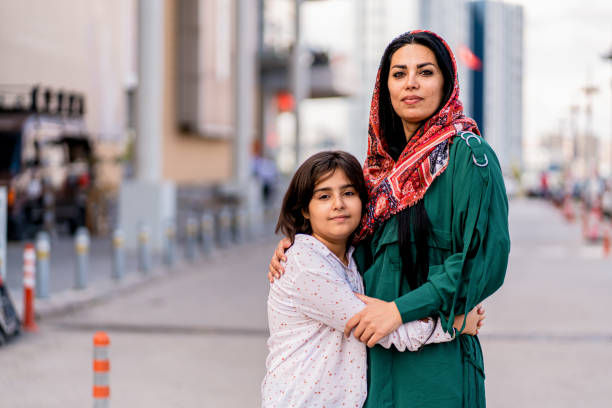
The same cannot be said for refugees from, for example, the Middle East or Africa. And even from Afghanistan. There have also been reports of black people, and students from the Middle East and India, who have been unable to leave Ukraine. Or if they can leave, they have been told to walk rather than to take a train. Often, these groups of people are not considered to be “true refugees”.
The latest figures from the UN show that Romania has taken in 801,453 refugees; Hungary 507,849; Moldova 439,290; Slovakia 363,940; and Belarus 24,857. Even Russia has taken in 641,752 refugees- although Ukraine would probably argue that many of these refugees are forced deportations (and there are even reports of limbs being chopped off). The other problem in measuring this data is that Poland, Hungary and Slovakia are part of Schengen, so some people may have travelled from one country to another, thereby making it difficult to track everyone’s movements, the UN says. The Czech Republic has also granted over 314,000 temporary visas, according to the Interior Ministry.
The EU and the UK are doing their bit too. Ukrainians who flee the war have a right to stay in the EU and work throughout its 27 member nations for up to three years. And the UK has finally launched a family visa scheme for Ukrainians who have an immediate or extended family member in the UK. It has also launched the Homes for Ukraine Scheme, after the government was criticised for the slowness of its response to the Ukrainian refugee crisis, This allows people without relatives in the UK to settle there. Under this scheme people can nominate a family or individual to stay with them for up to six months. Applications have to be made online.
Offshoring agreements are not even considered. The UK, for example, recently announced an offshoring agreement with Rwanda in East Africa. Asylum seekers, some of whom are likely to be “economic migrants”, who arrive in the UK are sent to an offshore processing site in the East African state before their application is considered. Should these asylum seekers not be embraced as Ukrainian refugees are?
Even New Zealand has finally decided to help Ukrainians who are fleeing their country. On 15 March the government announced a scheme which allows “parents and wider family members offshore of Ukrainians in New Zealand” to be able to come to the country. The government says this policy will benefit around 4,000 people. Successful applicants will be granted a two-year work visa with work rights, and children will be able to attend school, according to a government website.
Looking at the response, it would appear people look the same, or are similar to, others who reside in a country that is taking in refugees, the general populace is more willing to embrace them. Moreover, if refugees have the same, or a similar, religion ‒ that is, they are white, middle class and Christian ‒ then taking in refugees becomes more appealing.
Addressing the concerns of refugees
The fact that Western countries have stepped up and are taking in Ukrainian refugees is commendable. But is the stance taken by Western countries inherently racist? Although people fleeing war should always be able to find homes elsewhere, it seems very clear that when the “war is in a country’s own back yard” ‒ since the war in Ukraine very much affects Europe and other Western countries ‒ then a country is more willing to help.
What will happen if Ukrainian refugees decide not to return to their home country? Will residents of countries to which Ukrainians have fled be so embracing then? For adults, will the countries taking in refugees be able to offer adults employment, housing and the necessary English lessons, if required? Will children be able to continue their education? And will they always be labelled a “refugee”?
I have conducted several studies that look at the refugee story. One of those studies looked at the necessity of ensuring refugees get access to employment opportunities and good health care. Securing employment is very important to refugees. Will the refugee-taking countries be ready and willing to offer full-time long-term employment to newcomers fleeing their home country?
Another of these studies also appeared in a book entitled: “Educational Policies and Practices of English-Speaking Refugee Resettlement Countries”, edited by Jody McBrien and published in 2019. With several essays appearing in that book, from different parts of the world, McBrien notes in the introduction that the lack of teacher training programmes that “offer instruction regarding the special needs of refugee children” results in “problematic interactions between the refugee children, their teachers and their peers”. She also adds: “Most countries do not have requirements for teachers to know how to help students whose first language are not the language of the country in which they live”.
In a study that was carried out by Zhiyan Basharati and I, we learned that is crucial for refugees to speak the language of the country in which they are in, if they are to achieve higher wages or to attend tertiary education. Finding the requisite teachers to teach the language skills required seems to be hard to achieve. I don’t think any country can claim complete success, yet.
Another study also showed that in the UK refugee student experiences, include the lack of availability of school places for refugee places, transition issues in Year 11, and the reluctance of schools to take in pupils in the middle of term time”. Has this concern been addressed?
It is great taking refugees into our homes, but their concerns must be addressed. Allowing refugees into a country is just the first step.
Lucia Dore, Executive Contributor Brainz Magazine
Lucia Dore is a financial journalist/editor, author, and documentary filmmaker, who has worked across the Middle East and North Africa (MENA) the UK, Europe, North America and Asia/Pacific. Most recently she was head of a newswire service, Mergermarket, for MENA, which provides proprietary merger and acquisition intelligence for subscribers. She has also made a documentary on NZ's response to the refugee crisis – before the West deemed refugees a "crisis".
As well as providing PR and writing advice to clients, she is co-writing a book which looks at the interaction of seniors and technology, AI in particular. She also has a Business English Course which can be found a www.learnbusinessenglish.net. She is the owner of a media company, LCD Media, that looks at disruptive technologies in financial services in Asia/Pacific; Australasia and MENA. (A new website is under construction).