Holi — Symbol of Life and Spring!
Written by: Stefania Piccardo, Executive Contributor
Executive Contributors at Brainz Magazine are handpicked and invited to contribute because of their knowledge and valuable insight within their area of expertise.

Holi, symbol of life and spring!
What is Holi?
Holi is celebrated in India and all over the world, but what is the meaning of this colorful celebration?
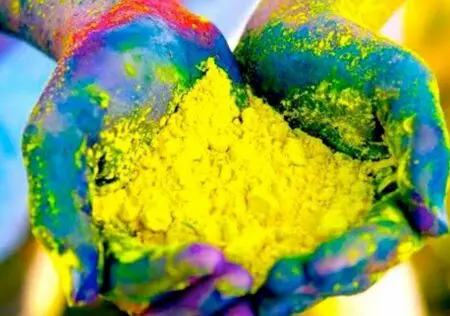
Why people throw colors at each other or lit bonfires?
The meaning is all hidden in the legends that surround this beautiful festival.
They celebrate good over evil on the first day of Holi and the second day is the celebration of love, Spring, and new life. It is celebrated as an event that leads the world coming out of the darkness of winter into the light and renewal of Spring.
It is usually connected to the God Vishnu as it also celebrates the love between Radha and Krishna, who is the incarnation of Lord Vishnu.
The legend of Holika and Hiranyakashipu.
Bonfire characterizes the first evening of Holi. The legend revolves around two demon siblings, Holika and Hiranyakashipu.
Hiranyakashipu was a demon King and had been given immortality or…. sort of. Actually, he had been given five special powers, which kept him from being killed under certain conditions.
He could not be destroyed:
by animals or humans
indoors or outdoors
during the day or night
on land, air, or water
by bullets or with handheld weapons
Being indestructible, he started believing he was a God. Whoever worshipped other gods other than him was punished or killed.
Since Hiranyakashipu’s son Prahlad remained a worshiper of the Hindu god Vishnu instead of his father, the demon planned to kill his son because of this.
Hiranyakashipu bound his sister Holika into the scheme. By wearing a special coat that shielded her from fire, she took Prahlad into a bonfire. The plan involved killing Prahlad in the fire but instead, her coat flew off and covered Prahlad instead, protecting him and killing her.
Epilogue
After having witnessed all these events, Vishnu was determined to put an end to this evil creature.
He smartly managed to bypass Hiranyakashipu’s five powers by:
taking the form of half-lion, half-human (so not animal or human)
arriving at sunset (not day or night)
showing on a doorstep (not outdoors or indoors)
placing the demon on his lap (which isn’t land, water or air)
and killing Hiranyakashipu with his nails (which aren’t projectiles or a hand-held weapon)
It is thought that Holika gave the name to this festival and the reason why bonfires are lit during the first night.
The Legend of Krishna – Why is it called the festival of colors?
According to this legend, Krishna was quite naughty. He did not use to like his dark blue skin and wanted to be fairer, like Radha. He was advised by his mother, Yashoda, to color Radha’s face with any dye he wanted. After this, They were still in love with each other, meaning that Radha was not accepted Krishna’s mischievous nature.
This may be why people today throw colors at each other during the second day of this celebration and why the festival represents the love between Radha and Krishna.
What is the powder used called and made of?
Gulal powder is used for various festivals but mostly associated with Holi, and it is made of a mixture of more than 95% corn-starch blended with food and cosmetic pigments. The colors used have various meanings:
Red represents love.
Blue is associated with Krishna’s skin colour.
Yellow is the turmeric that is used for most of Indian food.
Green is the color of spring, youth, and new life!
Of course, there are many more legends surrounding this beautiful and traditional Indian festival, but these are just a hint to the many stories there are regarding Holi.
Wishing you and your family a happy, colorful, and loving Holi!
Stefania Piccardo, Executive Contributor Brainz Magazine
Stefania Piccardo obtained her Ph.D. in English language and literature from La Sapienza University of Rome, Italy. During her academic years, she worked for Scottish distilleries and castles as a tour guide in multiple languages. Her love for Scotland brought her back to Aberdeen in 2003, where she obtained an MSc in Corporate Communications and Public Affairs from Robert Gordon University.
She then worked for multiple organizations but soon realized that she wanted to teach languages privately to the corporate level. Stefania has helped many students achieve the best grades in school and university, but most of all, she has the ambition to train corporate employees who deal with import/export, foreign trade, or want to develop their career and expand their horizons for more opportunities in Europe and beyond. She speaks four languages, including Italian, her mother tongue, English, French and Spanish, and she founded Language tutor4U back in 2012.
In addition to her teaching schedule, she works as a PR/Marketing manager for Namaste Delhi, the innovative and traditional Indian restaurant she owns, along with her husband in Aberdeen City center since 2018. As a keen writer, she also enjoys feeding social media posts and writing for her blogs about Italian and Indian cultures, languages, and much more!
References:
Disclaimer: The information provided has been well researched and written from many sources available online, and the views provided are not of Namaste Delhi. Namaste Delhi does not take any responsibility for any technical error in the article.