David Ferrera – How One Engineer Turned Big Ideas Into Real Impact
Some careers take shape through planning. Others grow out of curiosity and the drive to solve hard problems. For nearly 30 years, David Ferrera has built his life’s work around the latter. His path through the medical device industry shows how one person’s ideas–backed by persistence and engineering skill–can help shape an entire field.
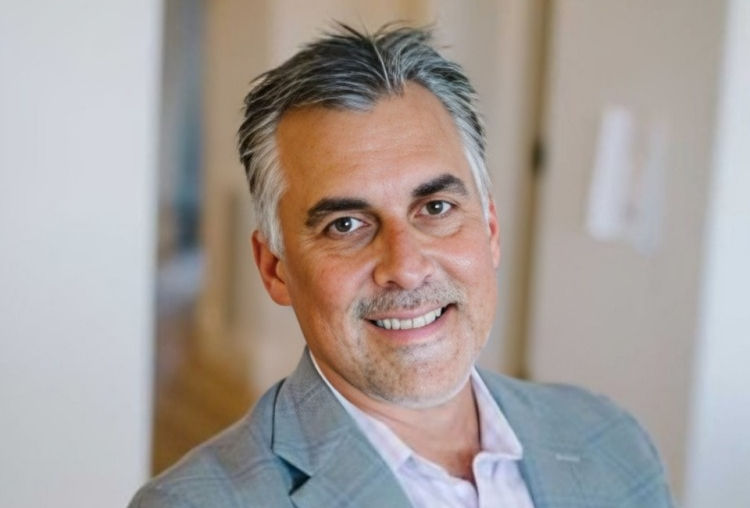
“I always wanted to understand why things worked the way they did,” Ferrera says. “Once I understood that, I wanted to make them work better.”
From early engineering roles to launching his own companies, Ferrera’s journey offers a look at how innovation actually happens: slowly, steadily, and through constant iteration.
Early engineering foundations that set the stage for innovation
Ferrera’s story begins at the University of Lowell (now UMass Lowell), where he studied Plastics Engineering. The program taught manufacturing, design, and hands-on problem solving. He also played collegiate baseball, which helped him build discipline.
“You learn quickly that consistency matters,” he explains. “In sports and engineering, small things add up.”
This mindset served him well when he started working at major medical device companies like Boston Scientific, IMPRA, Micrus Endovascular, and Microvention. There, he watched physicians perform real procedures–an experience that changed his understanding of innovation.
“One doctor told me, If you want to invent something we’ll actually use, watch what slows us down in the room. That conversation stuck with me.”
This lesson became the core of his approach: identify real problems, then design tools that fix them.
How early ideas helped advance stroke care
Ferrera’s first major career milestone came at MindFrame Inc. He helped develop one of the earliest mechanical thrombectomy devices for acute stroke–a field that was still in its early stages.
“At that time, the tools were limited,” he says. “We thought, Why can’t we remove a clot faster and with better control? That question drove us.”
The devices he helped design became part of a growing shift in stroke treatment. MindFrame was later acquired by Covidien, now Medtronic Neurovascular.
David Ferrera remembers not the deal, but the impact.
“The best part was seeing patients walk out of the hospital who might not have had that chance before. That’s when you realize an idea can actually change lives.”
Building Blockade Medical: Turning a vision into a company
In 2011, Ferrera co-founded Blockade Medical. The goal was simple: make better neurovascular tools by collaborating directly with doctors.
“As an engineer, you always see ways things could work better,” he says. “Starting Blockade let us explore those ideas without limits.”
The company developed coil technologies for treating aneurysms and quickly grew. In 2016, it was acquired by Balt Extrusion. Ferrera then stepped into a global role as Chief Technology Officer for Balt Global in France.
Working internationally expanded his view of the industry.
“You realize stroke care looks different around the world,” he says. “That forces you to think in new ways. You see needs you never noticed before.”
RC Medical: A venture studio built around big ideas
Today, Ferrera leads RC Medical, a venture studio designed to bring physician ideas to life. Instead of focusing on one product, RC Medical identifies clinical problems and builds new companies to solve them. It’s a model that blends innovation with practicality.
“We sit with physicians and listen,” Ferrera explains. “A lot of great ideas start with someone saying, I wish I had a tool that could do this during a case.”
This model has already spun out companies such as Single Pass, Infinity Neuro, and Sonorous NV. Each focuses on solving a specific challenge in interventional radiology or neurovascular care.
“We’re not chasing trends,” he says. “We’re solving real problems doctors deal with every day.”
Ferrera also serves as CEO and Chairman of Sonorous Neuro, continuing his long-standing focus on neurovascular technology.
Leadership built on collaboration and listening
Ferrera believes that innovation happens through teamwork, not individual genius.
“Innovation doesn’t happen in a vacuum,” he says. “You need engineers, physicians, researchers–all pulling in the same direction.”
This mindset has led him to advisory and board roles at Innervate Medical, Vasometrics Medical, Spinal Singularity, and the American Heart and Stroke Association.
He chaired the American Heart Association’s Heart & Stroke Ball in 2020 and 2021–something he calls one of the most meaningful parts of his career.
“You can’t spend decades in this field without caring deeply about the people it affects,” he says.
Finding balance while continuing to build
Despite the pace of his career, Ferrera has learned to step back when needed.
“You can’t solve problems when you’re burned out,” he notes. “Some of my best ideas have come when I’m not at a desk.”
He enjoys travel, wine, golf, ice hockey, and spending time with his family–activities that keep him grounded.
A career defined by turning ideas into impact
Today, Ferrera holds more than 80 patents. Many of them grew from simple questions, careful observation, and long-term commitment to solving complex problems.
“Our job is straightforward,” he says. “Identify problems. Build solutions. Help people.”
It’s a formula that has shaped his career, guided his companies, and contributed to advances in modern stroke and vascular care–one idea at a time.