Assessment – The Missing Link in Movement Therapies
Updated: Dec 30, 2025
Luther has over 27 years of experience educating and treating the public, elite athletes, & pain management clients with chronic musculoskeletal and soft-tissue alignment and postural issues.

I am writing this article to expand the consciousness and use of the many movement therapies that exist that people rely upon for health and wellness. Let me state from the outset that this is not a criticism of the many fine therapies and therapists that exist and who are helping many people with their wellness goals. However, there is a “Major” global philosophy that is being missed in the application of many of these therapies.
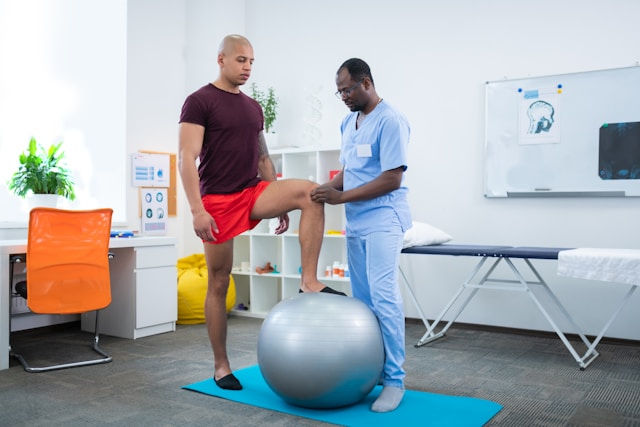
Before I explain my rationale, let me list a few of the popular therapies which include, but are not limited to: Pilates, Yoga, Tai Chi, Physiotherapy, Feldenkrais Method, Alexander Technique, Massage Therapy, Personal Training, etc. So please don’t get defensive about your modality as I explain my rationale.
Rationale
My rationale for addressing this subject arose from my 27 years of working with clients conducting Posture & Movement Alignment, Medical Massage, Therapeutic Stretching, Personal Training, and Salsa Meet-up Dance practices. I literally have worked with a minimum of 20 clients a week for 50 weeks a year for most of my 27 years in practice (you do the math). This is why I can write this article with great confidence and inform you that I can literally count on one hand how many people have heard what I have told them during my assessment process, things that they have never heard before. Let that sink in a moment before you move on to read the rest of the article.
I used to think that there were others who assessed like I did, but over the years, there have been too many clients who have tried all types of therapies, including those mentioned above, but did not receive the information (or expected outcomes) that I have delivered. There have also been many people from out of town asking me if other therapists similar to me exist in their area, or have moved and cannot find the same level of expertise or services in their area. So at 70+ years, I am exporting my knowledge to the world for all who resonate with it.
Trust me, I have had many conversations (some were very intense) with clients and other movement professionals about this over the years, and it's like pulling teeth without Novocain to even get people to even want to try to understand what I am conveying. They often ask things such as “what is the scientific evidence or concrete objective proof for what I am saying, or they have absolute faith and blind loyalty to their modality or therapists. Movement Professionals and clients alike simply think the rub (massage), the stretching (yoga and other flexibility practices), or Personal Training or Pilates and other similar techniques are the answers to their concerns and will deliver the expected outcomes, but are often disappointed.
Movement modalities and practices are only tools, and about as useful as a practitioner’s ability to apply the tools correctly. The tools (Modalities) themselves alone are the complete solution.
Complete full body/mind/spirit assessments: The key missing links
This article is limited to a discussion of the Physical body aspect of assessments. There are other, more well-qualified professionals to address the Mind/Spirit aspect of assessments. I am only mentioning this because that’s another key missing element in the Movement Therapies application and approach of their craft. However, I will include a link here from one of my LinkedIn colleagues who explains the role of fascia in the physical, mental, emotional, and spiritual realms very well.
His name is Elias Delphinus, Integrative Health Doctor, Naturopathic & Lifestyle Medicine. This will give you a more comprehensive understanding of the approach you will need to fully assess a human’s Posture and Health needs. Click here.
Physical body assessment
Every movement professional should have a continuous improvement philosophy designed to calibrate how they are applying their craft or professional movement modality, and its effectiveness in terms of whether it is achieving expected outcomes. My philosophy is that if you are still doing things the same exact way you were doing things within a year's time, then you probably have not grown much in knowledge or expertise and maybe stuck in a mindset lock.
My personal opinion is that if you are not completely assessing and evaluating your client’s physical alignment and posture “Before” and as a “Prerequisite” for applying your craft, then you are missing a major opportunity to expand the effectiveness and expected outcomes from the application of what you do. To do this, you must be willing to challenge and, if necessary, change/modify your business model.
Skill sets needed for accurate assessments communication skills
The reason I mention communication skills first is that most movement professionals and the general public (clients) are locked into the mindset that it is the modalities that they use that will produce the results and expected outcomes. I use the following statement as a means to change mindsets: I, as the practitioner, am the “Mechanic “ and you, as the client, are the “Driver of your own vehicle (body)”. I, as the mechanic, cannot get behind your steering wheel and control your body. That is going to take a deliberate conscious effort to modify behaviors as a client.
This usually gets people’s attention to realize that they have a responsibility in their healing to begin to shift from the mindset that they are coming to you to get “Fixed”. If you can get pass this barrier, then you are well on your way to a collaborative relationship in achieving the expected outcomes for both you as the practitioner and the client. This will be your most difficult challenge because most people in the world are trained to run to someone to get fixed.
Client education and training
Superior communication skills are needed for this in the movement field because people are so locked into the mindset that you are going to fix them. That requires the ability to have excellent observation skills so that you can accurately describe your findings and, more importantly, articulate how you are going to assist them (clients) in the recalibration of their alignment and posture with a treatment plan that can be monitored and measured.
You will be surprised to how many people who simply do not want to put in the work and effort in improving themselves, outside of doing activities such as
Pilates, Yoga, Personal Training, etc, but they don’t realize that sometimes these activities are making things worse without proper assessment as to how the particular modality will work for them. Here is another one of my sayings that I have developed over the years in response to clients not wanting to put forth the effort and expectation to be fixed, “I will apply my craft to the best of my ability but you as the client should dial back your expectations of what you expect receive from my therapy unless you are willing to do the work”. It takes a lot of courage and confidence in your craft to be able to say this in a very direct manner to clients. In other words, it’s not my responsibility to fix you as I am a consultant only and can only guide you because you, as the client, are with yourself 24 hours a day.
Practitioners have very little control of what happens when they leave your office.
Superior anatomy, physiology, and kinesiology knowledge
It is not enough to be trained in only the knowledge that was included in your modality certification or training program. You must continually learn knowledge across multiple disciplines that can help your particular modality to be more effective. Also, I am not necessarily talking about getting a doctor’s degree or spending a lot of money on different certifications, etc. Most of the knowledge I learned about assessment principles did not come from my primary licensed and certification courses. I did not take continuing education courses solely to satisfy licensing requirements, but to expand my knowledge so that I can apply my craft more effectively.
For example I have studied, trained and learned from diverse groups of movement experts, online, in-person, and self study such as: The American Posture Institute, BodyZone, Z-Health Brain-Based Movement, NeuroSomatic Educators, Upledger Institute, Tom Meyers Anatomy Train knowledge, John F. Thie’s Touch for Health system, Ortho-bionomy, stretching, yoga, personal training courses (IdeaFit) and Tai Chi courses and dozens of others too numerous to name, most of which were not taken for CE credits but for the knowledge to apply my craft better. I encourage all movement practitioners to do the same, expand your knowledge outside of your direct field, if only to understand what many of your clients to will be doing anyway.
Superior observation skills
Assessment skills require being able to accurately observe what’s happening in human posture in static positions and dynamic movements. This requires the ability to focus using some type of system for observing and recording the results of observations. Traditionally, this has been done visually and manually, recording results. However, the introduction of technology and AI tools have greatly enhanced the ability to interface visual/manual techniques with technology. It is imperative to realize that technology and AI should not replace human assessment and evaluations, but be used to enhance and improve data gathering for forming conclusions in order to build more meaningful and effective treatment plans based upon your assessments.
For example, I have recently digitally enhanced my practice with the creation of an app I call PosturePro, which is part of my in-house Posture Alignment & Coaching business. I use the app to add additional data gathering techniques to supplement my visual observation and assessment techniques, which include, but not limited to: static postural photos, videos of dynamic movements and gait, Muscle Testing, Romberg’s balance testing, and various Brain-based visual and vestibular testing, and many other assessment techniques to gather information to load into my program. From here, I am able to develop AI suggestions for 8 & 12-week treatment plans for breathing, balance, proprioception, stability, mobility, strengthening, stretching exercises, and programs, as well as add my own personally developed programs to the app.
As a licensed manual therapist, this gives me the opportunity to be more precise in my bodywork routines which have purpose and a plan with definite outcome objectives that can be measured. It also enhances my documentation processing because I can produce at least three types of reports: assessment, treatment plan suggestions, and overall summary, integrating both the assessment and treatment plan reports. These reports can then be exported to the client and/or their practitioner of choice to be used as needed with a client’s preferred therapist or modality if they won’t stay with your program.
Currently, there is no consistent communication and cooperation amongst the various types of movement therapists that clients are using and there can be significant contraindications and conflicts of therapeutic objectives and treatment plans amongst different therapists because of the lack of awareness of what the client is doing and participating in from various modalities while in between your sessions with them.
Conclusions
This article was written as a philosophical discussion about the need for mindset change within the Therapeutic Movement community and was written without AI involvement or direct references to double blind studies and scientific references on purpose. I am sharing my experiences of how I have applied Therapeutic movement principles to help thousands of clients get positive outcomes in my 27 years of experience.
I hope this article causes all practitioners to review your practices and see if what I have written resonates or not. I am not trying to convince anyone of what I am saying is correct. I also recommend that movement practitioners start integrating AI and technology techniques into their practices, not as a replacement but as an enhancement towards achieving better outcomes for your clients. If you already are doing this, then congratulations, if not, please seriously consider implementing some of the ideas I have presented in this article.
Read more from Luther Lockard
Luther Lockard, Posture & Movement Coach, LMT
Luther Lockard is a professional bodyworker with 27 years of experience, which includes the services of Posture & Alignment Coaching, flexibility training, personal training, medical massage, reflexology, craniosacral, Reiki, therapeutic touch, healing touch, and other energy-based modalities. Luther has over 2000 hours of professional training in bodywork, which includes Brain-Based & Corrective Exercise Movement Coaching.