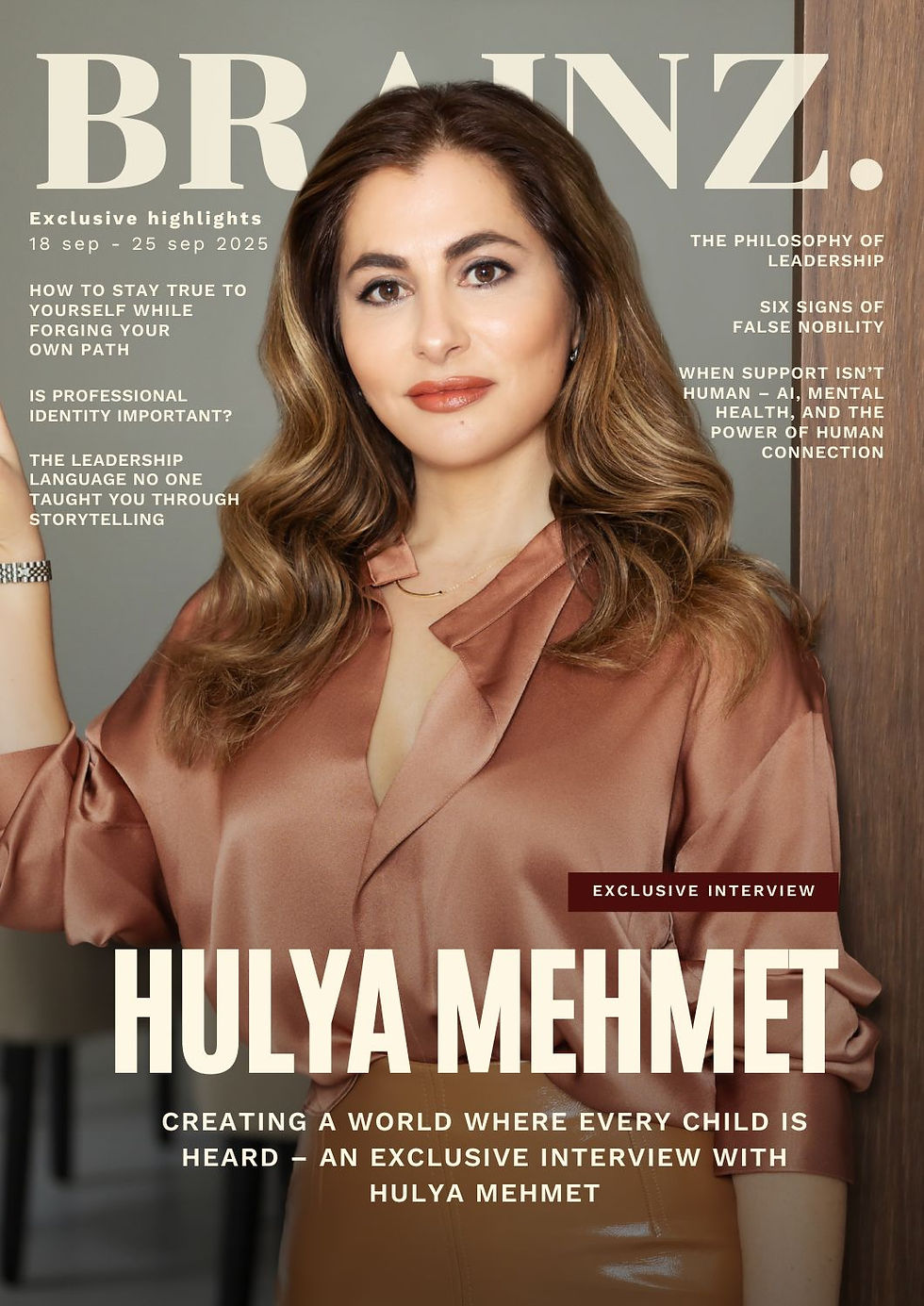
Creating a World Where Every Child Is Heard – An Exclusive Interview with Hulya Mehmet
Hulya Mehmet is a thought leader in children’s communication, a pioneering speech and language therapist, and a transformative author. With over 25 years of clinical experience and personal insight as a parent, she understands the confusion, fear, and frustration that families, educators, and professionals face when a child or individual isn’t communicating in expected ways. Too often, parents are told to “wait and see.” Educators and workplaces lack the tools to respond. Neurodivergent individuals are misunderstood or sidelined. Hulya is changing that. In 2004, she founded Articulate Kids, a specialist practice delivering compassionate, evidence-based speech therapy to individuals with complex communication needs — including autism and ADHD. Her work has helped thousands of children and young people communicate, thrive, and reach their full potential, often after other services have run out of answers.
As a powerful advocate for neurodiversity and a voice for systems-level change, Hulya challenges outdated models and promotes more inclusive thinking across education, healthcare and business. She also works with organisations and corporate teams to develop neuroinclusive cultures — helping leaders better understand, support and retain neurodivergent talent. Her recently launched debut book, Why Isn’t My Child Talking?, is already recognised as a must-read for those navigating communication differences. Her thought leadership has been featured in The Daily Telegraph, and she consults widely with schools, businesses, and institutions. As a trained leadership coach, she brings strategic insight to communication and inclusion at every level.
Hulya is part of a growing movement that’s changing the way we think about neurodivergent people, not as problems to fix, but as individuals with untapped strengths, insights, and potential. Her work is helping to reshape the landscape across education, healthcare, and business, ensuring communication is not a barrier but a bridge. She’s committed to building a world where all individuals — regardless of how they express themselves — are seen, supported, and empowered to thrive.
Article Highlights






Quote of the week
"Every sunrise proves that no matter how dark the night felt, life is always ready to begin again - with you at its centre".
What a Decade in Child Protection Taught Me About Listening That Most Health Practitioners Never Learn
Before I ever took a client's health history, I sat across from families in crisis and learned to listen for what wasn't being said. Ten years in child protection social work will teach you that. You...
Brainz Expert Panel
How To Recognize Imposter Syndrome In Others
Expert Panelists are handpicked and invited to contribute because of their knowledge and valuable insight within the areas of Business, Mindset, Leadership, Lifestyle, and Sustainability. Members of The Brainz Magazine community of experts will share their best tips, advice, ideas, and hacks within different topics.
1. Struggle to feel worthy
Ever met someone who downplays their achievements or says they just got "lucky"? Learn how to spot the subtle signs of imposter syndrome and support those silently struggling with self-doubt.

Brainz podcast
How to Move From Confusion to Clarity
Hulya Mehmet is a thought leader in children’s communication, a pioneering speech and language therapist, and a transformative author. With over 25 years of clinical experience and personal insight as a parent, she understands the confusion, fear, and frustration that families, educators, and professionals face when a child or individual isn’t communicating in expected ways. Too often, parents are told to “wait and see.” Educators and workplaces lack the tools to respond. Neurodivergent individuals are misunderstood or sidelined. Hulya is changing that. In 2004, she founded Articulate Kids, a specialist practice delivering compassionate, evidence-based speech therapy to individuals with complex communication needs — including autism and ADHD. Her work has helped thousands of children and young people communicate, thrive, and reach their full potential, often after other services have run out of answers.
As a powerful advocate for neurodiversity and a voice for systems-level change, Hulya challenges outdated models and promotes more inclusive thinking across education, healthcare and business. She also works with organisations and corporate teams to develop neuroinclusive cultures — helping leaders better understand, support and retain neurodivergent talent. Her recently launched debut book, Why Isn’t My Child Talking?, is already recognised as a must-read for those navigating communication differences. Her thought leadership has been featured in The Daily Telegraph, and she consults widely with schools, businesses, and institutions. As a trained leadership coach, she brings strategic insight to communication and inclusion at every level. Hulya is part of a growing movement that’s changing the way we think about neurodivergent people, not as problems to fix, but as individuals with untapped strengths, insights, and potential. Her work is helping to reshape the landscape across education, healthcare, and business, ensuring communication is not a barrier but a bridge. She’s committed to building a world where all individuals — regardless of how they express themselves — are seen, supported, and empowered to thrive.