Why Your Estate Plan Can’t Replace Your Values – An Interview with Lynita Mitchell-Blackwell
Lynita Mitchell-Blackwell, Esq., CPA is a Georgia-based Estate Planning Attorney, Legacy Wealth Strategist, and founder of The Legacy Light Path™ – a framework that guides high-achieving professionals and entrepreneurs to protect their loved ones, preserve their assets, and ensure their legacy and family's future is imbued with peace, not chaos and confusion. A 2026 Georgia Super Lawyer®, ordained minister, certified Christian life coach, and 7x bestselling author, Lynita brings a rare dual perspective as both attorney and CPA to the complex intersection of wealth, legacy, and purpose.
In this interview, Lynita shares the philosophy behind her practice, the legacy planning blind spots she sees most often among successful professionals, and why she believes true legacy begins from the inside out – with who you are, not just what you own.
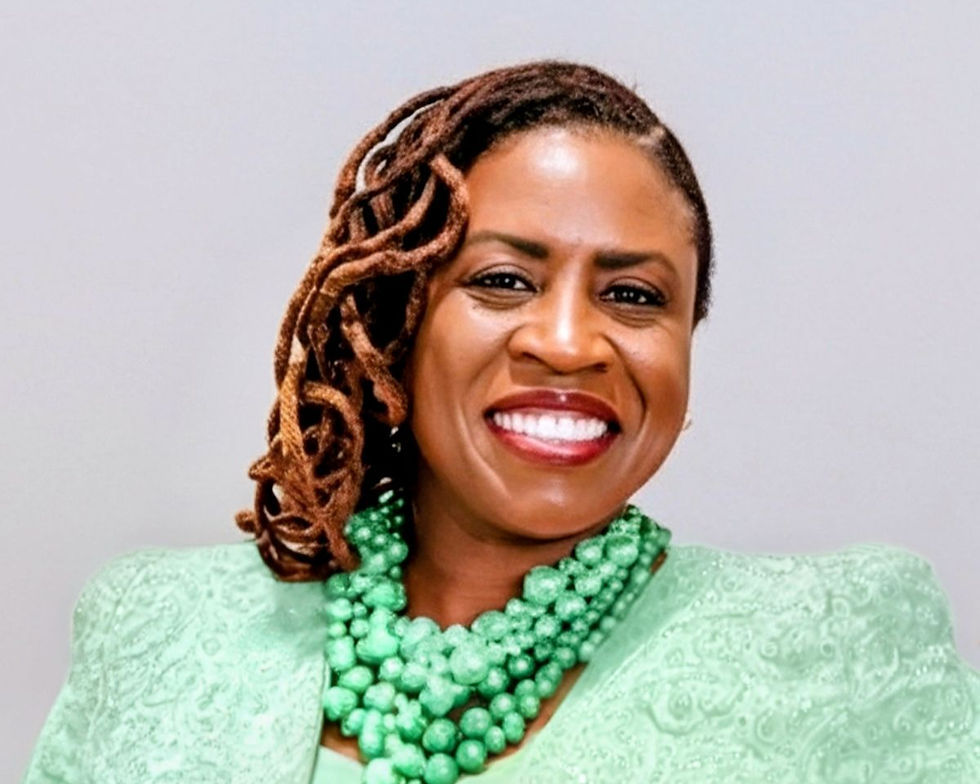
Lynita Mitchell-Blackwell, Estate Planning Attorney and Wealth Strategist
What inspired you to create The Legacy Light Path™, and how has it changed the way you approach estate planning?
The Legacy Light Path™ was born from a deeply personal truth: legal documents alone do not create a legacy. Early in my practice, I watched families receive technically perfect estate plans – wills, trusts, powers of attorney and still experience conflict, confusion, and heartbreak after a loved one passed. Something was missing. That something was intentionality. I began asking my clients not just 'What do you own?' but 'What do you stand for? What do you want your family to remember? What values do you want your wealth to carry forward?'
The Legacy Light Path™ became my answer to that gap. It is a holistic planning framework that illuminates the intersection of legal protection, financial strategy, and life purpose. It has fundamentally transformed how I approach every client engagement. I no longer simply draft documents – I guide people on a journey of defining what their legacy truly means, then building the legal and financial architecture to protect and honor it. The result is estate plans that don't just transfer assets, they transmit values.
How does your background as both an attorney and CPA shape the advice you give clients about protecting and transferring wealth?
Most people work with either a lawyer or an accountant – rarely someone who is credentialed and experienced in both disciplines simultaneously. That dual lens is the foundation of everything I do. As an attorney, I understand the legal structures, the fiduciary duties, the statutory requirements, and the tools available under Georgia and federal law. As a CPA, I understand the financial implications of every decision – income taxes, estate taxes, gift taxes, capital gains, and the often-overlooked step-up in basis rules that can save families hundreds of thousands of dollars.
This integrated perspective means I see the full picture at once. When a client comes to me with a family business, a real estate portfolio, or a complex blended family situation, I am not handing them off to different advisors who may never fully communicate. I synthesize the legal and financial strategy into one cohesive plan. My clients don't fall through the cracks between disciplines and in legacy planning, those cracks can be very costly.
"I no longer simply draft documents – I guide people on a journey of defining what their legacy truly means, then building the legal and financial architecture to protect and honor it."
What legacy planning issue do you find successful professionals overlooking most often?
Without question: the gap between intention and documentation. Most successful professionals have clear intentions about what they want for their families. They want their children to be protected. They want their business to survive them. They want their wealth to make a difference. But intention, no matter how sincere, has no legal force.
I regularly meet executives, entrepreneurs, and high-earning professionals who have accumulated significant assets but are operating with a basic will they drafted years ago – or nothing at all. They often believe they are 'too young' to need a comprehensive plan, or that their assets are 'not complicated enough.' Neither is true. Probate does not discriminate. Family conflict does not require complexity to ignite. Disability does not wait for the right moment. The most common and costly oversight I see is the assumption that having some plan is the same as having the right plan – structured to actually protect what you have built.
How do you see the conversation around generational wealth evolving among entrepreneurs and business owners today?
The conversation is shifting in a powerful and long-overdue direction. For the first time, we are seeing large-scale, community-level dialogue about building wealth that outlasts one generation – particularly in communities that have historically been excluded from wealth-building opportunities and estate planning education. Entrepreneurs today are asking different questions than their parents did. They want to know how to structure their business for succession, how to use trusts to protect assets from litigation and creditors, and how to align their estate plan with their philanthropic and faith-driven values.
I am also seeing a growing recognition that generational wealth is not solely about dollars transferred. It encompasses financial literacy passed down, values embedded in family governance structures, and intentional preparation of the next generation to steward what they receive. The entrepreneurs I work with increasingly understand that the greatest gift they can give their heirs is not just assets – it is the preparation and the wisdom to use those assets purposefully.
What is the first step someone should take if they want their legacy plan to reflect both their assets and their values?
The first step is a conversation that has nothing to do with legal documents – it is a values clarification conversation. Before you can build a plan that reflects who you are, you must first articulate who you are and what matters most to you. I encourage every client to answer a few foundational questions: What do I want my family to say about me in 50 years? What financial behaviors do I want to encourage or discourage among my heirs? Are there causes, institutions, or communities I want my wealth to support after I am gone?
Once those answers are clear, every legal and financial decision flows from them. The type of trust you use, the beneficiary designations you select, the charitable giving structure you establish — all of it becomes an expression of your values, not just a transaction. Without this foundation, even the most technically sophisticated estate plan can feel hollow. With it, even a straightforward plan carries profound meaning. Start with the 'why,' and the documents will follow.
"The greatest gift you can give your heirs is not just assets – it is the preparation and the wisdom to use those assets purposefully."
What practical habit can help families create more clarity and less conflict around future wealth transfers?
The single most powerful habit is holding regular, intentional family wealth conversations while everyone is healthy, present, and not in crisis. Most families never discuss money, values, or inheritance expectations openly and then are shocked when conflict erupts after a death or disability. Transparency, offered with love and wisdom, is one of the most profound gifts you can give your family.
I recommend that clients host at least one family meeting per year where the broad contours of the estate plan – not necessarily every detail – are shared in age-appropriate ways. Children should understand that a plan exists, who is responsible for what, and what the family values are. Parents should share not just the 'what' of their plan but the 'why.' Complement this habit with a well-organized legacy binder or digital file that contains key documents, account information, and letters of instruction. When a family crisis comes and it will – clarity eliminates the space where conflict lives.
Why do you believe self-leadership is such an important part of building a lasting legacy?
Because legacy is not ultimately about what you leave – it is about who you become. Everything you build, every document you draft, every asset you accumulate flows from decisions you make daily. The quality of those decisions depends entirely on the quality of your inner life. Self-leadership – the discipline of governing your thoughts, your emotional health, your sense of purpose, and your daily habits – is the invisible foundation underneath every external achievement.
I founded the Sacred Self-Leadership Movement because I witnessed this truth in my own life and in the lives of my clients. High-achieving women, particularly black women, often sacrifice their own well-being in the pursuit of legacy-building, not realizing that they are simultaneously undermining the very foundation they are trying to build. You cannot pour from an empty vessel. You cannot lead others with clarity if you are depleted. Self-leadership is not self-indulgence – it is the prerequisite for sustainable impact. Protect yourself first, and everything else you protect will be stronger for it.
Looking back on your own journey, what taught you that success and fulfillment are not necessarily the same thing?
Honestly? Burnout taught me. There was a season in my career where, by every external measure, I was succeeding. My practice was growing. The accolades were accumulating. I was checking every professional box on the list. Yet I was profoundly depleted – disconnected from my own joy, my faith, and even my sense of purpose. I had built something impressive and felt hollow standing inside it.
That season became the crucible for my book, Prioritize You: A Survivor's Guide to Loving Yourself Back to Life. It forced me to examine the difference between a life that looks good and a life that feels meaningful. Success, I learned, is often measured by external metrics. Fulfillment is measured from the inside. The pivot for me was recovering my relationship with God, with my own values, and with the understanding that my worth was not defined by my productivity. Out of that season grew a deeper, more integrated practice – one that now helps my clients pursue legacy not from a place of striving, but from a place of wholeness.
"Success is often measured by external metrics. Fulfillment is measured from the inside."
If readers could take away one lesson about protecting their legacy and their peace of mind, what would it be?
Start before you are ready, and start from the inside out. Most people wait for the 'right moment' to do their estate planning – when their business is bigger, when their children are older, when they feel more financially stable, when life slows down. That moment rarely arrives. Meanwhile, life – with all its unpredictability – continues without asking for your permission.
But more than the urgency of timing, I want readers to understand this: your legacy plan will only be as strong as the clarity you bring to it. You must know your values before you can encode them into legal structures. You must tend to your own well-being before you can sustain the work of protecting others. True legacy protection begins not in a law office but in the quiet, honest work of knowing who you are and what you are here to build. The documents are important – they are essential. But they are the expression of something deeper. Get clear on who you are, and the rest will follow. That is The Legacy Light Path™.
Read more from Lynita Mitchell-Blackwell