Why the Traditional Mental Health Model Isn’t Enough – An Exclusive Interview with Dr. Katie Simons
Updated: Mar 9
Dr. Katie Simons is a clinical pharmacist turned hypnotherapist, plant medicine facilitator, and mental health coach whose work sits at the intersection of neuroscience, embodied healing, and the exploration of consciousness. Her years in the conventional healthcare system provide her with a deep understanding of physiology and pharmacology, while also exposing the limitations of a system that focuses primarily on symptom management rather than true healing. This prompted Katie to expand her practice beyond traditional treatments to develop a practice model that facilitates results, transformation, and empowerment.
Today, as founder of The Holistic Apothec, Katie supports women through a nervous system- informed approach that weaves somatic practices, hypnotherapy, plant medicines, and embodied awareness. Her work centers on the process and practice of restoring balance, resilience, and wholeness in the mind, body, and spirit allowing continuous access to peace, choice, and authentic connection. Katie creates spaces where healing can unfold sustainably, guided by the intelligence of the nervous system and the individual’s own inner wisdom toward lasting transformation.
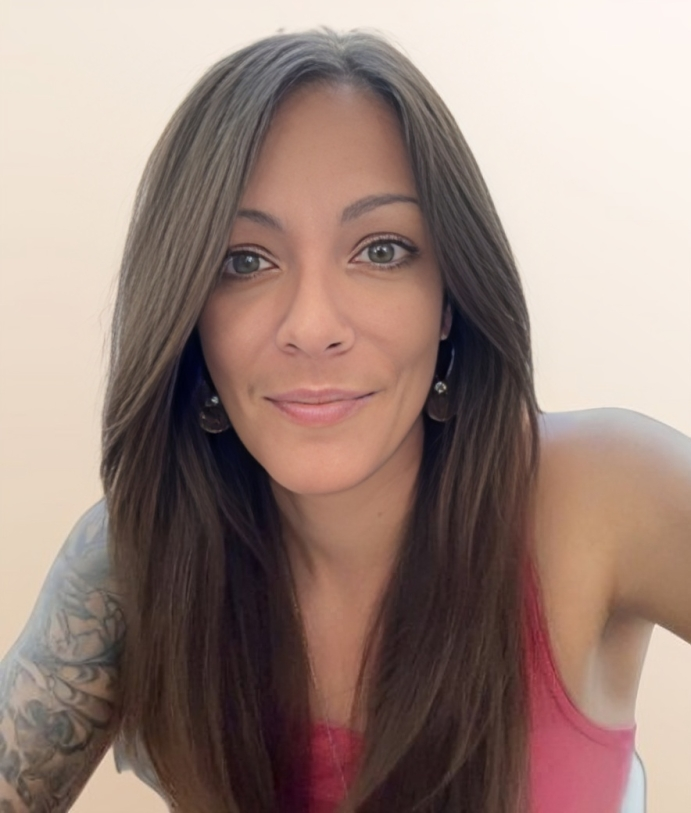
Katie Simons, Transpersonal Hypnotherapist and Coach
What drew you into this work, and how has your understanding of healing evolved over time?
I was drawn into this work through my own lived experience of anxiety, burnout, and depression, despite doing all the things I was told should make me feel better. As a Doctor of Pharmacy, I understand the medical system’s explanation of mental health pathophysiology well, yet as a clinician and as a patient, it is clear that therapy and medication are not addressing the root of what so many high-functioning women, myself included, have experienced. It was plant medicine, hypnotherapy, and somatic therapies that allowed me to transform my inner and outer experience and to heal.
This experience prompted me to seek a better understanding of what healing is and why certain tools are so effective at supporting transformation. It has become clear to me that healing is not trying to fix something presumed to be broken, but is creating safety and coherence within the nervous system, so that the innate intelligence of the body can be accessed. I see healing as a process of remembering that becomes accessible when the body is no longer stuck in survival cycles.
I have come to realize that when we use the correct tools to decompress the nervous system, reconnect to our bodies, and reframe the subconscious limiting beliefs absorbed through culture and upbringing, we unlock a far greater capacity for positive change and transformation. The result is stepping out of mental health symptoms and stepping into living an aligned, fulfilling life. Healing is the process and practice of restoring balance, resilience, and wholeness in the mind, body, and spirit that allows continuous access to peace, choice, and authentic connection.
Healing work is not forever. Contrary to popular belief, it has a finite arc that has an end. My work and methodology have evolved alongside this understanding and remain responsive to the experience of my clients, grounded in what is actually unfolding in the bodies and lives of the clients I support.
How does your background in pharmacy and science influence the way you approach nervous system regulation and healing?
My background in clinical pharmacy practice at an academic teaching hospital allows me to approach healing with a strong foundation in physiology, neurobiology, and evidence-based understanding of how the body adapts to stress. It has also given me a front row seat to the limitations of a system focused primarily on symptom suppression. Many mental health diagnoses, including depression, anxiety, OCD, and ADHD, reflect patterns of chronic nervous system activation coupled with conditioning rather than isolated pathology. Viewing these symptoms through a nervous system and neurobiology lens creates far more space to address root causes instead of managing surface -level presentations.
I understand how medications can be supportive during certain phases of healing, but I also see clearly that they cannot create lasting, fulfilling change on their own. Medications act like a bandage. Sometimes they are needed to “stop the bleeding.” They can assist with healing, but do not address the underlying drivers of distress. This perspective allows me to bridge traditional medical treatments with somatic and subconscious practices, as well as tools like plant medicines, so clients can engage in deeper, more sustainable work that results in internal balance, resilience, and a feeling of wholeness. Central to my work is empowering individuals to move out of the paradigm of being told they are sick or broken and into understanding the signals their bodies are communicating.
Where do you see traditional mental healthcare models falling short when it comes to creating real change?
Traditional mental healthcare models leave people in a difficult position by addressing symptoms as isolated, chronic diagnoses rather than understanding the body as an integrated system shaped by stress, experience, and environment that is capable of healing. When mental and emotional symptoms are separated from the body’s nervous system patterns, the essential context of the human experience is lost. People are frequently labeled with diagnoses that describe clusters of symptoms without a clear physiological explanation for why those symptoms exist. Contrary to long-held assumptions, conditions such as depression are not caused by simple neurotransmitter deficiencies, a narrative that has been widely challenged in recent years. By limiting the story to just the symptoms, we cut ourselves off from the ability to heal and transform.
When we widen the lens to include the entire nervous system and mind, these symptoms can be understood as signals indicating a perceived lack of safety and resulting stress. This perception of threat may stem from uncertainty, change, emotional stressors, internalized expectations, or chronic pressure. These factors alone are enough to keep the nervous system locked in survival mode. The first step to creating real change is decompressing the nervous system and unpacking the signals the body is sending. Only when safety is established in the body can the body move into regulation, allowing space for unpacking limiting belief structures and changing emotional and thought patterns that lead to the resolution of mental health symptoms. The most important realization is that these symptoms are not permanent. They are adaptive patterns, and adaptive patterns can change. Real change begins when the system feels safe enough to reorganize itself rather than remain in constant defense.
How do somatic and subconscious practices support people in moving out of survival and into greater self-trust?
Somatic and subconscious practices work directly with the parts of our system that operate beneath conscious thought. Survival patterns are stored in the body and nervous system and show up as disruptive emotional and thought patterns. This mammalian part of our anatomy is literally wired to get us to respond to challenges by fighting, fleeing, freezing, or fawning. These reactions occur faster than conscious reasoning, and they also require bodily signals to know the threat has passed. In modern-day society, we rely so heavily on cognitive strategies that we often fail to respond to the body’s need for completion and emotional processing, which keeps the nervous system stuck “on” in a state of survival mode.
Somatic and subconscious practices are therapeutic approaches that move us out of the purely cognitive mind and into the body and deeper layers of the subconscious. These include hypnotherapy, emotional freedom technique, bilateral stimulation, microdosing plant medicines, breathwork, meditation, and related modalities. Although often labeled as alternative, many of these approaches consistently produce meaningful results. They create space for the body to release stored tension, process unresolved emotional material, develop greater self awareness, and gain insight. At the same time, they help signal safety to the nervous system while addressing the belief and thought patterns that drive stress responses. As we learn to listen to internal cues with curiosity rather than judgment, habitual patterns begin to unwind. Over time, regulation becomes more natural, self trust strengthens, and we rely less on external authority and more on our own embodied knowing.
What challenges are you seeing most often in women today?
The most common challenges I see are chronic overwhelm, anxiety, emotional exhaustion, and a sense of disconnection from self. Many women feel constantly activated, responsible for everything and everyone, and unable to truly rest, even when life appears stable. I often hear women describe a desire to work on themselves while simultaneously feeling that life is simply an ongoing emotional struggle. Much of this stems from prolonged nervous system activation driven by modern demands, cultural conditioning, and a lack of support for healthy balance and emotional processing.
When the nervous system spends extended periods of time in survival mode, it begins to shape perception, thought patterns, and emotional responses. Many modern therapeutic approaches unintentionally reinforce this survival state by focusing primarily on talking about distress without supporting the body in shifting out of it. Although depression, anxiety, and overwhelm feel like signs of personal failure, they are actually intelligent body responses to environments that do not prioritize emotional safety, rest, or regulation. Without addressing the nervous system and environment directly, these patterns tend to persist no matter how much insight or effort is applied.
What shifts do you witness when women stop trying to fix themselves and begin listening inward?
When women stop relating to themselves as problems to solve or something broken to fix, a profound shift occurs. Anxiety decreases, emotional responses become less reactive, depression dissolves, and decision-making feels clearer. I see women reconnect with intuition, set healthier boundaries, and relate to themselves with greater compassion. There is often a shift from struggling to presence, from self-criticism to self-love.
This shift really begins with the awareness that we do not need to operate from a place of fear. Fear of rejection, fear of abandonment, fear of suffering…there is a point in this work where all these fears no longer hold the same power over us anymore. When fear is no longer the driving motivation behind all decisions, a new level of choice emerges. When we do the work, we get to a point where we have continuous access to peace, choice, and authentic connection. Yes, healing work does end, after which growth continues from a more stable foundation. Listening inward becomes that foundation, a place of inner authority that guides how we move through life with greater confidence, resilience, and authenticity.
How can people explore working with you or joining your upcoming women’s group?
For those who feel drawn to supportive group work, I am re-opening my 16-week, small women’s group program, The Path to Self-Sovereignty: A Return to the Feminine, in March. This is a transformational program that walks through reconnecting to the body, understanding the subconscious and conscious mind, and remembering one’s intuition and inner authority, with sharing, education, and practical tools and experiences. I also work with clients 1:1 in eight-week personal transformation coaching programs that meet women where they are and guide them to where they would like to be.
I will also be offering a live workshop in April for healing and healthcare professionals on Holding Space for Healing, co-hosted with Liz Geandreau, LPC, NCC, PAPT. We will explore the paradigm shift from the traditional healthcare model to a true healing model, the unspoken demands placed on facilitators, what it actually means to hold space, and the four internal pillars required to do so well. We will also teach and demonstrate practical tools, including emotional
freedom technique, somatic awareness, and daily breathwork practices for somatic reset. This workshop is designed to support providers of all types in stepping into a nervous system- informed, healing-oriented perspective they can carry into both their professional practice and daily lives.
I encourage everyone to approach this work from a place of resonance, knowing it will create lasting change. My role is to create a grounded, supportive environment where women can reconnect with their own inner guidance and gain tools to move forward in alignment with their values and desires. All my current offerings, including hypnotherapy, somatic breathwork, and medication tapering, along with the option to book a complimentary connection call, can be found on my website.
Read more from Katie Simons