Why Fire Zones Should Rebuild Smarter, Not Faster
Written by Monserrat Menendez, Interior Designer
Monserrat is an entrepreneur, interior architect, and sustainability advocate, as well as the founder of Senom Design, a firm dedicated to merging innovative design with sustainable solutions. With over a decade of experience across residential, commercial, and international projects, she specializes in bringing clients’ visions to life through thoughtful, high-impact interiors.

In the aftermath of Los Angeles's devastating wildfires, survivors face a brutal truth, their neighborhoods won't return for nearly a decade. But what if that forced pause isn't a setback, it's an opportunity?
When waiting becomes wisdom
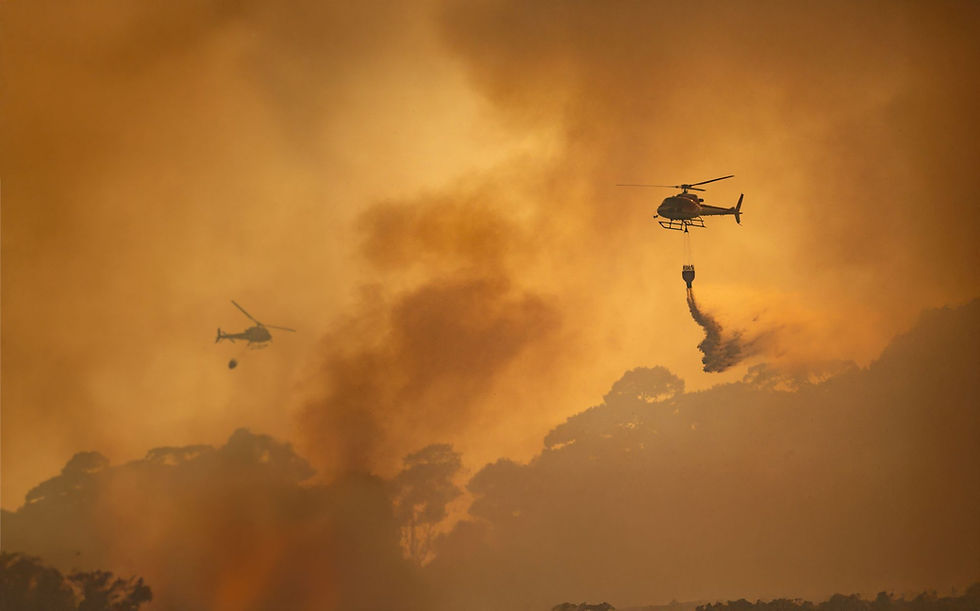
Rev. Grace Park stands in what used to be Pacific Palisades Presbyterian Church, her shoes crunching on debris that was once pews, hymnals, and a century of community memory. The January 2024 fires didn't just take her church, they took an entire neighborhood. And here's what she knows that most people don't want to hear, "The Palisades isn't going to be back to what it was for another seven to 10 years."
Seven to ten years. For the 100,000 people displaced by last year's fires, that timeline feels impossible. Staci Mitchell, who lost her English cottage in Altadena after 26 years, has already moved eight times, from her son's one-bedroom apartment to a series of hotels, Airbnbs, and finally a rental. She's exhausted. Her family has lived in Altadena for four generations, and she's determined to rebuild on that same piece of earth where she knows exactly where the sun rises.
But here's the question nobody's asking loudly enough: Should we rebuild what was, or can we build what should be?
The conventional wisdom says speed matters most to get people home, restore normalcy, rebuild the dream. But that dream burned at nearly 100-mile-per-hour Santa Ana winds during the driest winter on record. And climate scientists are clear: this isn't an anomaly. It's a preview.
What if the seven-year timeline isn't a tragedy but a rare gift? A forced pause that could break the cycle of building beautiful, vulnerable homes in fire country, only to watch them burn again. What if, instead of racing to recreate the past, we used this window to build homes that can actually survive the future?
This isn't about bunkers or sacrificing beauty. It's about a building approach that most Americans have never heard of, despite its 30-year track record in Europe: Passive House. And in fire country, it might be the smartest rebuilding strategy we're not talking about.
The building standard that does double duty
When most people hear "passive house," they think, expensive hippie homes with solar panels and composting toilets.
Wrong. Passive House (or Passivhaus, its German origin) is a rigorous building standard focused on creating an airtight, super-insulated thermal envelope. The goal? Homes that need almost no heating or cooling, slashing energy bills by 60-80% while maintaining perfect comfort year-round.
But here's what the passive house movement hasn't emphasized enough, those same features that make a home energy-efficient also make it wildly fire-resistant.
Think about what happened in Altadena and the Palisades. Homes didn't just burn from the fire front they ignited from wind-blown embers that found their way through attic vents, gaps under eaves, and poorly sealed windows. The fires essentially exploited every weak point in standard construction. One ember enters, finds combustible material, and the house becomes fuel.
Now consider passive house construction:
Airtight envelope. We're talking about sealing every crack and gap so thoroughly that ember infiltration becomes nearly impossible. Standard homes have 10-15 air changes per hour. Passive houses? Less than 0.6. Those embers that destroyed 6,000+ homes in Altadena would have hit a wall literally.
Triple-pane, fire-rated windows. While neighbors' homes exploded from radiant heat, shattering standard windows, passive house windows can withstand significantly higher temperatures. They're designed to keep heat out during summer, they're equally good at keeping fire heat out during a wildfire.
Non-combustible exterior insulation. The best passive house designs use mineral wool instead of foam material that doesn't burn, doesn't melt, and doesn't release toxic fumes. Your home's exterior becomes a thermal fortress.
Continuous fresh air, even during a fire. Here's the counterintuitive part: passive houses use energy recovery ventilators (ERV) that filter incoming air. During a fire event, you can seal the building and still breathe clean air while the neighborhood chokes on smoke. After the fire passes and smoke lingers for weeks, you're not inhaling particulates while everyone else is.
The passive house isn't trying to be fire-resistant. It just happens to excel at it because good building science is good building science.
The economics of building right
"But isn't passive house expensive?" Yes. And also no.
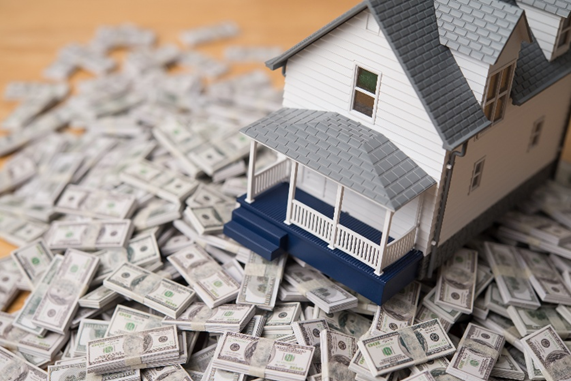
Passive house construction typically adds 5-15% to upfront building costs. For a $500,000 rebuild, that's $25,000-$75,000 more initially.
But here's the math nobody's doing:
Energy savings: 60-80% reduction in utility bills over the life of the home. In California, that's $2,000-$4,000 annually. Over a 30-year mortgage, that's $60,000-$120,000 saved.
Insurance premiums: While the insurance industry is fleeing fire zones entirely, some carriers are beginning to offer substantial discounts for homes with documented fire-resistant features. Early adopters in Paradise, California, which lost 18,804 structures in 2018, report 15-25% insurance reductions.
Resale value: In fire country, buyers are getting wise. A home that provably survived design standards versus a home that's just hoping? The market will reward that.
The cost of not building smart: Rebuild once at standard construction. Watch it burn in the next fire cycle. Rebuild again. The real expense isn't the upfront investment, it's the repeated loss.
Kevin Hockin and Rosanna Kvernmo learned this the hard way. Their wood-fired pizza restaurant, Side Pie, burned in the Eaton fire. Their home nearby sustained such severe smoke and heat damage that it needs to be fully rebuilt. They're now in month 12 of "a giant waiting game," waiting on insurance settlements, waiting on their landlord's decision whether to sell, waiting to know if their business can return.
What if their building had been designed to survive? They'd still be making pizza. Their daughter Judith wouldn't be 12 miles away from her community. The waiting game wouldn't exist.
The community-scale opportunity
But individual homes solving individual problems isn't enough. What makes this seven-year window genuinely transformative is the possibility of community-scale thinking.
Altadena lost more than structures. It lost a historically Black neighborhood where families like Staci Mitchell's had built generational wealth since the 1960s. The rebuilding requirements, increasingly stringent codes, insurance hurdles, and construction costs threaten to accomplish what decades of discrimination couldn't, the erasure of Black homeownership in yet another California community.
Unless. What if Altadena became the first neighborhood in America to rebuild as a passive house district? Not scattered individual homes, but a coordinated effort with:
Bulk purchasing power: Community-scale material orders that bring costs down 20-30%
Shared infrastructure: Neighborhood ERV systems, community water storage for both fire suppression and drought resilience, coordinated defensible space that actually functions as a system.
Workforce development: Training local residents in passive house construction, creating jobs while building expertise that's exportable to every fire zone in the West.
Preservation of community: Making it financially feasible for multigenerational families to return, not just wealthy newcomers who can absorb increased costs.
This isn't utopian dreaming. Passive house retrofits in Germany and Austria have shown that community-scale projects reduce costs, improve outcomes, and maintain cultural fabric. In fire country, it's even more urgent.
The window is already closing
Here's the uncomfortable truth: we're about 18 months into that seven-year window, and most rebuilding plans default to "what was." Architects are drawing up the same designs. Builders are using the same materials. Insurance companies are writing policies (when they write them at all) based on old risk models.
The opportunity isn't infinite.
Right now, there's flexibility. Survivors are working with architects, making choices, designing futures. Code officials are open to innovation. State and federal disaster funding is available. The trauma is fresh enough that people are asking hard questions about whether to rebuild at all and if so, how.
But as Rev. Park noted, trauma also makes people crave normalcy. The familiar. The comfortable. The way things were.
And that's how we'll end up, in 2031, with beautiful new neighborhoods built to the same standards that failed in 2024, waiting for the next fire season, the next Santa Ana windstorm, the next "worst fire on record."
Unless we choose differently. Now.
Building the future that survives
Imagine Altadena in 2035.
Staci Mitchell sits on her porch, not a replica of what burned, but something better. Her home is beautiful, filled with light, comfortable year-round without air conditioning screaming through summer or heaters blasting through winter. Her energy bills are $30/month. When the inevitable fire season comes, she doesn't panic. Her windows are rated for radiant heat. Her exterior won't ignite. Her ERV system filters the smoke that would otherwise infiltrate. Her neighbors, many of them back, families intact, have the same protection.
The neighborhood isn't a fortress. It's a garden. Native, fire-resistant plants that need minimal water. Community spaces where kids play. Solar canopies in parking areas. It looks nothing like a disaster zone and everything like a vision of what California could be: beautiful, resilient, and designed for the climate we have, not the one we wish we had.
This isn't fantasy. The technology exists. The building science is proven. The financing mechanisms are available for those who look for them. What's missing is the collective will to believe that we deserve better than rebuilding vulnerability.
The families who lost everything in the Palisades and Altadena didn't cause the climate crisis. They don't deserve to be test subjects for how badly we can adapt. They deserve homes that won't burn, communities that won't disappear, and a future that doesn't require them to choose between staying in a place they love and staying safe.
The seven-year window is both a warning and an invitation. We can spend the next decade rebuilding what burned. Or we can build what won't.
The choice is ours. But the window is closing.
Read more from Monserrat Menendez
Monserrat Menendez, Interior Designer
Monserrat is an entrepreneur, interior architect, and sustainability advocate, as well as the founder of Senom Design, a firm dedicated to merging innovative design with sustainable solutions. With over a decade of experience across residential, commercial, and international projects, she specializes in bringing clients’ visions to life through thoughtful, high-impact interiors.
She is the U.S. Brand Ambassador for U Green, an organization that helps companies become more profitable while empowering people and brands to follow a consistent path toward sustainability through transformative education and specialized consulting. As an Executive Contributor to Brainz Magazine, she shares her expertise in design, sustainability, and innovation. Her mission is to create spaces that are not only beautiful but also responsible and forward-thinking.