When The Body Remembers What The Mind Has Forgotten
Updated: Jun 14
Andy is recognized for his unique approach to acupuncture and integrative healing modalities, supporting people in overcoming acute and chronic physical and emotional pain. His treatments combine results-driven methods with spiritual awareness and energetic alignment, with noticeable improvement experienced in over 80% of first sessions.

Have you noticed that some experiences linger long after they should have faded? These experiences do not always persist as memories. Often, we can barely recall the details, yet something remains. A situation may trigger a strong reaction, or a familiar tone of voice may create tension for reasons we cannot immediately explain. Sometimes, a symptom persists even though the original stressor is long gone.
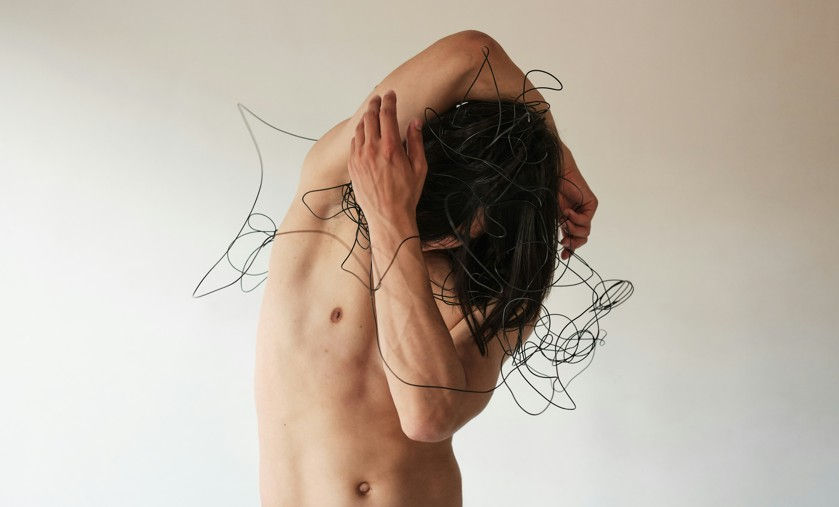
Healing is not always about letting go, it is about finishing what was never completed
For many years, I approached these experiences in the same way most practitioners do. A patient would arrive with pain, insomnia, digestive issues, migraines, or chronic tension, and my attention naturally focused on the symptom itself. Over time, however, I became interested in something else. Not the symptom. The state behind it.
Why do some experiences stay with us?
Most of us assume that once an event is over, it belongs to the past. Yet our daily lives suggest something more complex.
A familiar song can transport us back twenty years in an instant. The scent of a particular perfume can awaken emotions we haven't felt in decades. Sometimes a seemingly insignificant comment can provoke a reaction that feels strangely disproportionate to the moment. Experiences like these remind us that human beings do not operate purely through logic or conscious memory.
Something deeper is constantly at work. The more I studied the nervous system and the more patients I treated, the more I found myself returning to the same question, "What exactly does the body remember?"
The body often remembers states, not stories
Modern neuroscience has transformed our understanding of memory. Increasingly, researchers recognize that memory is not simply a collection of stories stored in the brain. Much of our experience is encoded through patterns, associations, and physiological states.
This makes intuitive sense. Most people cannot remember every detail of a difficult period in their lives. Yet they often remember how it felt. The pressure. The uncertainty. The constant vigilance. The feeling of carrying more than they could comfortably hold.
In my clinical experience, symptoms often seem more connected to these states than to the events themselves. The story may be over. The body's adaptation to the story may continue.
What years of clinical practice have taught me
"A patient I never forgot."
One patient in particular has stayed with me. He came to my clinic with severe back pain. Movement was difficult, sleep was poor, and the pain had begun to dominate his daily life.
During his first acupuncture treatment, something unexpected happened. Within a few minutes, tears began running down his face. We were not discussing emotional issues. In fact, very little had been said at all.
As practitioners, we occasionally witness emotional responses during treatment, so the tears themselves were not what caught my attention.
What surprised me was what happened afterward. The pain that had brought him to the clinic disappeared after that session and never returned.
To this day, I cannot fully explain what happened. But experiences like this have made me increasingly curious about the relationship between physical symptoms and processes that seem to operate beneath conscious awareness.
Symptoms or unfinished processes?
For most of my career, I viewed symptoms primarily as problems to solve. That is, after all, why people seek treatment. Something hurts. Something feels wrong. Something is interfering with their quality of life.
Yet over the years, another perspective began to emerge. What if some symptoms are not simply signs of dysfunction? What if they are evidence that the body is still attempting to complete something?
This is not a new idea. Different healing traditions have described it in different ways for centuries. What interests me is not the language we use, but the observation itself.
Human beings seem designed to move through experiences. When that process is interrupted, something often remains unresolved.
The nervous system was designed for completion
When we encounter stress, the body responds immediately. Our muscles prepare for action. Breathing changes. Attention narrows. Hormones are released. Every system shifts toward protection and survival. Under normal circumstances, the response resolves once the challenge has passed. The body returns to balance. The nervous system settles.
Life continues. The reality, however, is that many experiences do not unfold under normal circumstances. Sometimes we suppress what we feel because there is no time or space to process it.
Sometimes we carry responsibilities that force us to keep moving long after we have reached our limits. Sometimes life simply asks us to function when every part of us would prefer to stop. The event ends. The adaptation remains.
An ancient perspective on movement
One of the reasons I continue to appreciate Traditional Chinese Medicine is its elegant simplicity. For thousands of years, health has been understood through the concept of movement.
Qi moves. Blood moves. Breath moves. Life moves. When movement becomes restricted, symptoms begin to appear. Although the language differs from modern neuroscience, the underlying observation feels remarkably familiar. Health is not a static condition. It is a dynamic process of adaptation, regulation, and flow.
When the body starts moving again: A different kind of release
Another patient taught me something important about this. She arrived carrying years of physical tension. During treatment, her entire body began to tremble in gentle waves.
Not dramatically. Not alarmingly. Simply as though something deep within her system had begun to move. I observed quietly and allowed the process to unfold. When the treatment was over, she sat up slowly and said something I have never forgotten.
"I feel free." Not pain free. Not relaxed. Free. The distinction mattered. It felt as though the treatment had affected something larger than the symptom itself.
Why healing doesn't always feel comfortable
One of the more interesting patterns I have observed is that change does not always arrive as people expect. Many assume that healing should feel pleasant from beginning to end. Sometimes it does. Sometimes it doesn't.
Occasionally, patients report vivid dreams, emotional sensitivity, unusual fatigue, or temporary fluctuations in their symptoms after treatment.
Years ago, I found these reactions puzzling. Today, I see them differently. When a river has been blocked for a long time, restoring its flow is not always a quiet process. Pressure changes. Movement returns. The entire system reorganizes itself. Perhaps human beings are not so different.
Why the body holds on
This brings me to questions that continue to shape my work.
Why does the body hold on at all?
Why maintain tension that is no longer needed?
Why preserve protective patterns long after the original danger has disappeared?
I no longer believe the body does these things because it is malfunctioning. More often than not, I suspect it is doing exactly what it was designed to do. Every adaptation begins as an attempt to protect us. The challenge is that some adaptations outlive the circumstances that created them.
The body does not hold on because it wants to suffer. It holds on because, at some level, it may still be waiting for completion.
A different way to think about healing
This perspective has changed the way I think about healing. Rather than asking only how to eliminate symptoms, I have become increasingly interested in what those symptoms might represent.
Not as messages. Not as metaphors. But as evidence of an organism still attempting to restore balance. Perhaps healing is less about fixing what is broken and more about allowing interrupted processes to continue. Perhaps some of the most profound changes occur when the body finally feels safe enough to stop holding on.
Final thoughts
After years of clinical practice, I have become less interested in symptoms and more interested in states. Symptoms are often what patients notice. States are what seem to change first.
The longer I work in this field, the more I believe that healing is not always a process of removal. Sometimes it is a process of restoration. Sometimes it is a return to movement.
Sometimes it is the quiet completion of something that began long ago and never had the opportunity to finish fully. Perhaps that is why certain treatments can create changes that seem disproportionate to the intervention itself.
Not because something new was added. But because something that had been waiting was finally allowed to continue.
Ready to explore what your body may still be holding?
If you are struggling with persistent symptoms, chronic tension, emotional overwhelm, or recurring patterns that seem resistant to change, it may be worth looking beyond the symptom itself.
Sometimes the most important question is not, "What is wrong?" Sometimes it is, "What remains unfinished?"
Read more from Andy Husler
Andy Husler, Acupuncturist, Visionary, and Alchemist
Andy is a certified naturopath specialized in Traditional Chinese Medicine (TCM), recognized for his distinctive approach to acupuncture and integrative healing modalities. His treatments are designed to address acute and chronic physical as well as emotional pain by combining physical, emotional, and energetic alignment simultaneously. With a strong focus on tangible results, more than 80% of clients experience noticeable improvement during their first session.