What’s Love Got To Do With It?
Updated: Jan 18, 2024
Written by: Jessie RM Pandya, Executive Contributor
Executive Contributors at Brainz Magazine are handpicked and invited to contribute because of their knowledge and valuable insight within their area of expertise.

I’m sitting here wrapped up in my cosy blanket listening to the rhythmic lullaby of the rain against my window – pitter-patter, pitter-patter. It is now a number of days since Valentine’s Day. With its passing passes all of its hallmark clichés. Even so, I cannot help think about LOVE. Not the kind of love found in literature, art, dance, poetry, painting, songs. Rather the deepest love that shapes us, remains with us and moves us.
One of St. Teresa's of Kolkata's sayings about 'Love' that resonates inside of me is that 'we are created to love and to be loved'. Simple? Not for me and for many of us. Experiments, however, have demonstrated that infants who are provided with adequate food, water, shelter, clothing and warmth but denied human contact and affection will literally die.
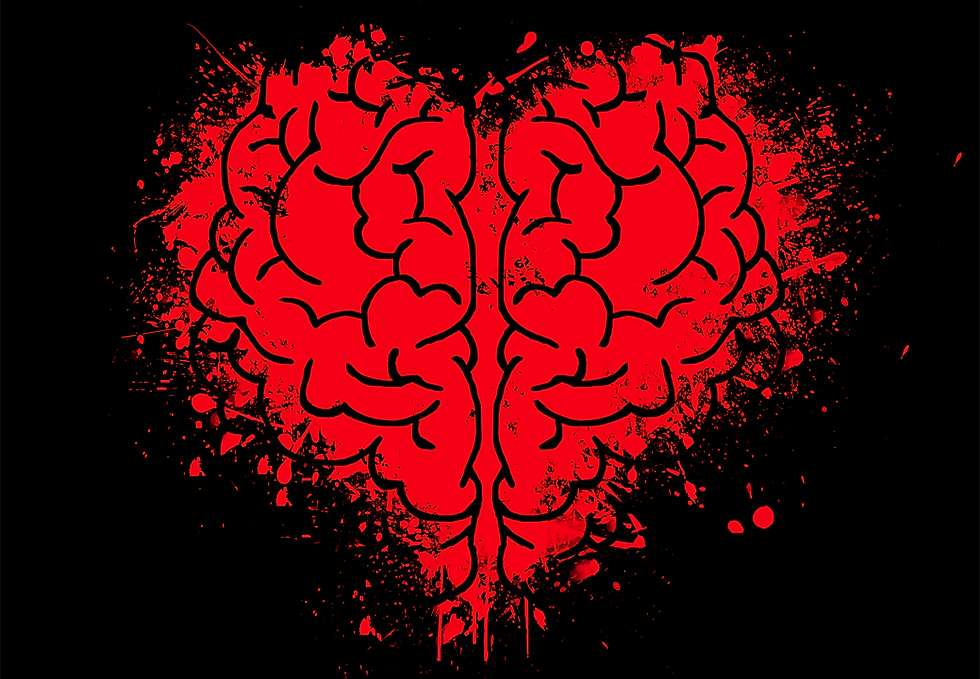
This means that St. Teresa was right. We are born hard-wired for 'Love'. Neuroscience shows us that the brain caries within it a genetic blueprint for 'Love' such that it is hard-wired into us from our early, childhood primary caregiver relationships. These early relationships take root in our brains and bodies right down to a cellular level and not only determine our physiological, mental health but also how we grow, navigate and explore our world and relate with other people.
As an Integrative Somatic Trauma therapist, I often encounter clients who have experienced Adverse Childhood Experiences or ‘relational trauma’. Neuroscientific research suggests that repeated experiences of relational failures become hard-wired in the brain. I believe the lack of hope of getting one's relational needs met can be very painful for the infant/child. As an infant/ child we learn to protect ourselves by 'creatively adapting' our patterns of relating, in order to please the 'other'. Although these adaptations will have been crucial at the time for self-protection, they can result in inflexible and unsatisfying ways of relating to self and others, in adulthood. These repeated experiences of relational failures are often at the root of what brings a client to therapy. They are caught in the suffering of feeling unlovable, unworthy, inadequate, a failure. They have shame, fear, a lack of self-confidence, self-doubt and low self-esteem. A phrase that captures this truth is “the neurons that fire together, wire together" (Hebb, 1949). As such if our earliest relational experiences are of reaching out then being rejected this gets hard-wired in our unconscious implicit memories and create a story about being unloved and thus unlovable. These feelings can then be triggered in current relationships when we are met with similar experiences of rejection.
Positive and negative unconscious memory patterns can thus have an influence on future relationships. If it is negative then it may what show up in adult relationships as fear, rejection, shame, avoidance and blocks to intimacy. Thankfully, however, these unconscious implicit memory patterns can be rewritten and rewired through a safe, steady, stable experience. The person can have a felt sense in the body of being seen, heard, cared for, understood and accepted by a safe and compassionate other. In short, they can experience love within a therapeutic relationship. This in turn can bring the person to be able to encounter others in a healthy relationship and know they can love and be loved.
Visit my website for more info!
Jessie RM Pandya, Executive Contributor Brainz Magazine
Jessie RM Pandya, is a U.K. registered Integrative Somatic Trauma Therapist & Coach (MBACP), with over 25 years of experience in the Health, Wellness & Lifestyle industry. Jessie is a dedicated Trauma specialist, with a background in Nursing and Coaching. She is passionate about helping clients to address the root causes of Anxiety, Depression, Burn out, P.T.S.D, and Stress, which might be the result of a past or current traumatic event. Jessie has helped many clients to break free from the Trauma cycle and live to their fullest potential, without years of therapy. Jessie has undertaken further intensive Somatic Trauma Therapy training with world renowned author and trainer in the field of trauma Babette Rothschild. Jessie is passionate about transforming lives, through healing Trauma.