Western And Eastern Cultural Dynamics – Intersectionality Of Cultures For Asian Americans
Updated: Mar 13, 2025
Written by YourPlace Therapy, Mental Health Practice
Your Place Therapy champions compassionate mental health care with a special commitment to AAPI representation. Based in NYC, their team of licensed social workers provides empathetic and inclusive care, empowering clients to start with where they're at.

API stands for Asian and Pacific Islander. The API community encompasses a diverse population from various countries in the Asia-Pacific region, including East and Southeast Asia, along with the Indian subcontinent and the Pacific Islands, which comprises the major subregions of Oceania: Melanesia, Micronesia, and Polynesia. This three-lettered community represents more than 30 different countries with different ethnicities and cultures. Historically, these communities were grouped with the intention of creating alliances to simplify government classifications. AAPI or “Asian American and Pacific Islander” is also a commonly used term, but there is some debate on the term as it only presumes Asian Americans. They are both commonly used in society and media, but we will use API as it encompasses the community as a whole.
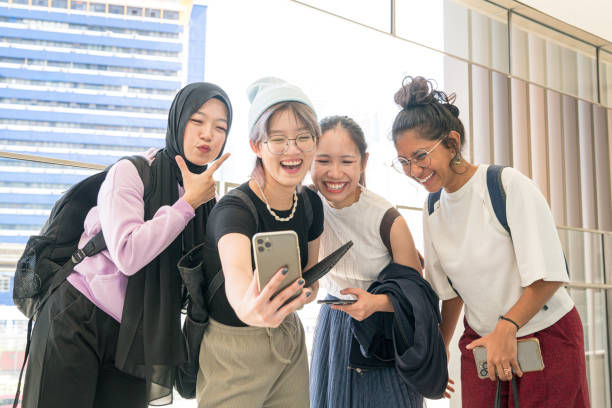
API awareness has grown in the last few years through its increased representation in America. API storytelling is being shown more in Western media with films like Moana and Everything, Everywhere, All at Once, along with T.V. shows such as Never Have I Ever. In addition, popular films such as the South Korean film, Parasite, have been receiving recognition and won awards. These media depictions highlight these communities' varying cultures, traditions, and communities.
Fun Fact: “Asian American” was coined by student activists to replace the derogatory word, “oriental” for Asians in the United States.
Understanding the values of the API community involves recognizing the differences between Eastern and Western cultures.
Dynamics of eastern and western cultures
For the purposes of this article, we will be focusing on the Asian Eastern cultures and the practices, traditions, and beliefs of its 3 regions: East Asia, Southeast Asia, and South Asia. Asian Eastern cultures often function in a collectivist mindset, where its center is more on a community rather than an individual. The priorities lie in the well-being and needs of the community rather than individualistic goals. The group aims to maintain good relationships and intra-group harmony. As a result, self-identity and belonging are based on their community and their role in it. There is also an emphasis on having a strong sense of duty towards one’s family and close relationships. Families work as a unit towards common goals and struggles and typically share strong emotional bonds. Reputation and responsibility hold high importance as one’s actions represent both the individual and the community.
Disclaimer: While we understand the importance and differences of Pacific Islander culture, we, the authors of this article, cannot speak to those experiences as we are not a part of that community and can only shed light based on our Asian American cultural identities.
Western society predominantly has an emphasis on individualism. Individualism is the ideology that prefers self-reliance while prioritizing one’s personal ambitions and goals above the community's needs. This individualistic mindset allows you the freedom to make your own choices. In Western cultures, families typically consist of parents and children who live in the same household. The nuclear family structure demonstrates the ideology of individualism through its detachment and separation from the support of extended family. It is a dynamic that most Western cultures strive to create. Western culture emphasizes individualism because there is an expectation that the members are supposed to be stable without the support of others.
Intersectionality of cultures as second-generation asian americans
“As a second-generation Vietnamese American and a son of immigrants, I am deeply rooted in Western and Eastern Cultures. My parents had a large influence in instilling the values and traditions of my Vietnamese heritage while attending school taught me Western cultures and customs. As I matured, I realized the parallels and variations between the two cultures and the importance of learning to navigate between individualistic and collectivist values. I first experienced these conflicting approaches when I moved out for college. My parents wanted me to stay close, but I wanted to pursue my educational career away from home. I incorporated both individualist and collectivist ideas by choosing to attend a college away from home, yet close enough to extended family to guarantee a trusted support system. To manage these contrasting ideas, I did my best to respect and internalize the values my parents taught me while trying to pursue my own goals.” – Alexander Nguyen
“As a Chinese American, I experienced both cultures as I grew up with a Western mindset while being rooted in traditional Eastern values. I was at a crossroad trying to navigate this intersectionality as my cultures have conflicting views. Career-wise, my Western education taught me that I am the sole chooser of my future while my Chinese heritage deemed it as a group decision of what is best for the family. Ultimately, I chose the career that I wanted to pursue but made achievements in this field so that I could be successful like my parents envisioned for me. I learned that I make decisions asserting my individuality and independence by taking into account my cultural heritage. Blending these mindsets, I pursue my goals and aspirations but also ensure that those choices can bring honor to my family.” – Rachel Ng
We can understand the intersectionality of the Western and Eastern cultural dynamics through Asian Americans’ overlapping cultures tied to one’s identity. Those in the API community may struggle with the issue of navigating through the nuances of individualistic and collectivist values, which are exemplified in Alex and Rachel’s personal experiences in dealing with clashing values which includes family expectations and personal objectives. In the end, both were able to reconcile the expectations that were set in stone by their Western and Eastern cultural dynamics by embracing the complexity and diversity that derives from the API community. As society moves to become more diverse, we move in a direction where individualism and collectivism can be celebrated and valued.
Need guidance in understanding clashing values with one’s identity?
Read more from YourPlace Therapy
YourPlace Therapy, Mental Health Practice
YourPlace Therapy is a New York City-based mental health practice dedicated to advancing emotional wellness with a focus on AAPI representation. Their skilled team of AAPI mental health clinicians emphasize personalized, inclusive care that center the client as partners for growth. Passionate about fostering safe spaces and supportive environments, they help individuals from diverse backgrounds achieve personal growth and a stronger sense of self.