Types of Ecotherapy
Written by Sarah Frustié, Ecotherapist, Forest Guide, Nature Retreat Facilitator and Holistic Counsellor
Sarah Frustié is an ecotherapist, forest guide, nature retreat facilitator and holistic counsellor working between Australia and France. Through nature-based practices, she supports people in caring professions navigate burnout, ease chronic stress, and reconnect with the Earth.

Most of us move through daily life without noticing how often we are already in contact with nature’s quiet healing presence. This article invites you to recognize ecotherapy in your everyday routines and explore how intentional connection with the natural world can support wellbeing and inner balance.
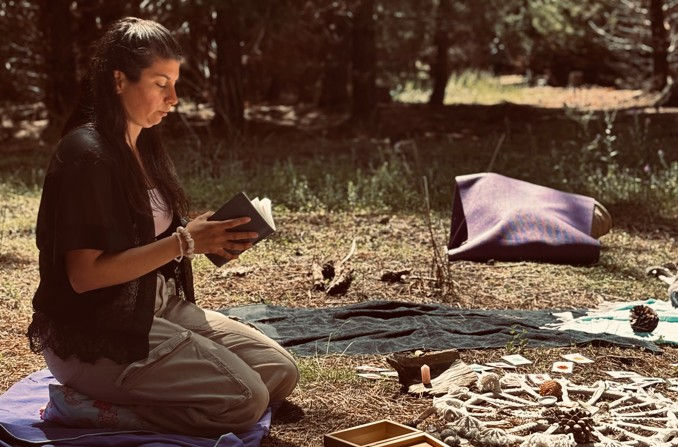
Great news! You have been practising ecotherapy without even realizing it. In simple terms, ecotherapy is the process of reconnecting with yourself through experiencing the natural world. Ecotherapy practices are often slow, simple, and sacred, inviting us to return to a deeper relationship with nature, the body, and the present moment.
The beautiful thing is that it does not need to be complicated. Ecotherapy can happen indoors or outdoors, in small everyday moments as much as in deep and immersive experiences in nature.
In this short article, I will explore some types of ecotherapy and other Nature Based Therapies (NBTs). There are many different ways to reconnect with the Earth and with ourselves. Here are a few examples.
Adventure Therapy, outdoor challenges that support resilience, personal growth, and group connection.
Animal-Assisted Therapy, healing relationships with animals, including equine therapy, cat and dog therapy.
Care Farming, working with plants and animals in a farm environment to support wellbeing.
Eco Art Therapy, creative expression using natural materials and elements.
Forest Bathing (Shinrin Yoku), a soulful Japanese practice of slow, mindful immersion in the forest (my offering in the Kuitpo Forest in the Adelaide Hills).
Gardening and Horticultural Therapy, the act of nurturing plants to cultivate self-care and emotional well-being.
Green Exercise, outdoor movement practices such as walking, running, hiking, or yoga.
Mindfulness in nature, the art of breathing deeply outdoors, watching birds, hugging trees, touching grass, or smelling flowers.
Nature Meditation and Guided Visualization, grounding practices inspired by the natural world. Simply meditating in nature, on a rock, near the ocean, in the forest.
Natural and Whole Foods Nutrition, what goes in your body is important. This is the practice of using herbal, botanical, and natural remedies to nourish body and mind.
Walk & Talk Therapy, engaging in counselling sessions while walking outdoors in nature (my offering in the Adelaide Hills).
Wilderness Therapy, immersive retreats and camping experiences designed to support healing and transformation (what I offer on French and Australian soils).
There is no single “right” way to practice ecotherapy. It does not have to be big either. Less is More, Simple is Better. Small is best.
You can start with 10 minutes a day. Go for a walk without technology and walk slowly, listening to the birds, hugging a tree, looking at the leaves falling, looking at your feet on the ground, and smelling the bush flowers. Whatever is available to you at this moment.
Nature meets us where we are. Sometimes healing begins with something as simple as sitting beneath a tree, feeling the wind on your skin, or noticing the sound of birds at sunrise. Perhaps the Earth has been supporting you all along.
If you’re ready to slow down, reconnect with your wild self, and explore the healing benefits of nature, I offer a free 20 minute phone call to start your path. You can visit my website or email me here.
Read more from Sarah Frustié
Sarah Frustié, Ecotherapist, Forest Guide, Nature Retreat Facilitator, and Holistic Counsellor
Sarah Frustié is a bilingual ecotherapist, holistic counsellor, and forest guide based in the Adelaide Hills and France. She supports people in caring professions to navigate burnout, release chronic stress and anxiety, and reconnect with themselves through nature-based practices, forest bathing, and guided nature and meditation retreats. With a deep belief in the healing power of the natural world, Sarah blends mindfulness, eco-psychology, trauma-informed, and whole-person approaches to create safe and sacred experiences. She is the founder of Sarah Frustié Therapy, where every session is an invitation to slow down, breathe, and connect with the living world.