The SSI Methodology – A Training Philosophy by SSI Performance
Written by Valérie Leone, Fitness Coach
Valérie Leone serves as Personnel Selection Officer in the Canadian Armed Forces. She holds a master's degree in criminology, co-founded the South Shore Iron gym in 2019, and is a dedicated powerlifting athlete. She has taken several other lifters under her wing and has helped them on their quest in strength sports.

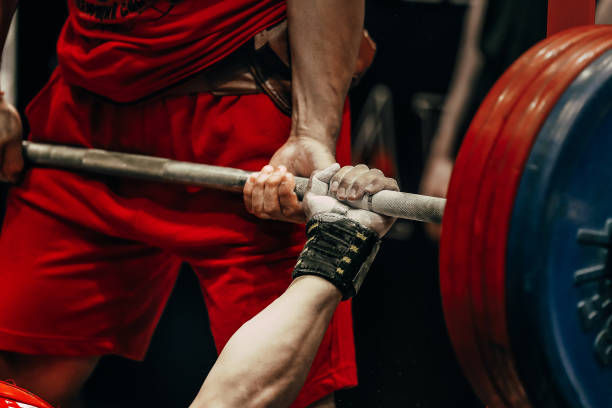
At its core, the SSI Methodology is about the accumulation of perfect reps. The focus is on developing mechanical precision first and loading second. Built on the principles of linear progression and progressive overload, the system is simple in its execution but ruthless in its demand for discipline.
The method follows three clear steps:
Teach the movement
Load the movement
Cultivate a winning mindset
Chapter 1: EDI – Explain, demonstrate, imitate
My background in the military plays a central role in how I coach. One of the most powerful and transferable systems I’ve carried over is EDI – Explain, Demonstrate, Imitate.
Whether we were drilling weapon handling or fieldcraft, the formula was the same. We broke complex movements into digestible chunks, practiced each one individually, then combined them into fluid execution, eventually performing at full speed under stress.
This system works seamlessly for strength training. The big three powerlifting movements, squat, bench, and deadlift, can all be broken down into technical subcomponents. We teach each piece, drill them in isolation, and only then begin stringing together complete, fluid reps.
"Perfect reps" is non-negotiable in this system. It’s not a casual suggestion, it’s the bar. Every lifter under my eye will hear it daily. Perfect reps mean no wasted motion, no half-executed technique, no surviving the rep, you dominate it. We train the body to execute with precision because when the pressure is on, the body doesn't rise to the occasion, it defaults to training. And if your training was half-assed, your performance will be too. We drill until perfection is the norm.
Breaking things down into components and hammering each part is also a core principle of Westside Barbell and Louie Simmons. Westside was one of the first systems I read that deeply resonated with how I naturally approached training. Louie’s focus on identifying weak points and targeting them with intensity, using tools like bands, chains, and variations, made perfect sense. I knew then I was on the right path. Though I didn’t fully understand how to apply every Westside tool early in my career, that philosophy of precision and targeted development stayed with me and helped shape this methodology.
Chapter 2: Accumulation of reps and loading in the SSI Methodology
Once the technical foundations are in place, built through perfect reps and pattern reinforcement, we can begin to load. But the loading isn't random. It is structured through linear progression and governed by rep ranges that make sense for the athlete's level.
We prefer to begin with hypertrophy rep ranges, especially for new lifters. Beginners start in the 8 to 12 rep range. Not only does this reinforce technical cues through more practice volume, but it also builds the necessary muscle mass. Most beginners don't have the physical structure yet to lift seriously. They need muscle. They need time under tension. They need to correct years of bad posture, weak backs, and imbalanced hips. Hypertrophy training does that.
For intermediate and advanced lifters, the working range shifts to 5 to 8 reps. The movement patterns are usually locked in by this point, so we can transition into more strength-specific work without sacrificing form.
The beauty of this setup is that in the early technical phase, you’re building patterns and building the body at the same time. It’s efficient. It’s foundational. And it’s where most programs fail.
What I see too often is coaching that jumps straight to classic powerlifting templates, low reps, high intensity, and peaking-style programming right from day one. It looks good on paper. But in practice, it produces bad habits: stripper squats, cat-back deadlifts, and soft benches. Unbeknownst to them, athletes in this situation are trying their best and sacrificing form just to complete the lift. That principle runs against my philosophy. We delay gratification until the rep is carried out with control and certainty. We don't guess, we execute. And often, the difference between the sloppy rep today and the clean, confident one is just a matter of a few months of proper training. Sure, progress happens for a while. Sheer grit and CNS drive can take a lifter surprisingly far. But it caps out fast. And once that wall hits, there’s nowhere to go.
Our athletes don’t hit that wall. We build right from the ground up, rep by rep, muscle by muscle. We don’t skip steps, and we don’t cut corners.
Chapter 3: A habit of winning
It's not just about winning, it's about developing the habit of performance.
One of my athletes once asked why I was so calm during meet prep, why I didn’t seem nervous. I told him it is just a job now, a regular performance, a task that gets completed.
Much like a tradesman goes to work and installs wiring or fixes plumbing, lifting isn’t complicated when done right. You show up, execute, and move on. That is what separates a professional from a hobbyist. It is not hype. It is not chaos. It is a habit. It is readiness backed by reps.
I discourage frequent maxing out. It invites randomness, ego, and inconsistency. Instead, we build athletes who are used to succeeding, who trust the bar they are loading because it is within reach. More importantly, they trust the coach. If I load a PR, it is because you are ready. And if you have been stacking clean reps week after week, you know you are ready too.
We aim to chip away at our bests. A 5 to 10 lb PR performed clean is more valuable than a sloppy 25 lb jump that gets missed. Confidence grows with success. Execution becomes routine, not a gamble.
Think of your training like a bank:
Perfect reps are deposits
Small, clean PRs are interest gains
Max attempts are rare, intentional withdrawals
Our win-at-all-cost mentality, obviously within the rules and ethics of the sport, is present in everything we do. Cutting protocols. Meet prep. Injury management. Therapy and recovery. Behind every clean lift on the platform, there is a pile of behind-the-scenes work nobody sees.
When we travel, we plan every detail. We know what we are eating. We know what equipment we are bringing. We check with hotels or Airbnbs in advance to confirm bathtubs or whatever we need for water cuts. The goal is always to maximize performance, especially under pressure.
We are known for this. Our cutting protocols are refined, calculated, and built around maximizing coefficient scores. Whether someone sneers at DOTS lifters or not, the reality is that if you want to be competitive at the top, you have to optimize. You do not carry unnecessary weight. You do not stay soft. You cut fat. You cut water. You show up dialed in.
That is not ego. That is preparation.
Conclusion
The SSI Methodology isn't revolutionary. It is built on timeless principles, discipline, repetition, and structure, adapted from the military and refined in the gym. We do not chase hype or shortcuts. We do not care for overcomplication or fluff. We take people who want to get stronger and we build them, methodically, technically, and mentally.
From perfect reps to calculated loading, from mindset to meet prep, this method is forged in consistency. Success is not an accident, it is the result of showing up, doing the work right, and doing it often.
If you follow this methodology, you will lift more than just weight. You will build the kind of work ethic and resilience that carries over into everything you do. And that is what it means to train the SSI way.
Valérie Leone, Fitness Coach
Valérie Leone is balancing her role as a Personnel Selection Officer in the Canadian Armed Forces with her academic achievements in psychology and criminology, along with operating the South Shore Iron gym in Montreal. Her background in psychology and criminology likely provides her with a unique perspective on the mental and emotional aspects of training, leadership, and personal growth. Her role in the Canadian Forces gives her a sense of discipline and resilience that undoubtedly influences her powerlifting career and the way she mentors others. Her mission: creating a space where others can not only pursue physical fitness but also find a supportive community to help them grow.