The Absurd Art of Outsmarting Your Own Fear with Paradoxical Intention
Sarah Merron is an NLP Trainer and Self-Leadership Coach who has transformed mindsets since 2008. With her extensive experience, she has trained and coached individuals from all walks of life, including business leaders, entrepreneurs, parents, athletes, and more. Sarah's expertise lies in Neuro-Linguistic Programming (NLP), Hypnosis & Time Line Therapy® techniques. For 15 years, she has been helping people develop actionable self-insight and self-awareness and map their version of success. With her guidance, you can design an authentic life that truly feels like you.

Fear and anxiety love to play hide-and-seek, except they’re terrible at it because they always hide in the most obvious places: your mind, your sweaty palms, and that weird tight feeling in your chest. What if I told you there’s a way to confuse fear so badly that it just gives up and walks away? Enter Paradoxical Intention, a psychological technique from Viktor Frankl’s Logotherapy.
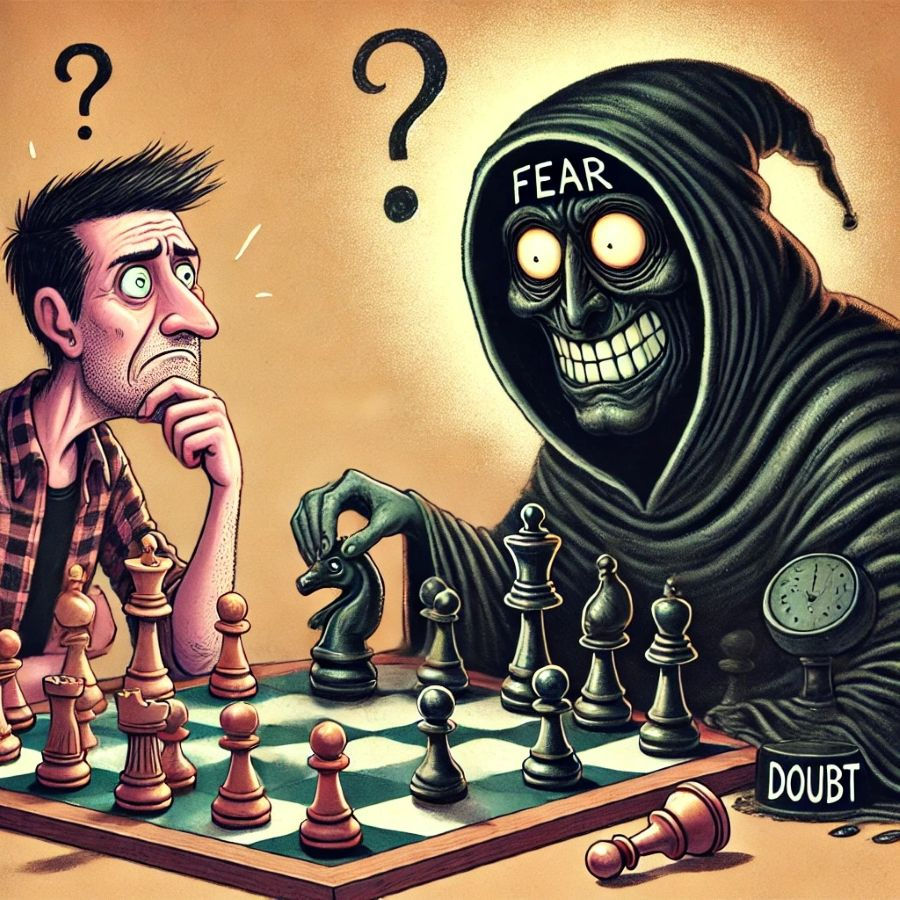
This idea is founded on three core concepts: freedom of will, the will to meaning, and the meaning of life. It suggests that the best way to stop fearing something is to do it purposefully. Sounds insane? Welcome to the club.
Wait, you want me to do what?
Paradoxical Intention works on the principle that the harder you try to avoid something, the more it messes with you. It’s like trying not to think about a pink elephant. (Oops. There it is.) Frankl discovered that instructing people to exaggerate their fear often led to an immediate reduction in anxiety.
For example, if you’re terrified of looking awkward in social situations, instead of trying to blend into the wallpaper, you go full-on social catastrophe. You trip over the air, wave at someone who isn’t waving back, and butcher a handshake into an accidental fist bump. By deliberately doing what you fear, you trick your brain into realising the situation of dread is less dreadful than you might imagine.
Why does this ridiculous hack work?
Pattern interruption: Fear runs on a predictable loop - cue, panic, avoidance. Throwing in an unexpected "I meant to do that!" short-circuits the process.
Fear loses its drama: Once you intentionally act like an awkward penguin, your brain gets bored and moves on to more important things, like food.
You stop fearing the fear: Often, it’s the anticipation that's scarier than the event itself. Facing it head-on forces it to lose its horror-movie soundtrack.
Cognitive confusion: Your brain doesn’t know how to process, "I’m afraid of this, yet I’m doing it on purpose." It short-circuits, and fear loses its power.
How this ties into NLP (because, of course, it does)
This wacky concept is actually a beautiful fit for Neuro-Linguistic Programming (NLP). It triggers a pattern interrupt, reframing fears, and underscores the golden rule that resistance isn’t failure - it’s just a stubborn toddler in your subconscious throwing a tantrum.
Pattern interrupts: Confuse your inner drama queen
NLP loves a good pattern interrupt. Paradoxical Intention is the ultimate WTF moment for your brain. Instead of feeding fear with avoidance, you hit it with, “Let’s make this even worse!” and suddenly, your anxiety is like, "Wait, what? That’s not how this game works!"
Reframing fears: From terror to comedy
Fear thrives on seriousness. If you treat fear like a joke, it deflates faster than a poorly made soufflé. Paradoxical Intention turns your scary scenario into a sitcom episode starring you.
Resistance = Feedback (not a sign that you should give up)
NLP teaches that resistance isn’t a stop sign; it’s just a signal that something needs tweaking. When fear pops up, instead of backing away, run towards it like a dramatic slow-motion scene in an action movie.
Real-life ways to troll your own anxiety
How can you actually use this technique without looking completely unhinged? (Well, maybe just a little unhinged.)
Public speaking jitters. Instead of trying to be perfect, say, "I’m going to mess up spectacularly in the first five minutes!" Watch as your anxiety deflates like a sad balloon and realises nothing catastrophic happened.
Fear of rejection? Make it a goal to collect 10 rejections. Bonus points if you get a creative one ("Sorry, I only date people who own llamas").
Perfectionism taking over? Submit something with a deliberate typo and bask in the realisation that the world didn’t end.
Scared of failure? Aim to fail at something on purpose and see how absurdly not world-ending it actually is.
Befriend the fear, then roast it
Paradoxical Intention is like playing a mind game with yourself and winning. When we stop treating fear like an evil overlord and start treating it like an annoying younger sibling, we realise we were in control all along.
So the next time anxiety tries to run the show, flip the script. Make it your idea. Turn it into a joke. Then watch as your fear awkwardly packs its bags and leaves for a long holiday.
Sometimes, the best way to outsmart fear is to out-weird it.
Read more from Sarah Merron
Sarah Merron, NLP Trainer & Self-Leadership Coach
Sarah Merron is an NLP Trainer and Self-Leadership Coach who has transformed mindsets since 2008. With her extensive experience, she has trained and coached individuals from all walks of life, including business leaders, entrepreneurs, parents, athletes, and more. Sarah's expertise lies in Neuro-Linguistic Programming (NLP), Hypnosis & Time Line Therapy® techniques. For 15 years, she has been helping people develop actionable self-insight and self-awareness and map their version of success. With her guidance, you can design an authentic life that truly feels like you.