Squashing The Stigma Around Emotions ‒ Emotions Are The Key To Growth, Not A Sign Of Weakness
Updated: May 9, 2024
Written by: Kristian Reiber, Executive Contributor
Executive Contributors at Brainz Magazine are handpicked and invited to contribute because of their knowledge and valuable insight within their area of expertise.

In today’s world, it appears that there is just as much a stigma around showing emotions as there is around mental health. It’s not hard to see the parallels between these two similarly negative and pervasive problems. Similarly, it’s not hard to see how squashing these stigmas would greatly benefit our global society. While there seems to be momentum behind ridding the world of the stigma around mental health, I haven’t noticed attention given to the negativity related to emotions.
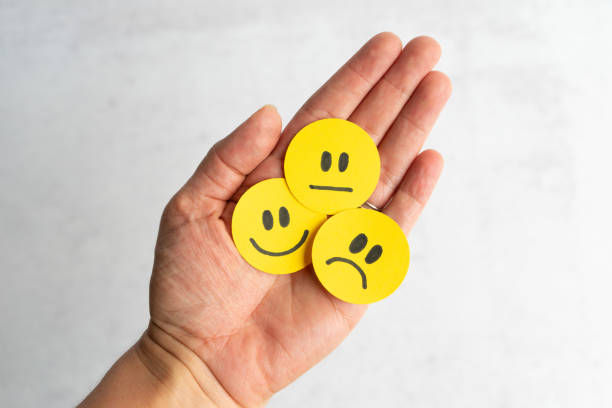
Imagine the possible heights we could reach, as a worldwide community, when these taboos and stigmas are finally eradicated. For me, the possibilities stand out as what’s important, so I believe it’s best to focus more on ideas related to rising up rather than concentrating on the current problem.
What if we allow emotions to arrive, recognize which emotions show up, understand why the emotions come up, learn the lesson the emotions are teaching, and let them go instead of pushing them away? What if we changed the long-standing and close-minded narrative by reacting to the expression of emotions with unconditional love and support? What if we simply empathize with others who are going through difficulty and struggle by telling them we’re there for them and that we’re listening? What if we joined in on celebrating “over-the-top” positive emotions with friends and family instead of being guarded? What if we stopped judging everyone’s emotional reactions and just let them have the space to express what they need, or want, to express?
The future can tell a different story
Think of how many ways the narrative is communicated that it’s unacceptable to show most emotions. We hear it in conversations and witness people’s reactions to others’ emotions, we see it on TV and in movies, and we read it in books and magazines. While there are rare exceptions to the many messages that say emotions are taboo, the vast majority of those messages echo the stigma. These valuable exceptions are based on acceptance and tolerance, spelling out the uncommon truth that emotions NEED to be expressed so that healing, growth, and positive change can occur.
How many times have you witnessed people’s reactions when others tear up or express frustration? Oftentimes, the reaction is something dismissive like rolling eyes or giving a toxically positive statement like “you shouldn’t feel that way,” or becoming visibly uncomfortable. It’s as if the only allowable emotions, in public, are positive: mild happiness, mild excitement, and gratitude. Even intense positive emotions, like pure joy, elation, unbridled excitement, and tearful gratitude are considered “over-the-top,” “dramatic,” or “too much,” and are unwelcome in most cases. Say nothing of the disturbing array of intolerant reactions negative emotions elicit. With the very wide range of emotions that are part of human existence, this extreme restriction on them can lead to countless damaging results.
For me, growing up surrounded by men who were macho, be-a-manly-man-or-else types, and by women who almost universally internalized their emotions, I was trained to dismiss emotions, or push them away, at all costs. Being disconnected from emotions, and believing that showing them was NEVER ok, I built up an impenetrable wall to hold them in. This severely limited my ability to connect with others in authentic or vulnerable ways. I had to display toughness and resiliency at all times, or fear being called a “weakling.” The wall I built also hardened me against change, reflecting the countless ways I was taught that change is uncomfortable and not worth the effort.
Let’s create a new way
The Old Model, from my perspective: “You’re being dramatic,” “toughen up,” “quit being a sissy,” or “real men don’t act like this” are a just a few of the insulting responses I’ve been hit with when I expressed emotions like frustration, sadness, grief, or disappointment. Less harsh reactions like “it could be worse,” “think happy thoughts,” “you’ll get over it,” “cheer up,” “always look on the bright side,” “everything happens for a reason,” “good vibes only,” “it will all be fine,” and “don’t be so negative” are no better.
These less insulting reactions aren’t better because they’re nothing more than toxic positivity, which is usually intended to help, but often results in a lack of connection. This type of positivity isn’t based on empathy; it comes from people who feel uncomfortable with witnessing negative emotions. In short, toxic positivity is either rejecting others’ negative emotions or reacting to them with fake comfort. Whether insulting or toxically positive, these types of responses never helped anyone deal with emotional situations.
The New Model, from the heart’s perspective: We can replace toxic positivity with supportive, empathetic communication. We can show our understanding by acknowledging that the situation is hard and that they’re not alone. We can give others space to express emotions that come up, without being critical or judgmental. We can allow, and even join in on, emotions that might seem excessively positive from our point of view. After all, we can’t read minds, and another person’s view of the situation might easily justify the heightened positivity.
Four steps to handle emotions
When I discuss emotions with clients, friends, and/or family, I encourage them to get in the habit of following four steps when their own emotions arrive.
1. Allow yourself to feel the emotion
First, allow the emotion to be there, and try to avoid dismissing it or pushing it away, no matter how uncomfortable it may feel, and no matter how “triggered” one may become by its presence.
2. Identify the emotion
Next, recognize which emotion, or combination of emotions, has arrived. This second step can be difficult if one is not familiar with the language around emotions, but luckily there is an insightful resource available. Atlas of the Heart is a new book and HBO/Max Series by Brené Brown, Ph.D., MSW. Armed with decades of research around shame, vulnerability, human interaction, authenticity, and emotions, she breaks down the science of what’s revealed in her research into very relatable words about the feelings born in the heart. Within the pages of her book, and in the episodes, Brown provides language we can all understand, and resonate with, so that we are able to recognize each emotion for what it is.
3. Understand the cause
Once we recognize the emotion, we can take the third step of understanding what caused it and why it’s there. While there are countless causes, emotions are almost always there to teach us something. If we ignore what caused the emotion by dismissing the reason why it’s there, we can’t take the next step.
4. Understand the lesson
The fourth step involves learning what the emotion is trying to teach us. If we don’t learn the lesson, it’s almost certain to return as something more intense later on.
We’re all likely to have witnessed someone blowing up unexpectedly over something that seems like “no big deal.” What we’re not considering is that the individual may already be frustrated or may have had that same thing happen so many times that blowing up can quickly become the knee-jerk response. This is a very common example of how a lack of communication and repeated dismissal of mild emotions can lead to the emotion returning with more intensity.
By taking these four steps, we can allow the emotion to run its course and dissipate after we’ve learned what it’s teaching. Contrary to what many of us have been taught, we don’t have to push it away or dismiss it to be able to move on with our day.
Why do we need to feel emotions?
In order for a person to make healthy lifestyle or mindset changes, they must first feel the emotions connected with the resistance that appears when those changes are considered. Unfortunately, when we’re resistant to change, information is rarely enough impetus to get the change started. This can commonly be seen in the case of someone who wants to give up a vice, or a bad habit, but finds it difficult. If the person can connect with an emotional reason to change, their chance of success rises significantly.
An example of this might be someone who’s in the habit of unconscious snacking which is causing significant health problems. Even if the person knows that snacking causes issues, that knowledge may not be enough of a reason to make a change. On the other hand, what if, for instance, they realize that their habit will eventually take away their ability to play with their grandchildren? Their emotional reaction to missing out on playtime is likely to be much more of a powerful incentive for change than knowing “it’s not good for me.”
In this case, and in many relatable situations, emotional connections are a source of enduring strength. This, of course, stands as evidence against the notion that feeling, or expressing emotions, is a form of weakness. The stigma around emotions is false, in the same way, that the stigma around mental health is false.
Let’s squash these stigmas once-and-for-all! Let’s start by allowing our own emotions to show up and learn the lessons they’re teaching. Let’s allow others to feel their emotions without fearing judgment. Let’s give support and love to ourselves and others in times when we may have been critical, dismissive, judgmental, or intolerant in the past. I believe that with a collaborative effort, we can squash the stigma around emotions.
Kristian Reiber, Executive Contributor Brainz Magazine
Kristian Reiber is an author and a Certified Holistic Health and Mindset Coach who helps clients exchange failing habits and mindsets that have kept them stuck, for habits and mindsets that set them free. Many of his clients had been struggling with their challenges for years or even decades before transforming their lives with Kristian's guidance and support. He is co-author of Dare to be Authentic: Finding Your Purpose and has been featured on several engaging podcasts, including the Lifelong Wellness Podcast, Fibromyalgia Real Solutions, Business Talk Radio, and PBN Podcasts with host Jill Nicolini. Kristian found his purpose in helping people through their challenges after overcoming an almost two-decade-long struggle with autoimmune disease. He knew that others felt trapped in the symptom-based medical system like he did and knew that sharing his experience with healing through natural solutions and holistic medicine could help them overcome their challenges, as well. Kristian now works mostly with female entrepreneurs and leading professional women to help them achieve a healthy work-life balance. His history of overcoming abuse, addiction, autoimmune disease, and his own failing mindsets has uniquely equipped him to be able to empathize with clients and help them grow past their challenges.