Schuyler Tansey – Building a Future in Education
Some careers start with a single moment. Others grow slowly through experience, reflection, and purpose. For Schuyler Tansey, the path toward becoming an educator has been steady and intentional.
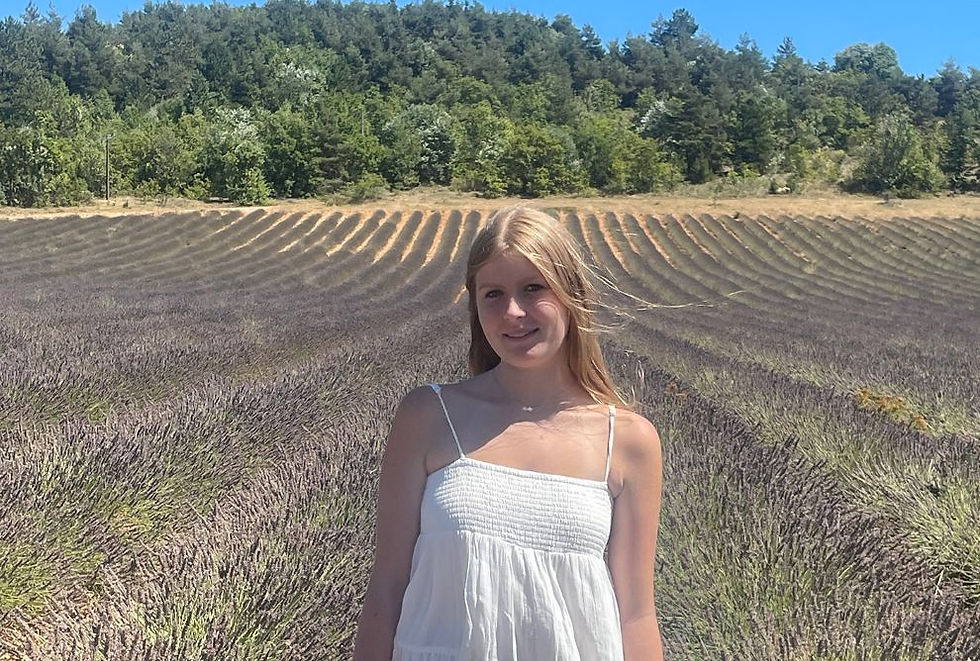
Born and raised in midtown Manhattan, New York City, she grew up surrounded by diversity. Different cultures, languages, and perspectives shaped her early understanding of community. “Living in Manhattan, you see how many different stories exist in one place,” she says. “It makes you realise how important understanding and empathy are.”
Today, she is pursuing a degree in Elementary Education at Xavier University in Cincinnati, Ohio. Her goal is clear. She wants to work at the foundation of learning, where confidence and curiosity begin.
Early influences and academic choices
Schuyler Tansey began her collegiate journey at Tulane University. The experience broadened her perspective and strengthened her interest in service. Over time, she made a thoughtful decision to transfer to Xavier University to focus specifically on elementary education.
“I realised I wanted a programme fully aligned with my long-term goals,” she explains. “Transferring wasn’t about leaving something behind. It was about moving closer to what I wanted to build.”
That decision reflects a pattern in her career. She evaluates, reflects, and adjusts when needed. Her academic focus centres on foundational learning and youth development. She believes early childhood education shapes long-term outcomes.
“Elementary school is where students learn how to learn,” she says. “It’s where confidence starts.”
Studying education abroad
During her time at university, Schuyler spent a semester abroad at Richmond University in London. The experience expanded her understanding of global education systems.
“Seeing how classrooms operate in another country was eye-opening,” she says. “It made me think about how culture shapes learning.”
Exposure to international perspectives reinforced her belief that education is not one-size-fits-all. Teaching methods, classroom structures, and expectations vary. Adaptability matters.
That broader outlook now informs how she thinks about future classrooms in the United States.
Community service as a core value
Outside of academics, Schuyler Tansey has consistently invested time in community outreach. Her volunteer work spans several states.
In Mingo County, West Virginia, she helped build homes for families in need. The experience required physical effort and teamwork.
“Working on a build site teaches patience,” she says. “You see how small contributions add up to something lasting.”
She has also worked with the Romero Center in Camden, New Jersey, and supported initiatives through St. James Church in New York. Through tutoring programmes at The Loyola School, she gained direct experience supporting students academically.
Her service with St. Francis Seraph Ministries further deepened her understanding of community-based outreach.
“These experiences remind me that education doesn’t exist in isolation,” she explains. “Students bring their community experiences into the classroom.”
Why early education matters
Schuyler believes elementary education is the most important stage of academic development.
Research supports this view. Studies show that strong early literacy skills significantly increase long-term academic success. Early intervention also improves graduation rates and social outcomes.
“When children feel supported early, it changes how they see themselves,” she says. “Confidence in reading or maths becomes confidence in life.”
Her academic focus reflects this belief. She is building practical teaching skills while also developing emotional awareness.
Developing as a future educator
Schuyler Tansey approaches her preparation with seriousness. She understands that teaching requires more than content knowledge.
“You need patience. You need empathy. You need structure,” she says. “It’s not just about lesson plans.”
Her time in different cities and service settings has shaped her adaptability. From Manhattan to Cincinnati to London, she has experienced varied communities and learning environments.
That exposure informs how she plans to approach her career. She wants to create classrooms that are welcoming, structured, and responsive.
Looking ahead
As she continues her studies at Xavier University, Schuyler remains focused on long-term impact. She is not rushing the process. She is building it carefully.
“Education is about planting seeds,” she says. “You may not see the results right away, but they matter.”
Her journey reflects thoughtful decision-making, consistent service, and a clear commitment to foundational learning. She has moved across cities, changed universities, and sought international experience, all to refine her path.
Schuyler Tansey is still at the beginning of her professional story. Yet her trajectory already shows discipline, purpose, and a belief in the power of early education.
For her, big ideas are not abstract. They start in small classrooms, with young learners, one lesson at a time.