Navigating Burnout Through a Chinese Medicine Perspective
Cameron Tukapua coaches people to heal and transform their lives and relationships through conscious Self-care. Her offerings are based on four decades of clinical and teaching experience. Cameron is the author of 'Heartfelt Living – How to Navigate Change and Healing: Your Ancient Wisdom Guide'.

In states of burnout, the body and mind have disconnected. This can be hard to navigate as our capacity to see and feel what’s happening to us is limited. Distressing symptoms such as insomnia, fast racing thoughts, pounding heart, high anxiety, panic attacks, low energy and palpitations can arise. The intensity, manifestation, and duration of burnout will vary according to constitutional and lifestyle factors.
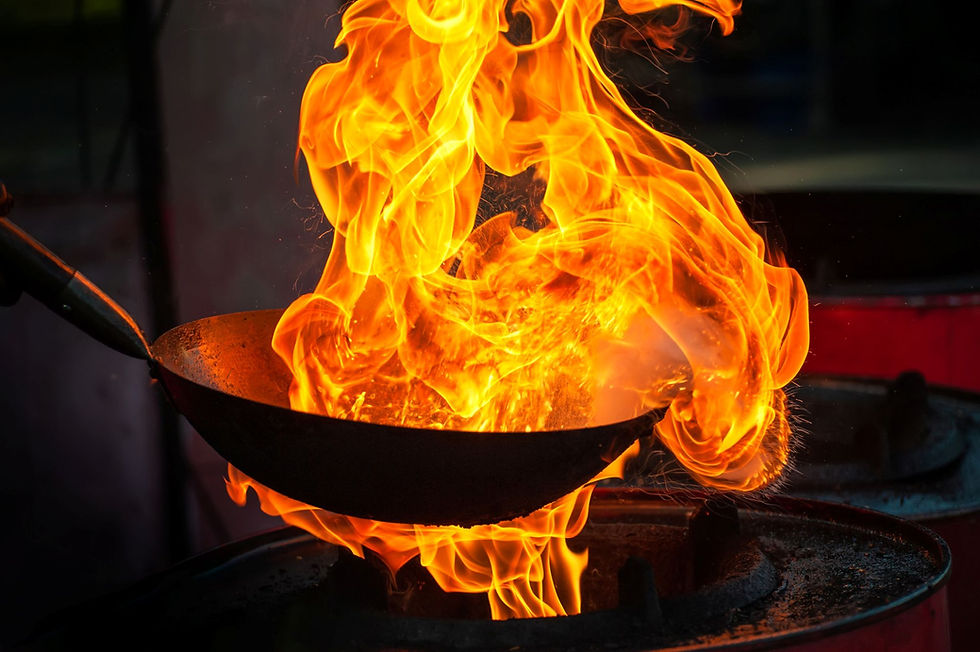
In this article, I will explain burnout in the context of the heart and the kidneys not communicating. This occurs when the water of the body is not sufficient to control the fire. When the body's need for rest and replenishment is ignored, we are literally running on empty, the precursor to burnout.
Understanding the related body-mind influences of the heart and kidney gives us ways to track and correct our unconscious drivers.
Kidney and heart functional areas of influence
In Chinese medicine, every internal organ has physical and nonphysical areas of influence. The body and mind functions are understood in relation to the manufacture and governance of the five vital substances of the body, the constitutional essences, the blood, the mind, body fluids, and Qi, the vital energy.
To understand the mental, emotional, and spiritual expression of the organs, we look to the ways of nature. Each organ behaves like one of the five elements of nature: water, wood, fire, earth, and metal. In this article, we will focus on the water and fire energies.
The kidney organ manufactures and stores the constitutional essences of the body and corresponds to the water element. The related mental quality is will and willpower, the related emotions are fear and fearlessness, and the spiritual virtue is wisdom. The heart organ is the ruler of awareness, which contracts into the mind functions. It corresponds to the fire element, the sun, and light. The related mental quality is clear thinking, the emotions are joy and happiness, and the spiritual virtue is love.
The kidney essence formation and function
Kidney essence is formed at conception and is the foundation of our inherited, constitutional strength. A strong constitution manifests as stronger physical vitality, which gives us more stamina. In turn, we can more easily will our way through life’s ongoing challenges.
Our inherited constitution, like a financial inheritance, is our lifelong store of energy. If our inherited foundation strength is deficient, we will be more inclined to illness, and we may lack drive and willpower. By contrast, if we have abundant reserves of energy, like reserves of funds, we will tend to feel more secure and powerful due to the backup energy.
This essence is stored in the kidney and is the prenatal foundation for bone formation and blood production. It also provides the material foundation for the brain. Kidney essence informs fertility, growth, development, maturation, and ageing of the body and the brain. After birth, our inherited kidney essence is supplemented by the nutrients extracted from air, food, and fluids.
Our essences are our physical link to the strengths of our ancestors. These are stored in our kidneys and bones, which is why we are shaped like them. The kidney power is like a lifelong battery, which forms the baseline balance of the whole body. Strong kidney essences give us the power to endure challenges and live a long and healthy life.
The essences are used up through work, physical activity, sex, pregnancy, and lifestyle. As we age, the battery power and our essence supply reduce. Maintaining reserves of essence by not driving our bodies too hard is wise. A topped-up reservoir helps us to feel safe and secure. If our reserves are low, we will tend to feel unsafe and perhaps fearful. States of burnout always indicate that we have been overusing our reserves. This can easily happen when we are driven by a strong will to follow the plan and go fast, even if the body signs are saying slow down!
The heart spirit foundation and light
The heart houses the spirit and mind. It is the home of our highest awareness and corresponds to the fire element, which is visible in nature as the sun and light. When our heart spirit is awake, light shines through the mind so we can see.
As the spirit is very light, it anchors into the body through the blood. Blood is known as “the root of the mind.” The expanded nature of awareness contracts into the mind to focus on what is happening now. As concentration is a downward, nonphysical energy, it needs blood to hold it steady. This is easy to relate to when we think about how different foods can affect our thinking. In Chinese medicine, well-nourished blood is essential for mental health and emotional harmony.
The heart is our doorway to love, and its associated emotions are joy and happiness. Sharing our love through simple acts of kindness, generosity, gratitude, and compassion cultivates happiness. A lightness of being and happiness are natural to the heart.
The heart is the home of our highest consciousness, which is like a divine light. When our heart light is turned on, we are aware of what we feel inside us, our body sensations, thoughts, and emotions. Guided by the light, we know how to think clearly and act in ways aligned with a higher awareness. If the light goes out, we can feel numb inside. In this low-energy state, our light feels as if it has burned out, like a blown fuse. It is a very strange, disorientating, and disconnected feeling.
The heart and the kidney are not communicating
In a healthy state, the heart and kidneys maintain the baseline balance for mind and body wellbeing. When we look after our kidneys, which rule our strength and energy, and the heart, which rules the mind, we feel calm, clear, aware, and settled. In elemental terms, this is water controlling fire and fire warming water.
In states of burnout, the body, ruled by the kidney, and the mind, ruled by the heart, separate. Long-term stress in the body causes us to feel unsettled and overstimulated, like a car with the accelerator on high. Over time, this will deplete the kidney essences, which then fail to calm and cool the heart.
In Western medical language, in hyperactive states, the body functions are dominated by the sympathetic nervous system, which rules the fight, flight, and freeze responses. In high-stress states, our mental attention is externally focused. All systems are on high alert, searching for the next possible threat.
At this stage, insight, ruled by the heart in the Chinese medical view, vanishes, as the body’s defence systems overrule all other functions. In burnout situations, people tend to withdraw from those close to them as their alarm systems take all their attention.
In elemental terms, the water element governs the kidneys, our baseline energy, and fear. Imagined or real threats to survival activate our fears and put us on high alert. If our energy levels are low, our fears can assume unreasonable proportions. This is a bit like when a river’s water level is low, a boulder in the river can completely dam the natural flow.
In elemental terms, the fire element, which rules the heart, responds quickly to external stimulation. It has a naturally expansive energy, seen in the vitality, joy, and fast-changing emotions of young children. In balance, it helps us stay light, happy, and free. In a burnout state, fire can flare up and rage out of control, overstimulating mental and emotional functions. In imbalanced states, we can act in very immature ways.
When fire is out of balance, a love of overexcitement may become a tendency. These people will tend to thrive on drama and trauma. As excitement is a fun-based emotion, people in these states can more easily lose control of their life situations without themselves or others noticing there is a problem. In Chinese medicine, excessive joy is seen as a disharmony in the same way as too much grief and sadness are problems.
Symptoms and signs of heart and kidney imbalance
Out-of-control fire overstimulates mental functions. As the mind and thoughts speed up, they get scattered. We can observe this in people’s speech and communications. Speech and the ability to say what we mean are a reflection of healthy heart function. Losing words, speaking too fast, and not making sense are signs of disturbed heart function.
When the mind is scattered, we may become overexcited and manic. The classic signs of this are fast racing thoughts and constant talking. Short-term overthinking can be managed with rest and good food, which nourishes the blood to anchor the mind. When established longer term, fast racing thinking can create long-standing mental health problems such as anxiety, overthinking, and depression, sinking thinking.
If the blood level becomes affected, we can experience palpitations, insomnia, and waking during the night. When the body does not settle, we may feel jumpy and easily startled. These symptoms can be caused by deficient blood failing to anchor the mind. From a Chinese medical point of view, blood deficiency is a common factor in emotional and mental instability and burnout progression. Note: As this is a Chinese medical disease pattern, the deficiency may not show on a Western medicine blood test.
Causes of blood deficiency include trauma and hemorrhage, heavy menstrual bleeding, postpartum blood loss, long-term anxiety and worry, overexercise with insufficient nutrition, overworking the physical body, and long-term emotional and mental stress. All of these can deplete the blood stores. Blood deficiency can also come from a constitutional deficiency of the kidney essences, poor diet, or a weak digestive system failing to extract nutrients required for adequate blood production.
When the kidney essences are weak, we may experience any of the following: tiredness, occipital headaches and tension in the spine, poor memory, tinnitus, deafness, soreness of the lower back, feeling heat in the afternoon, night sweats, and reduced drive and confidence. High blood pressure and increased heart rate can also manifest.
As water seeks the lowest level, when water is out of balance, people can often indulge in escapism. Harmful habits such as addictions, thrill seeking, denial, avoidance, and indulgence can become normal behaviour for someone with a water imbalance. The healthy emotion of water is fear, which helps us to hold back from danger. The other end of the spectrum is fearlessness. In this state, people’s lives can spiral out of control without them seeing the signs.
The chemical explanation: Western medicine
In chemical terms, the adrenal glands, which sit on top of the kidneys, pump out adrenaline, which is our fight or flight hormone. Short-term adrenaline surges are helpful to give us bursts of energy to avoid danger. Long-term overactivity of the stress hormones depletes the adrenal glands, leading to low energy and tiredness.
Chronic body stress and high adrenaline levels also activate high cortisol production, our body’s natural painkiller. When cortisol levels are high, the sympathetic nervous system can be in a state of freeze, where we no longer feel our distress. Long-term, high cortisol levels suppress our immune system, making us vulnerable to infections and inflammatory conditions, for example, irritable bowel syndrome and urinary tract infections.
If we stay in fight, flight, and freeze for too long, and the feeling of danger is well established inside us, the body’s natural balancing mechanisms are overwhelmed, making us feel “tired but wired.” To keep going, we reach for stimulants like coffee, alcohol, high-intensity workouts, and cocaine. This upregulated feedback loop is very addictive and hard to get off.
Brain health support
In Chinese medicine, the brain is ruled by the kidney essences and belongs to the water element. In states of burnout, the essences have burned up. Every day ways to support brain health are drinking water, staying hydrated, resting from mental activity, quality sleep, time for silence, and extended times in nature. Resting from constant thinking, stimulation, and concentration supports the brain in slowing down and resetting itself.
Rest and sleep are essential for brain health. Like a reflection on a calm lake, stillness supports us in clearing our minds. Autism and ADHD Natural Health specialist, Tina Horrell, published an excellent article on the glymphatic system, which is the brain’s nocturnal cleansing system. She explains how, overnight, the brain has a natural detoxifying and cleansing process which helps to maintain mental health and balance by filtering waste.
The practice of Qigong is one of the eight limbs of Chinese medicine. It offers simple ways for restoring healthy brain function by mastering the body’s energy. Qigong helps connect the different regions of the brain, which includes switching off the alarm signals of the ‘animal brain’, the limbic system, by turning on the cerebrum, the higher mind. This part of the brain governs our sensory and spatial awareness. Qigong helps to rehabilitate the brain by restoring conscious control of our sensory awareness.
The practice of Qigong unites the Heart-mind as awareness and the brain. It activates the fine-tuning of the body movements governed by the occipital lobe and cerebellum. Qigong assists in restoring healthy coordination, posture, and balance, which tends to diminish with age. Qigong calms the mind, regulates emotions, and down-regulates the activation of the limbic system, which is easily triggered by trauma, remembered and real.
Ways to navigate burnout
Reflect on the warning signs you have been receiving and ignoring by reviewing the signs and symptoms in this article. If needed, get objective feedback from trusted friends/elders/professionals to help you track your position. Check out my individual coaching package and join me for a wellbeing review and reset your life.
Be real about your situation. In states of burnout, when our nervous systems are up-regulated, we are operating in survival mode and acting in ways that meet immediate needs. This can cause long-term damage to our health and relationships. Being safe is critical, not just for ourselves, but for those around us as well. Consider the question “who else is affected by your burnout? " and what are the impacts?
Boundaries burnout happens when we have been driving our bodies hard and overextending our energies. The kidney essences have been used up, the water cooling function stops working, and the heart fire blazes out of control. In human terms, fire rules the heart and relationships. When the heart is out of balance, we tend to seek lots of external stimulation, fires need fuel. To cool our inner fire, it is helpful to withdraw from social engagement for a slow, quiet time to rest and restore. Long-lasting fires are maintained by slow-burning embers.
Trust your body knows how to heal itself. To restore the natural balance of fire and water, reduce stimulation and boost your resting times. Examples: Limit too much mental stimulation. Go on retreat, take time in nature, and plan for an extended period of minimum responsibilities. Commit to body-centered practices, like Qigong, walking outdoors, climbing hills, and Yoga. Notice how your body is very willing to forgive when it receives the help it needs.
Open up to your higher awareness. Surrender to your inner knowing. Consider how a burnout may be steering you towards a new life more aligned with deeper needs. Review your situation from a holistic point of view and look for the wisdom in your wound. Allow time for burnout recovery and actively tend to refreshing and rejuvenating your energies. Join my Nourishing Roots Masterclass, a 4-step journey for healing and renewal.
Read more from Cameron Tukapua
Cameron Tukapua, Heartfelt Living Coach, Chinese Medicine Practitioner
Cameron Tukapua is a wellbeing coach who shares ancient wisdom teachings from Chinese Medicine, along with Qigong, Yoga, and Meditation practices. She helps people align the head and heart. Cameron has written a book called ‘Heartfelt Living,’ and her work has been featured in Thrive Global. She offers Individual coaching, online study pathways, and face-to-face wellbeing retreats.