Maysoun Ramadan on Leadership, Grief, and Building Meaningful Impact
Brainz Magazine Exclusive Interview
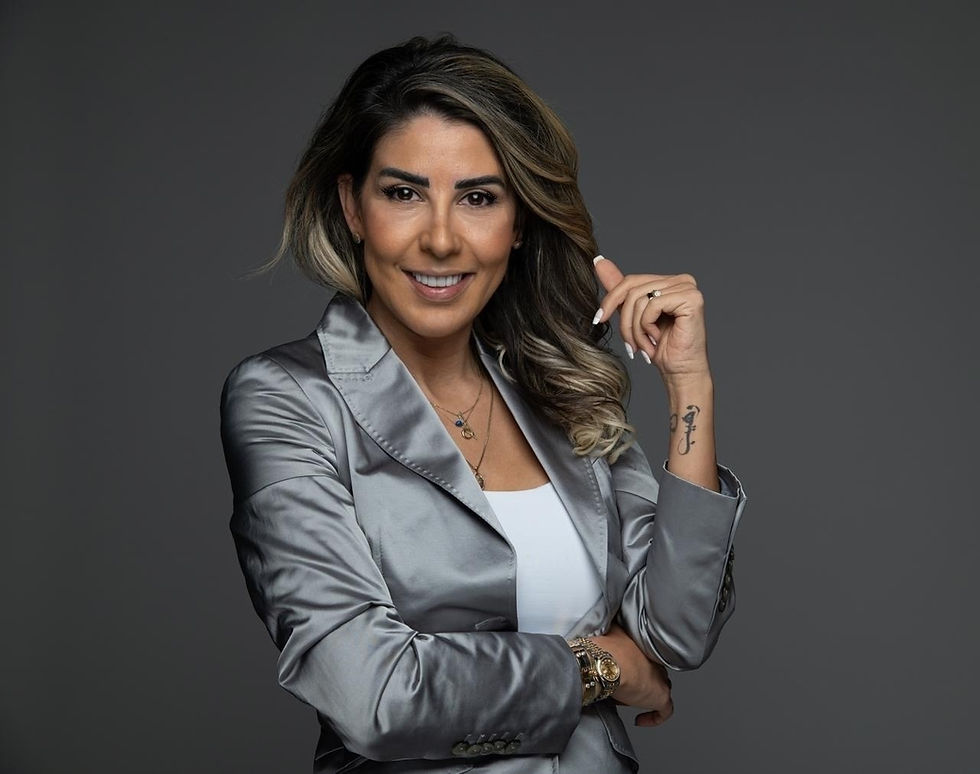
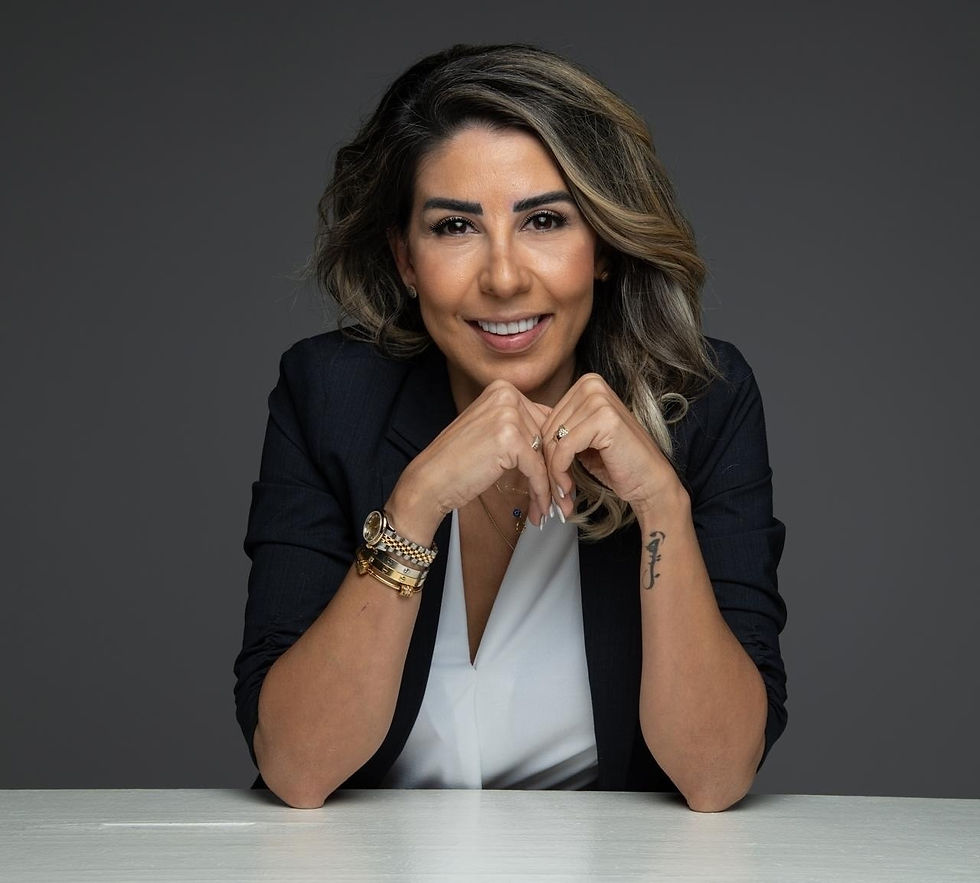
Maysoun Ramadan, Founder of Hedgehog in Dubai, a global voice with 20 years of Fortune 500 experience, is a leader working at the intersection of healthcare, leadership, and human impact. With a career spanning business, marketing, communications, public affairs, and diversity, equity, and inclusion, she has focused on improving access to healthcare, building more inclusive systems, and supporting patients and communities around the world.
In this interview, Maysoun shares the personal experiences that shaped her leadership, how living abroad influenced her understanding of success, and why grief, vulnerability, and authenticity have become central to the way she leads. She also reflects on women in leadership, supporting loved ones from afar, and what organizations still need to do to create true inclusion and belonging. Through her work with Hedgehog in Dubai, she also brings these insights into advisory and coaching, helping organizations bridge the gap between global ambition and local resonance.
You have built a career across healthcare, communications, public affairs, and global inclusion work. Looking back, what moments or decisions most shaped the leader you are today?
There was not just one moment. There were several.
One of the earliest was being asked to step into my first leadership role at a very young age during a particularly difficult phase of life. It was shortly after I had lost my mother, and it was also around the time I had my first child. It was not an easy period, but it became one of the most important moments in helping me understand what resilience really means.
Another defining moment was when I was asked to shift my career focus. I come from a healthcare background and I am a pharmacist by education. Often, when someone follows that kind of path, there is a perception that they should end up in one certain type of role. For me, being open to different paths within healthcare shaped my career in the best possible way.
It also became proof that there is never just one option available to us. I think that is especially important for women to remember. There are many ways to grow, lead, and contribute meaningfully, and sometimes the opportunities that shape us most are the ones that sit outside the expected route.
As someone with a global role, you made the intentional decision to remain based in Dubai. How did that choice shape your understanding of success and what it means to define a career on your own terms?
For me, it was always a mutual equation between what I wanted and what the organization I was part of was able to offer. Both matter.
COVID also changed a lot in how we think about work, leadership, and proximity. Before that, many of us were used to certain assumptions about what the relationship between employer and employee should look like. But after that global crisis, we all had to rethink what proximity really means. Is it only physical distance, or are there other ways to make things happen and stay connected?
Dubai has also been a very intentional choice for me. It is a global hub and one of the most diverse places in the world. It is a melting point of cultures and perspectives, and I have always believed there is so much that other parts of the world can learn from this region. Living in the UAE, I have seen firsthand how much possibility is created to diversify, not just in business, but in the very fabric of society. That exposure, combined with my global experience, has given me a unique lens on leadership and on the blind spots that can appear when strategies travel across borders without fully understanding people, context, and culture.
That decision taught me that success is not one size fits all. As you grow in your career and understand your own value, you need to know exactly what you want, how you want to grow, and on what terms. You cannot simply let tradition or expectation define success for you.
Your book, A Hedgehog’s Embrace, is deeply personal. What inspired you to write it, and how did your experience of loving and caring from afar shape the story?
The story begins with the hedgehog itself.
As a child, I had a real interaction with a hedgehog in my grandmother’s garden in Istanbul. My background is Jordanian, Turkish, and Palestinian, and I have now lived in Dubai for more than 18 years. That little moment stayed with me. Over time, the hedgehog became much more than just an animal to me. It became a symbol.
I began to see myself in it, especially in the way it curls and uncurls. There is something strategic and protective in that movement, but also something soft. That image became deeply connected to my leadership philosophy and eventually to my personal story.
The book is rooted in my experience of living abroad in a place I call home, while also navigating the pain of being far from loved ones during some of the hardest moments of their lives. First, it was my mother, then a close friend, and then my father. So the book is about caring from afar, grief, and what it means to love across distance.
It is not only a memoir. At the end of every chapter, there is a reflective section with questions and prompts to help readers better understand themselves and their own wellness. That was very important to me. I wanted the book to support people, not just tell a story.
In the book, you describe grief in such a powerful way, especially through what you call its “hedgehog nature.” What did writing it teach you about vulnerability, authenticity, and healing?
It taught me that leadership means very little if you are not genuine.
For me, this book became a platform to reflect on authentic leadership and what it really means to show the softer parts of yourself. One of the chapters is about the masks we wear, and that is something I know very well. I wore a mask for a long time.
The hedgehog became a beautiful way to show that there are times when you want to curl inward and protect yourself, and times when you need to uncurl and show your soft parts. Without the soft parts, the quills do not make sense.
When you are going through grief, if you do not openly acknowledge your pain, first to yourself and then in connection with others, it becomes very difficult to grow or move forward. Vulnerability, authenticity, and being genuine are not weaknesses. They are part of how we heal and part of what makes us human.
“The hedgehog became a beautiful way to show that there are times when you want to curl inward and times when you need to uncurl and show your soft parts.”
Many people living abroad carry the emotional weight of supporting loved ones across borders. What practical or emotional guidance do you hope readers take away from your experience?
One of the biggest lessons is to stop believing every painful perception you create in your mind.
When you live far away from loved ones, especially during difficult times, it is easy to start questioning everything. Did I do the right thing by living somewhere else? Did I make the wrong decision by building my life here and not there? Those thoughts become very heavy.
What helped me was taking a step back, writing those thoughts down, and asking myself whether I had actually shared my real feelings with the people I loved.
One of the most important things I learned was to say the truth openly. To call and say, I am struggling. I want to be there all the time, but I do not know how. I miss you. I wish it were different. Being far away is hard for me too.
Many of us hide that because we think our honesty might hurt the people we love. But in my experience, sharing that struggle openly can be deeply healing.
You have spent years working on access, equity, and inclusion in healthcare. How do you take ideas like inclusion and equity and turn them into something real, measurable, and meaningful for patients, employees, and communities?
Everything begins with leadership.
For me, diversity, equity, and inclusion are not separate behaviors or side topics. They should be lived as natural, organic parts of how we lead. Genuine leadership means not only being willing to show your own vulnerability, but also giving other people the space to explain who they are, what they need, and what perspective they bring.
Another important part of that is what I call kind leadership. Kind leadership is often misunderstood as weakness, but it is not weakness. It is about care. It is about giving direct feedback because you want what is best for the person, the team, or the community. That is very different from simply being nice.
Awareness is also critical. Many decisions are shaped by unconscious biases, and unless people are willing to reflect on those biases, it becomes very difficult to build truly inclusive systems.
From a healthcare perspective, we also need to be clear that equality is not equity. Giving two people the exact same thing is not the same as meeting them where they are. Patients in different regions, environments, and realities do not all need the same path to access. That is why better partnerships, better systems, and better strategies matter so much. No patient should be left without a diagnosis or medicine.
More broadly, I believe true success is not just about presence; it is about resonance. Whether you are supporting employees, serving patients, or engaging communities, leadership today requires intercultural intelligence. It requires the ability to understand how trust is built locally, how people experience systems differently, and how organizations can honor the fabric of the societies they serve.
You have navigated leadership while also being a mother, a woman in a high-impact role, and an advocate for gender equality. What has that taught you about handling pressure and staying connected to what matters most?
One of the biggest things is grit.
For me, grit is stamina. It is the combination of passion and persistence toward a long-term goal. When you are balancing motherhood, leadership, growth, and the many different roles life asks of you, grit becomes essential.
I would encourage anyone in that kind of season to write things down. What are you passionate about? Where do you bring the greatest value? What are you best at? Those answers become important anchors. They help you stay connected to yourself and keep moving forward even when life feels demanding.
Many women aspire to leadership but still feel constrained by expectation, pressure, or the belief that they have to follow a certain path. What advice would you give them?
I think it is important to say that many of the struggles women face are more universal than people assume.
There is sometimes a perception that women in the Middle East face very different limitations than women elsewhere, but as someone who works in diversity, equity, and inclusion and coaches women in leadership, I can say that many of the pressures are deeply similar across the world. There are still expectations around how women should lead, how they should communicate, and what roles they should prioritize.
At the same time, every woman’s story is individual. Every profile is personal. Every version of success is different.
So one of the biggest pieces of advice I would give is: do not copy someone else’s path exactly. Your situation, your responsibilities, and your vision are your own. Opportunities should not always be accepted as they are. Sometimes they need to be shaped, bent, and molded to fit your life better.
I would also say three things very clearly. Make sure your voice is heard. Know your worth and what only you bring to the table. And always invite collaboration, because often the best way to shift resistance or bias is to open dialogue and create awareness through real partnership.
“Make sure your voice is heard. Know your worth and what only you bring to the table.”
From an organizational perspective, there is a lot of conversation around inclusion, but the reality does not always match the language. What still needs to change for companies to genuinely support working parents and create more inclusive leadership environments?
Inclusion requires more than acceptance. It requires a welcome.
A person may be accepted in theory, but if your behavior, systems, or leadership do not make them feel welcome and that they truly belong, then nothing meaningful has been achieved.
Again, leadership is the first and most important step. The quality of leadership determines whether inclusion becomes a lived reality or just language.
The second piece is awareness. Organizations need to acknowledge that there is still a lack of awareness around these issues and that this is not something solved once and for all. It requires ongoing reflection, learning, and maturity.
The third piece is systems. Policies matter. Procedures matter. Regulations matter. Sometimes people are quick to dismiss quotas or policy changes, but there are moments when they are necessary as a step toward more sustainable change.
One very practical example is maternity leave. I experienced firsthand how different the experience of motherhood and work can be depending on the support systems around you. Better policies can change not only how women feel as mothers, but how positively and fully they are able to return to work.
So if I were to summarize it, I would say leadership, awareness, and systems. Those three together are what create real inclusion.
Your podcast, A City Witness, explores how cities shape people’s stories and journeys. What drew you to that idea, and what kinds of stories are you most interested in telling?
Part of it came from identity.
As an Arab woman living in this region, I have always been aware that there are many perceptions attached to who I am and where I come from. I wanted to create a platform that carried a different kind of voice, a more personal and human voice.
Dubai was the natural place to begin because it is the city I call home, and it is a place where diversity is lived every day. I wanted to explore inspiring people and ask how this city shaped their stories and enabled their growth.
That was the beginning of A City Witness. It later expanded into Amman, my home city, and I do not intend to stop there. I want to continue exploring how different cities leave their mark on people’s journeys and identities.
Alongside your corporate career, you also founded Hedgehog in Dubai. What inspired you to build something of your own, and what kind of leadership came through in that milestone?
Hedgehog is deeply connected to the leadership lessons I have been learning across my career.
I founded it because I kept seeing the same challenge appear again and again, the gap between local roots and global reach. That is often where even the most ambitious visions can struggle. It is not only a matter of logistics or market entry. It is also about culture, human connection, and the unspoken expectations that shape whether something truly resonates.
Being multicultural myself, and having worked across global environments for many years, I became increasingly aware of the blind spots that organizations can miss when they try to transfer ideas from one context into another. I wanted to create a space that could help bridge that gap.
Hedgehog in Dubai became that space. From our base in Dubai, we support organizations across borders through coaching and advisory, helping them align global ambition with local sensibilities, spot opportunities others may overlook, and unlock leadership potential in a way that feels both strategic and human.
For me, that is where authentic leadership and transformational leadership come together. It is about being honest about what still needs work, being willing to take risks, and creating change that is not only visible but meaningful. Through that work, I support both public and private sector leaders in strengthening partnerships, empowering human capital, and building a more lasting legacy.
And again, the hedgehog is there at the center of it. It represents protection, strategy, softness, and strength all at once.
When you look across your leadership, writing, podcasting, and coaching, there is a clear thread of empowerment and human connection. What kind of impact do you ultimately hope your work has on people and society?
I want to remind people that there is enormous value in the differences we carry.
That value is not only emotional or symbolic. It is practical. It can impact business, communities, healthcare, and even peace. I do not say that lightly.
A lot of my work is about helping people feel confident in their uniqueness, feel proud of it, and connect it to something meaningful. If your background, identity, or lived experience gives you something distinctive, then how can that become part of a solution? How can it create change? How can it help others?
I also hope that, whether I am working through writing, speaking, coaching, or advisory, I can help individuals and organizations move beyond simply expanding their footprint and instead deepen their roots. For me, real impact comes when ambition is matched by awareness, when leadership is connected to humanity, and when growth leaves behind something lasting for the communities it touches.
That is the impact I hope my work has.
Maysoun Ramadan’s perspective is a reminder that leadership is not only built through titles or achievement, but through resilience, vulnerability, and the courage to stay human in the process. Whether she is speaking about grief, inclusion, women in leadership, or healthcare equity, her message is consistent: our differences carry value, and real impact begins when we lead with awareness, kindness, and authenticity.
For more info, explore Maysoun Ramadan’s book, A Hedgehog’s Embrace, her podcast, A City Witness, her website, and work in leadership, coaching, and global health equity.