

Interview With Tricia Brouk - Director, Producer, Author, And Founder Of The Big Talk Academy
- Aug 20, 2021
- 9 min read
Updated: Oct 13, 2021
Brainz Magazine Exclusive Interview
Tricia Brouk is an international award-winning director. She has worked in theater, film, and television for three decades. Tricia founded The Big Talk Academy where she certifies speakers in the art of public speaking. Tricia’s commitment and devotion to inclusion are a priority as all of her shows, events, and communities are diverse. She curates and hosts the Speaker Salon in NYC, The Big Talk, an award-winning podcast on iTunes and YouTube. The Influential Voice: Saying What You Mean for Lasting Legacy was a #1 New Release on Amazon in December 2020. She was awarded Top Director of 2019 by the International Association of Top Professionals and Top Ten Speaker Coaches in Yahoo Finance in 2021 and the Empowered Women Award in 2021 by the IOATP. Her documentaries have received critical acclaim—winning Best Documentary Short at The Olympus Film Festival and Los Angeles Movie Awards. Tricia has spoken at Forbes, Pride Global, The New York Public Library, Barnes and Noble, Ellevate, The Jumbo African Support Hub, and The National Organization for Rare Disorders.
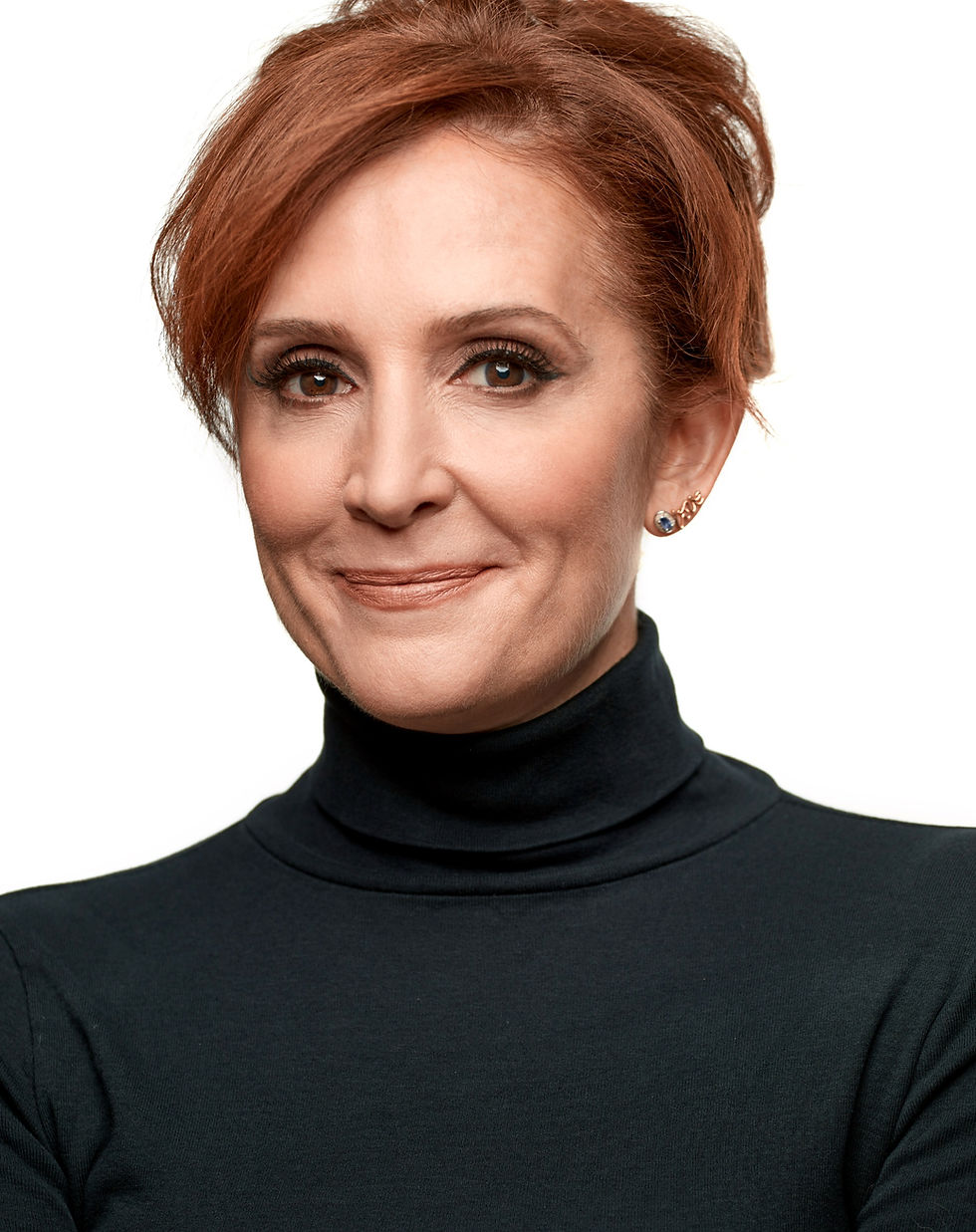
You’re a Director, Writer, Producer, Coach, TEDx mentor, and Founder of The Big Talk Academy. It is a very impressive list of merits! Can you tell us more about your work and how ended up in the industry?
I have been in showbiz my entire life. I moved to New York City from Arnold, Missouri to pursue a career in dance where I went on to have a very successful career performing at Opera Houses all over the world including Paris, Vienna, Palermo, Lisbon, and Lincoln Center in NYC. When I realized that my impact was limited to the number of people in the theater and the length of time I was on stage, I decided to move into choreographing, writing, and directing. Being behind the camera instead of in front of it allowed me to create a ripple effect of impact because I could make more work on other people. I could create more plays, more documentaries, more musicals that would reach more people, having a lasting legacy. This is what I was doing when a friend reached out to direct her TEDx Talk. I approached this work just like I did with the one-person shows I had been directing. I did script analysis, objective, and action (the acting technique I use), choreography, and blocking, with her and it was amazing. What was different in this experience, is that she is a thought leader who’s making a difference in the world with her message. Don’t get me wrong, theater and art are vital to the health of our world. And being able to also curate thought leadership by packaging storytelling to create media luminaries, was bigger than me and I knew I had to fully step into this role. Once I fully embodied adding "speaker mentor" to my CV, I had all these speakers and no place to put them. The best stage for speakers is TED, so I became the Executive Producer of TEDxLincolnSquare in New York City. I produced this event for two years. Now I mentor speakers onto other TEDx stages. I have put more than 50 speakers onto TEDx stages in under four years. And because the thought-leaders I mentor are so passionate about leaving their lasting legacy, I’ve become the strategic advisor to many of these folks in order to build out their speaker platform in a much bigger way.
Is there something special that keeps you motivated?
I have always been motivated. I’m a dancer. And I also know that life is precious and short. I was always conscious of this truth. And the grit, discipline, and fearlessness with which I lived my life as a dancer are directly related to my success now. Because I became extremely comfortable with hearing “no” after countless auditions, my resiliency muscle was constantly being flexed. Nothing took me out, and this kept my motivation intact. The motivation I have now, however, is directly related to amplifying and elevating the voices of people who want to have a global impact and make the world a better place. When I think about anyone who does not feel safe to speak or is not allowed to speak their truth or share their message, it motivates me even more profoundly because every voice matters.
This week, Brainz Magazine posted an article listing "10 Top TEDx talks you don't want to miss". To our readers that might be interested in doing a TEDx talk, do you have any tips on how to start developing a TEDx talk and what to think about?
If you desire fame, by taking a TED stage, you are approaching this artform all wrong. If you desire to step into the red circle because you know the TED brand will give you credibility and the opportunity to share your powerful idea worth spreading with more people so that you can change and even save a life, then you are doing this for the right reason What I would share with the reader is that you need to understand what a TED-style talk is like. Chris Anderson’s book, TED Talks: The Official Guide to Public Speaking is the bible when it comes to the artform of a TED Talk. Start there and you’ll get the language of TED clearly unpacked. What you also need to be clear on is that a TEDx Talk is not a pitch for you or your business. It is not a promotion for your book. And it is absolutely not a bullet-pointed talk that is going to teach me how to x,y,z. These talks are meant to get us to think differently. They are meant to move us into action. I have seen these stages become promotional and that is on the organizer. This leads me to my next point. You must vet the organizers. So many organizers do not know how to produce a show.
You are going to be online for the rest of eternity, so be sure the video is going to represent you at the highest level possible.
Once you’ve gotten clear on the language of TED and you have vetted the events, then allow your point of view to be the catalyst in crafting your idea worth spreading. There is only one you. And that makes your talk unique and powerful. I also encourage speakers to think outside of the box. I recently supported one of my speakers who was asked to speak at a virtual TEDx event in India. When she shared that it would be a pre-recorded Livestream, the world opened to us creatively. Since we could produce her speaking the way we wanted, not just live streaming from her computer, I suggested we hire a film crew with two cameras, a drone, and shoot on location in Sedona. We shot b-roll, used voiceovers, added music, and created a mini-feature film of her talk. Anything is possible now and I encourage all speakers to push the boundaries of their talk in order to stand out. What makes a great TED Talk is when your mind is opened up, changed, and moved into action by hearing this big idea. And if you think of this as what I call theatrical academia, you’ll hit the mark.
You wrote a book called The Influential Voice: Saying What You Mean for Lasting Legacy. What was your inspiration behind this?
I was supposed to be on holiday with my husband, Joe, in Mexico for ten days in June of 2020. And instead, I wrote a book. The systemic racism in the United States, the undignified language coming from the White House, the impeachment hearings, and the deaths of Ahmaud Arbery, Breonna Taylor, and George Floyd called me to write a book about these injustices and why our words matter. By sharing my personal story of speaking the truth and having the courage to do so, it is my hope that this book can inspire the reader to acknowledge the power in all of our voices, and that anyone can be an influential voice. And by leaving a lasting legacy along with having humility, curiosity and love is how we make the world a better place, together.
What are your key initiatives in order to succeed?
Success can be defined in a million ways. For me, it’s about knowing I’ve shown up authentically and been able to really make a difference in someone’s life with this work. It’s far more than speaking. The work I do with my community and speakers is transformational. I want to have a small part in creating better human beings with this work. I live by the mottos, “Keep the story moving” and “No means not yet”. If you can’t keep moving forward, you are wasting time thinking about the past and what didn’t work. And no, truly does mean not yet. One of my current speakers applied to my TEDx event three years ago. She was a “not yet”. Now we are working together privately, and she’s booked three TEDx stages in less than six months. Keep showing up. And if you desire to make an impact in the world, then you must relentlessly go after this dream daily. If you do not speak, you are preventing that one person from hearing from you. Remember, when you share your powerful story, you can change and even save a life.
I also take extremely good care of myself by going to bed at 7:30 pm and getting up at 4 am consistently. I drink a gallon of water every day, eat extremely well, work out daily, meditate and work my mindset. Just like the plies I did as a dancer. I flex my mindset muscle every single day.
What are the most common mistakes people make when speaking in front of an audience, and how do you avoid them?
The five biggest mistakes I see over and over are:
Being someone you’re not.
Unintentional movement.
Apologizing from the stage.
Making it about you.
Using air quotes
When you go out on a stage and try to be someone you’re not, the audience won’t trust you. They won’t know why exactly, but they won’t. And they may even like what you are saying, but if you are not being authentic, an audience can feel it and they will disconnect.
If you are not clear on why you are moving and when, the audience will be watching you pace back and forth instead of hearing your powerful message. I wrote an entire chapter on performance in The Influential Voice. Moving on stage is choreography and when you are intentional in when you move and when you are still, your talk will make a far greater impact.
If you fall, if the mic flies out of your hand, if the slides advance without your knowledge, never apologize. You are the expert. You are the person the audience is looking to learn from. If you apologize, you are undermining yourself and confusing the audience. When something goes wrong, because it will, ask for help.
“I’d love to have the AV team come up here and help me with the microphone.”
“Thank you for your patience here, as I reset my slides to best serve you.”
There is always a better way of communicating when something goes wrong. It’s not “I’m sorry.”
When you are taking a big stage and sharing your big talk, it needs to be about serving the audience. When you share your powerful story in service, you become the channel. You become the vehicle with which the powerful ideas are being shared. Checking your ego at the door also allows you to coexist with the fear, because you are no longer wondering, “What if they don’t like me? What if my idea is dumb? What if I epically fail?” Making it about the audience and how to serve them at the highest level, keeps your ego and fear in check.
Now that I’m pointing it out, you are going to be shocked at how often people use air quotes when they speak. And most of the time, incorrectly. I think using air quotes is lazy speak. If you are a speaker, choose a better more powerful language. When you use another word that has more impact and allows for creativity, you will connect more deeply to your audience.
Have you encountered any major challenges during your journey and how have these affected you?
When the pandemic prevented our physical stages from being stepped on, I realized that I needed to innovate for my community in an even bigger way. Living in New York City at the height of COVID was no joke. For me, it meant owning the urgency of my work with my community and giving them an even bigger platform to speak. The live event I was producing became a feature film that I directed and live-streamed. Instead of having these speakers in front of 150 people in a small theater, they spoke to 150 countries. This challenge forced me to find a solution that ultimately had more impact. Being locked down meant being even more vigilant with my self-care routine so that I could show up for my community when they needed me most. They had stories to tell. They had talks to be written and performed, so it was my mission and duty to make this possible during what was a chaotic and uncertain time. And what was birthed were hundreds of amazing talks, transformed lives, and community building that continues to blow my mind. Just this past weekend, I had three speakers at the live TEDxFarmingdale event that I emceed. Three of the community members were speaking on stage and six of the speakers from the community were in the audience supporting. In The Big Talk Community, you might be on stage alone, but you are never by yourself. This was proof in real-time.
Do you have any new upcoming projects, and how can someone get in contact with you?
I’m currently editing the final episode of my three-part docu-series The Big Talk Over Dinner, on Gender. The Big Talk Academy, my signature speaker training and certification program is available. The Speaker Salon Showcase is happening live on November 10th in NYC for the first time since 2019, and I’m taking applications for 2022. The audiobook of The Influential Voice is being scored by my long-time composer/lyricist and friend Andrew David Sotomayor.
I’d love to offer a complimentary chapter of my book The Influential Voice: Saying What You Mean for Lasting Legacy. Check it out HERE.


