How to Reclaim Calm Authority - Exclusive Interview with Health & Wellness Coach Patricia Heitz
Updated: Feb 24
Patricia Heitz is an NBC-HWC Board-Certified Health & Wellness Coach, speaker, and author specializing in belief systems, stress intelligence, and leadership clarity. Her work focuses on helping leaders and professionals uncover the unconscious patterns that shape performance, decision-making, team culture, and personal well-being.
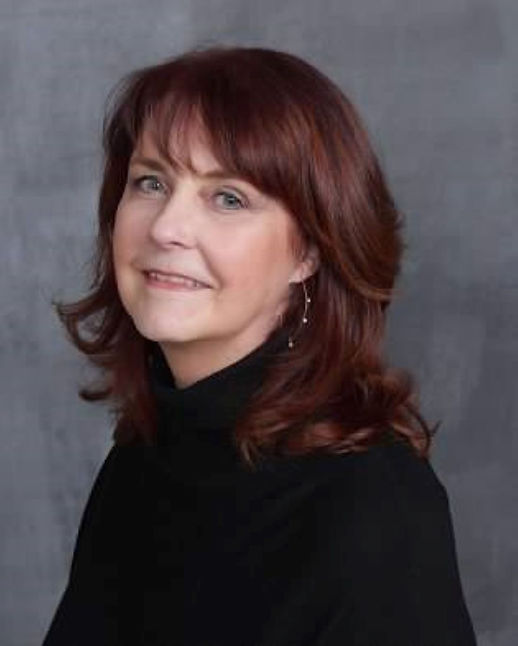
Patricia Heitz, NBC-HWC Board Certified Health & Wellness Coach
Who is Patricia Heitz?
Patricia Heitz is an NBC-HWC Board Certified Health & Wellness Coach and founder of Mindology, a leadership framework focused on where mind meets physiology. She works with leaders and high-performing professionals to uncover unconscious stress patterns shaping decision-making, communication, and team performance, helping them lead from their authentic Intelligence: calm, clear, and confident.
What inspired you to become a health and wellness coach?
In 2002, I was diagnosed with kidney cancer. That moment forced me to look beyond surface health and examine the internal patterns driving how I lived and led and how it might have affected my health.
During recovery, I began studying the connection between stress physiology, identity, and long-held internal belief narratives. I discovered how unconscious beliefs produce stress patterns that were shaping not only my health, but my life, including leadership style, ambition, and self-worth. As I recalibrated those patterns, every area of my life shifted. Coaching became a natural extension of that transformation.
How do you define wellness, and why does it matter today?
I define wellness as the pendulum being balanced. All systems within the mind and body are operating efficiently and well. It is really about internal regulation.
Wellness, or lack of wellness, starts in the mind and manifests in the body. As anyone who has ever been stressed will tell you, when they are stressed, they can feel it in the body… Muscle tension in the neck, shoulders, and back, along with tension headaches, jaw clenching, and rapid heart rate. Other common manifestations include gastrointestinal distress, skin issues, and fatigue. True wellness is the ability to operate from a balanced default called the Executive State, with access to our executive functions, allowing for clarity rather than chronic stress activation, as well as allowing for better health in the body. In today’s high-pressure environment, many leaders function in constant sympathetic nervous system overdrive, which narrows thinking, shortens communication, compromises long-term performance and severely endanger health.
True wellness restores access to higher-level cognitive function, emotional intelligence, so that the leader can access their true, authentic intelligence and operate as a higher performing leader.
What specific problems or pain points do you help your clients overcome?
Most of my clients are outwardly successful but internally operating under invisible pressure.
They struggle with:
Decision fatigue
Tension within teams
Difficulty delegating
Perfectionism masked as standards
A constant sense of urgency
The belief that more force equals better results.
I help them identify the belief underneath the stress patterns that is driving those behaviors so performance can improve without increasing pressure.
What makes your wellness coaching approach unique compared to others?
I focus on not just tools to lower the stress response that causes a roadblock to our full intelligence, but what is the fear or stress pattern buried beneath our consciousness that we are not even aware of that is triggering the stress response, and becoming an autopilot loop that one can’t reset because they don’t know what is driving the wheel.
Most leadership strategies address external systems. (the organization's environment) and, more broadly, interconnected systems within the organization.
Mindology examines the human internal stress patterns influencing the behavior, decisions, and style. When stress regulation shifts, communication improves. When communication improves, culture improves. When culture improves, performance not only stabilizes but escalates.
This is a structural change that affects the entire organization, not a surface strategy.
Can you describe a breakthrough transformation one of your clients experienced?
A senior leader came to me frustrated by recurring team resistance. His instinct was to apply more pressure.
Through our work, he recognized that his intensity was rooted in a long-standing stress pattern tied to proving competence. As he recalibrated that internal driver, his tone shifted without losing authority. Team collaboration improved, innovation increased, and results strengthened; not because he pushed harder, but because he led from regulation and authentic intelligence instead of reactivity.
What results can someone expect when they work with you?
Improved Cognitive and Strategic Functioning, which translates into: Clearer thinking under pressure, enabling better problem-solving, strategic planning, and creativity. Decision-making becomes more profitable and less reactionary.
Enhanced Emotional Regulation and Presence, which translates into: Reduced internal stress without reduced ambition, allowing leaders to stop burning energy trying to control situations, but instead learn the ability to exhibit a "calm authority".
Increased Organizational Resilience, which translates into: More stable, sustainable performance. Leaders recover faster from business setbacks. They are able to navigate uncertainty without falling into a state of chronic burnout.
Improved Team Performance and Culture, which translates into: Improved team responsiveness. A calm leader fosters a psychologically safe environment where team innovation, out-of-the-box thinking, and productivity expand. The shift is subtle but powerful: they stop leading from tension and begin leading from clarity.
How do you tailor your coaching to fit different lifestyles or needs?
No two people/leaders operate under identical stress patterns. The stress response is common, the triggers behind the stress are individual.
My work begins with identifying the specific physiological and behavioral responses common in their life. These are unique to each individual. From there, we develop strategic adjustments that fit their leadership role, industry demands, and personality.
The process is structured. The application is personalized.
What are the most common misconceptions about health and wellness you’ve encountered?
The biggest one is just not understanding what wellness is or how it applies to them. Some think it’s about meditation, breathing exercises, etc. or that it’s a little “woowoo”. Although breathing exercises are a very useful tool in helping with nervous system regulation, it is only a very small part of how to de-escalate an overburdened stress response.
Another one is the idea that they look at well-being as a superficial, one-time, or purely individual issue, or that it is a "perk" (like fruit bowls) rather than a strategic imperative, that it is exclusively focused on physical health. I’ve seen leaders decide they will institute a wellness program by offering fitness classes, memberships, etc, or setting up a fitness room. Fitness can be a great outlet for stress, but it is not what will facilitate a regulated nervous system that is sustainable. As I said before… Wellness starts in the mind and manifests in the body; therefore, addressing wellness by only physical fitness focuses on half the issue.
In reality, many high performers need to examine the internal pressure driving their productivity. Without addressing that foundation, even healthy behaviors can become another performance metric, reinforcing stress.
What simple daily habits can anyone start with to improve their wellbeing?
Well, the first thing to try and accomplish to improve wellbeing starts in the mind… The most effective for a leader is to interrupt urgency. That pressurized feeling that “This has got to get done or….” And the OR becomes something that produces fear. Once fear is initiated, the fight, flight, freeze response kicks in, and the chemical release starts (cortisol, adrenaline). The brain starts to spin, and it is not possible to reach that executive state that can actually help solve the problem.
But before one can interrupt the urgency to prevent the stress trigger, the underlying fear of “what will this mean” has to be dismantled. That is what Mindology will do.
However, to start practicing wellness for everyday wellbeing there some things that make this path easier. Things that you can do and start small such as:
A 10-minute walk after lunch, while you listen to something inspiring, or relaxing.
Spend at least 5 minutes on daily basis by listening to a meditation or doing deep breathing exercises.
Start the day with intention, instead of checking the phone first thing in the morning. I know a tech founder who leaves his phone on a table across the room from his bed, so he is forced to reflect, and intend his day as he has to physically get out of bed, walk across the room to get the phone. Creating a new morning routine of deep breathing and/or meditation allows the individual to be more in control of how they want the day to be, by setting this intention, and working to make the intention become the reality of their day. It’s like creating a road map for the day.
Other activities that really boost well-being are:
Moving your Body: It doesn’t matter how you move your body, only that you move your body. You can choose walking, yoga, or stretching. It is more about the consistency of doing it than what you are doing. Regular movement helps to metabolize excess stress hormones like cortisol and adrenaline and releases those happy chemicals, like serotonin and endorphins, which improve your mood, reduce stress, and even relieve pain.
Connect with Someone: Connecting with someone whose company we enjoy, either in a conversation, lunch, or coffee, or even a text or direct message, can spark a friendly chat that can bring a smile to your face and reduce feelings of isolation.
Practice Gratitude: This is an overlooked boost to our energy. Asking ourselves, what am I grateful for in my life, or what am I grateful for today? When you say three things out loud and write them down, it takes you away from negative thoughts and helps you focus on the good things. It could be as simple as “I am grateful for it being a sunny day,” or I am grateful that I am meeting with a client whom I really like today.” It could be anything that sparks joy.
How do you support clients who feel stuck or overwhelmed on their wellness journey?
Feeling stuck is rarely about a lack of capability. It is often the result of a chronic stress loop that limits our access to our executive thinking functions, so we are stuck in a spinning loop that we feel like we can’t get out of, or “stuck”. In order to move out of “stuckness,” it is imperative to break the stress loop. There are a number of ways to do this, but again, the process is tailored to each individual.
By creating an environment of psychological safety where clients can examine the unconscious stress patterns driving and keeping the stress loop spinning, we can examine them together without judgment. What is beneath the stress patterns is always a fear, and everyone’s is different. By allowing for a safe space to do this exploration, we are able to find the falsehood of the buried belief driving everything and replace it with the truth of that person’s authentic intelligence. Once we do this, it is like the blindfold being taken off, and an entirely new path and navigation system emerge.
What’s the best way for someone to get started working with you today?
Leaders and decision-makers ready to elevate performance without increasing pressure are invited to schedule a private Strategic Advantage Session.
In this focused conversation, we examine the unseen stress patterns influencing your leadership, decision-making, and team dynamics, and clarify the shifts needed to create stronger outcomes with greater stability.
Prior to the session, you’ll complete a brief intake to ensure our time together is strategic and results-focused.
Read more from Patricia Heitz