How Near a 1000-Year-Old Herbal Recipe Could Save Your Heart
Updated: Feb 13
Written by Sebastian Liew, Medical Herbalist
Dr Sebastian Liew * is the first medical herbalist to have significantly pioneered Western herbal medicine in Singapore and Asia. He is a distinguished fellow member of the Complementary Medical Association (UK). Liew has run a thriving clinical practice for over twenty years, specialising in chronic diseases, all with a whole-person approach.

Modern cardiology and ancient herbal wisdom rarely meet, yet this case study reveals how a near 1,000-year-old remedy supported heart recovery when conventional treatment options were limited. Through a holistic lens, the article explores how phytotherapy may address root causes rather than symptoms alone.
How did I manage to save a heart attack patient without pharmaceuticals? A patient shared this case’s history.
“Late July this year (2022), my 75-year-old father, Mr. Ann Kui Tee, suffered a heart attack. He has many medical conditions.
He was admitted to Kuantan Medical Centre and diagnosed with congestive heart failure. During this period, his pulse rate dropped to as low as 30+. The heart specialist suggested a pacemaker. However, he could not perform the pacemaker surgery because he suffered from a severe bacterial infection. Also, he could not take any blood thinner medication as it caused him urinary bleeding (from a past surgery). He was tired, breathless, and had a loss of appetite.
Dr. Sebastian Liew happened to be on his way to Penang. We called him to help. The heart specialist insisted he needed a pacemaker when his infection was over. However, my family was cautious about any form of surgery. Liew continued to give him herbs to support the heart and immunity.
To get a second opinion, my family decided to send him to a private hospital in Singapore for further check-ups. After all the tests, the heart specialist concluded he did not need a pacemaker but an angiogram. Dr. Liew prescribed him a customized Western herbal blend to heal the urinary tract and control the bleeding. So far, so good.
My family decided not to have the angiogram and wished to monitor him with the herbs prescribed. The specialist was confident that he might have another heart failure and enlargement within two weeks if he did not undergo a medical intervention.
We followed up with the specialist and did further tests. He was pleased and surprised that he recovered well without the pharmaceutical medication. By the 3rd week, he recovered his strength and vitality with diet changes and the customized herbal protocol.
It has been 4 months since his regular medical checks, and all his blood tests, including blood sugar and blood pressure, have returned to normal. We are delighted to have chosen the phytotherapy approach to help my father.”
Why was I able to help? I respect the heart specialist’s diagnosis, and certainly the medical tests helped me to assess whether my therapy works. However, from my holistic diagnosis, I could locate that the root cause of his heart attack was due to toxicity from poor lymphatic/immune system function.
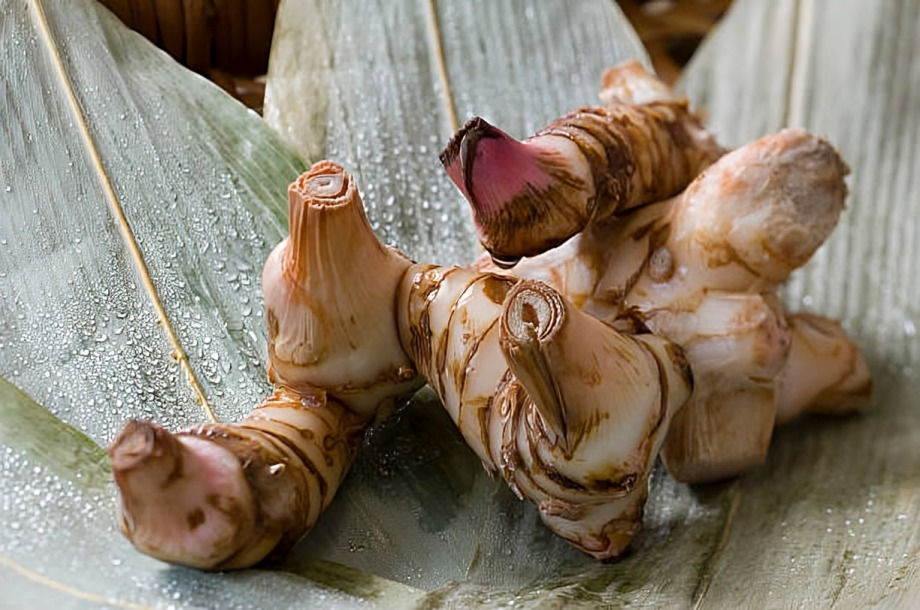
How did I manage to help with no pharmaceuticals? The first herb I gave him while he was struggling for survival in the hospital was galangal. His pulse rate dropped to 30 and below, and he was very weak and tired.
"Whoever is suffering from heart pain or is threatened by a cardiovascular weakness (fainting) should immediately eat a sufficient amount of Galangal, and he will feel better." –St Hildegard of Bingen, 12th-century Benedictine mystic
Lesser galangal root (Alpinia officinarum) thrives in humid tropical regions with shade and rich soil. It is grown in China, Indonesia, India, Malaysia, Singapore, Thailand, and Vietnam, where the medicinal use is widespread.
Her pharmacological actions are analgesic, anti-nauseous, carminative, digestive tonic, circulatory stimulant, cardioprotective, anti-candida, anti-bacterial, and anti-viral.
It is highly recommended for medicinal use because of its balanced nature, with energy somewhat between pepper and ginger. St Hildegard, the Benedictine abbess and herbalist of monastic medicine in the 12th century, is the first person in the world to teach that galangal is effective for heart pain and heart-related diseases. This application for heart pain is confirmed in Germany and has proven to be a safer alternative to nitroglycerin, the standard drug for heart attack.
The tongue-heart reflex enables more oxygen to reach the heart, improves circulation, and dilates blood vessels, helping prevent heart attack and normalizing blood pressure caused by stress. The latter implies a role for anxiety management. It is better to chew the galangal root or a tablet to stimulate the tongue-heart reflex.
Stagnation of blood is the mother of all diseases. It is a warming herb, yet not as irritating as ginger or pepper. Together with the herb Bertram or pellitory, it treats and prevents cold hands and feet. Chronic cold hands may indicate a peripheral circulation issue and a weak, depressed body (sluggish thyroid?). Rosemary is specific for poor circulation to the head area.
Galangal should be your daily protection from heart pain, mental distress, fatigue, stroke, weak heart, nausea, and dizziness. Always carry it around with you.
Greater galangal versus lesser galangal. Two types of galangal are most commonly used.
Greater galangal (Alpinia galanga)
Lesser galangal (Alpinia officinarum).
The greater galangal stands over 6 feet in height, and the lesser galangal generally grows to just over 3 feet.
Lesser galangal is found to be more therapeutic than greater galangal due to its essential oil content. It is also the one used in St Hildegard's medicine for heart disease.
Specific indications:
Anti-candida, anti-bacteria, anti-viral (essential oil content)
Anti-fungal (topical)
Asthma
Bad breath (Hildegard)
Blood pressure normalizer
Breathlessness due to a weak heart or anxiety (Sebastian Liew)
Common cold
Dyspepsia, where there is vomiting or stomach pain.
Fever (Hildegard)
Heart pain or heart attack (St Hildegard)
Indigestion: stomach upset
Bloated stomach (Sebastian Liew, excellent)
Lack of motivation, mental confusion (Sebastian Liew)
Menstrual pain (tea)
Nausea, any form
Reduces platelet aggregation (natural blood thinner)
Rheumatism
Suspected food poisoning (Sebastian Liew)
Another heart remedy is parsley honey wine, a recipe taught by Hildegard of Bingen. You can learn this recipe from my video.
Some recipes:
For heart health, stroke recovery, poor circulation, and sciatica pain.
1 glass of red wine
1 teaspoon of powdered galangal
Boil for 10 minutes.
Filter the mixture
Sweetened with honey.
For heartbeat irregularity (left ventricular hypertrophy)
3 galangal tablets or 3 teaspoons, followed by parsley, honey, wine, 30ml, 5 minutes later
Caution: Not recommended in high doses during pregnancy. Low dose for morning sickness is great. Do not take in high doses with blood thinners. Not suitable for those with a heating constitution. Toxicity: Very low
The information here is not medical advice and does not constitute a substitute for a healthy lifestyle. Please always let your primary healthcare provider know about any health supplements or complementary medicines you are taking. You can consult a qualified naturopath or medical herbalist to create a customised holistic program.
Read more from Sebastian Liew
Sebastian Liew, Medical Herbalist
Sebastian Liew is the first medical herbalist (since 2004) who has significantly pioneered phytotherapy in Singapore and possibly across Asia. With credentials from the Naturopaths and Herbalists Association of Australia, the TGA, and the University of New England, he is a distinguished fellow member of the Complementary Medical Association in the UK.
As a Doctor of Naturopathy*, he embodies the role of a natural medicine coach and teacher, dedicating his life to guiding clients to recover from chronic illnesses with a whole-person approach, and discover their inner healing potential, their innate ability to heal and shine.
His lifelong vision is to: Cure the Sick, Heal the Wounded, and Inspire the Weak.