How Media Affects the Nervous System and Why Regulation Matters More Than Willpower
Written by Nhi Phan, Thought Leader
Nhi is a media psychology educator and founder of NHI Multimedia. Her work explores how media shapes identity, attention, and emotional regulation, supporting creators, entrepreneurs, educators, and leaders in engaging with digital environments consciously and with greater emotional resilience.

Digital overwhelm is often framed as a problem of discipline, too much scrolling, too little focus, not enough boundaries. Media psychology points to a different underlying mechanism. In media-saturated environments, the nervous system is continuously responding to pace, stimulation, and social signals. Over time, this constant activation shapes how the body processes information, emotion, and decision-making. What often appears as a distraction or lack of willpower is frequently a sign of nervous system overload. Understanding this distinction changes how we relate to media and to ourselves.
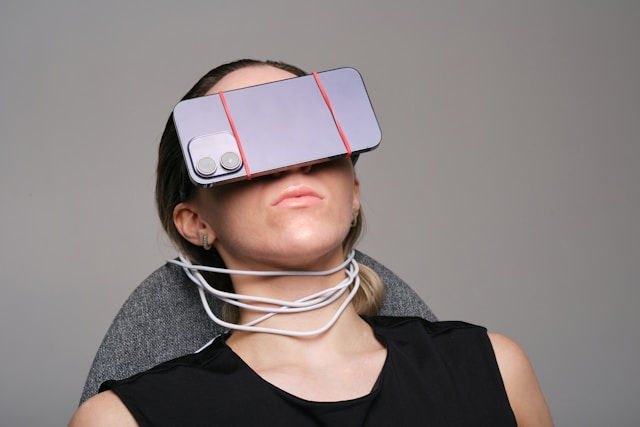
The nervous system as the first point of contact
Media environments engage the nervous system through:
Rapid visual and auditory input
Emotional cues and social signaling
Unpredictability and novelty
These inputs are processed automatically, often below conscious awareness. The nervous system responds first, long before intention or interpretation enters the picture. In environments of constant stimulation, this response becomes continuous rather than occasional.
Why willpower breaks down under constant stimulation
Willpower assumes choice. Nervous system responses precede it. When the nervous system remains in a heightened state of alert, the capacity for sustained attention, reflection, and emotional regulation diminishes. This can manifest as restlessness, irritability, mental fatigue, or a persistent sense of urgency.
Attempting to override these states through discipline alone often leads to frustration, not because of personal failure, but because the underlying system has not been addressed.
The MediaBliss Framework™: Regulation as environmental adaptation
Within the MediaBliss Framework™, media is understood as an emotional and psychological environment that shapes experience through repetition.
The pattern remains consistent: Exposure – Nervous System Response – Identity Calibration – Choice
Nervous system regulation operates at the second stage. Regulation is not about suppressing response. It is about restoring the nervous system’s capacity to return to baseline after stimulation. Without this capacity, choice becomes reactive rather than intentional. This is why regulation matters more than willpower.
How constant media exposure alters baseline states
One of the challenges of media-saturated environments is that heightened stimulation can become the new normal.
As exposure repeats, the nervous system adapts. What once felt overwhelming may begin to feel familiar. What once felt calm may begin to feel under-stimulating.
Over time, this shift can affect:
Tolerance for stillness
Sensitivity to stress
Emotional recovery time
These changes often occur gradually, making them difficult to recognize.
Regulation without optimization
Nervous system regulation is often presented as a productivity strategy, a way to perform better, focus longer, or manage stress more efficiently. Media psychology offers a different framing.
Regulation is not optimization. It is stabilization. It supports the capacity to respond thoughtfully rather than reactively, especially in environments designed to continuously engage attention and emotion.
Who this matters for
This matters especially for leaders, educators, creators, and professionals working in high-exposure or high-demand environments, where sustained stimulation can quietly shape nervous system functioning over time.
Key takeaways
Media environments engage the nervous system before conscious thought
Constant stimulation reduces the effectiveness of willpower
Nervous system overload often masquerades as a distraction or lack of discipline
Regulation restores baseline capacity for choice
Stabilization, not optimization, supports long-term coherence
In digital culture, attention and emotion are shaped first at the level of the nervous system. Recognizing this is not about avoiding media, but about understanding how media affects the body and responding with awareness rather than self-judgment. Regulation is not a personal failure to overcome. It is a physiological necessity to respect.
Read more from Nhi Phan
Nhi Phan, Thought Leader
Nhi Phan is a media psychology educator and founder of NHI Multimedia, a studio dedicated to conscious media and emotional well-being. She holds a Master’s degree (MSc) in Media Psychology and specializes in how media environments shape identity, attention, and nervous system regulation. Through her MediaBliss Framework™, she translates scientific insight into reflective tools for creators, entrepreneurs, educators, and leaders navigating visibility in a digital age. Her work bridges media psychology, emotional awareness, and conscious leadership, offering a grounded alternative to performance-driven media culture.
Related articles:
How Media Quietly Shapes Identity, and Why Awareness Is Now a Leadership Skill,
The Psychology of Visibility: What Leaders Need to Understand About Being Seen.
Why Comparison Isn’t a Character Flaw – It’s a Media Effect.
Repetition, Not Intention and How Identity Is Formed in Digital Environments
Emotional Reference Points: How Media Recalibrates What Feels “Normal”
Why Emotional Literacy Is a Leadership Skill in Digital Culture