

How Market Fundamentalism is Reshaping Our Lives and How to Stop It
Updated: Mar 30
Written by Mark Durieux, Sociologist and Educator
Mark Durieux is a sociologist with over two decades of experience as a university instructor. Lead co‑author of Social Entrepreneurship for Dummies, he lectures, researches, writes, and publishes in environmental, economic, urban, and public sociology as well as research methods.

Imagine a world where every corner of life, from the air we breathe to the schools we attend, is transformed into a marketplace, where the vibrant commons of nature and community are steadily paved over and replaced by commodified landscapes and privatized institutions. This is the unfolding reality driven by market fundamentalism. What does it mean for our sense of self, and how might we reclaim the spaces it threatens to erase?
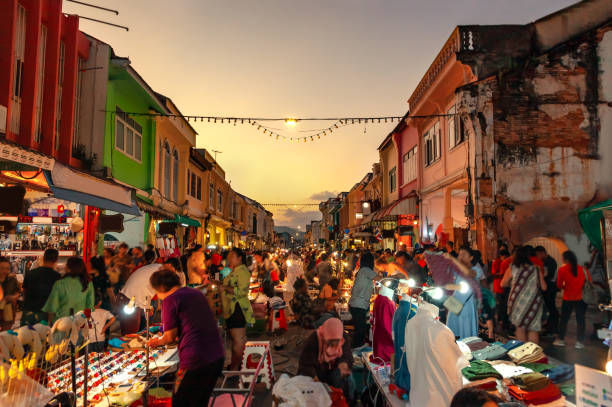
As Joni Mitchell once lamented, “They paved paradise and put up a parking lot.” Today, that parking lot is no mere convenience. It is a sprawling, relentless system that turns trust, education, health, and even our imagination into commodities designed for extraction and sale.
What is market fundamentalism?
For decades, scholars have traced how neoliberalism, characterized by privatization and deregulation, has hollowed out democratic institutions. It often cloaks itself in technocratic language like “efficiency” and “modernization.”
Market fundamentalism strips away this veneer. It elevates the market to near-religious status, insisting that every facet of life must be commodified and measured through profit alone. In this worldview, public institutions become suspect unless they mimic private firms. Collective goods like clean air, public education, and health care are recast as burdens to be sold off.
The shift from citizens to consumers
Perhaps most insidious is the colonization of our minds and hearts. Trust shifts from collective institutions to charismatic leaders and corporate brands. We are encouraged to see ourselves primarily as consumers, our agency expressed through purchasing power rather than democratic participation.
Problems are framed narrowly as technical issues to be solved by experts, not as political challenges demanding collective debate. This narrowing of imagination confines us to roles as competitors rather than co-creators of society.
How crises are engineered
At the heart of this colonization lies a deliberate tactic, engineering legitimation crises. Market fundamentalism doesn’t wait for public trust to erode organically, it manufactures the conditions for failure.
The playbook is familiar:
Strategic sabotage: Public institutions suffer budget cuts and staffing freezes.
Visible failure: Schools falter, hospitals strain, and infrastructure crumbles.
Blame shifting: Politicians blame “government” itself as inherently inefficient.
Privatization as salvation: Private alternatives are offered as the only viable solution.
This cycle has been rehearsed worldwide, from Chile to Britain, and recently in Brazil and Hungary. We see it reflected in modern political administrations that systematically weaken education and civil service to justify further market incursions.
The reality of two-tier societies
Market fundamentalism rarely eradicates public services outright. Instead, it creates dual systems that bake inequality into the very structure of our lives.
We see a residual public tier that is underfunded and stigmatized, serving marginalized communities. Meanwhile, a premium private tier emerges, offering high-quality access mainly to those with wealth. This stratification permeates education, health care, and security. When those with access to private tiers have little incentive to defend universal systems, the erosion of shared goods accelerates.
The rise of the cheerful robot
Max Weber famously described modernity as a process of disenchantment, where the world becomes calculable and predictable. Market fundamentalism pushes this further, turning nature into “natural capital” and human relationships into data points.
Sociologist C. Wright Mills warned of “cheerful robots”, individuals who adapt unquestioningly to bureaucratic demands. In today’s market-driven world, they morph into data-savvy optimizers of personal brands, hyper-rational as consumers but powerless as citizens. When institutions favor markets over people, democratic participation feels futile. Cynicism and withdrawal follow.
4 ways to re-enchant our world
If market fundamentalism is a colonizing regime, are we doomed to live under its shadow? Not necessarily. Resistance begins with understanding the forces at play and intentionally building alternatives.
Restore trust as a public good: Trust is infrastructure, not just a feeling. Rebuilding it requires investing in public institutions, practicing radical transparency, and creating genuine participatory processes that empower people beyond token consultation.
Defend democracy’s immune system: Universities, independent media, civil services, watchdog NGOs, and unions are democracy’s immune cells. Supporting these institutions materially and politically is essential to resisting the erosion of our shared values.
Reclaim the commons: We must assert that some things belong outside market logic, healthy ecosystems, basic healthcare, education, housing, and safety. This is a cultural project, expanding cooperative models while telling new stories of shared responsibility.
Revive the sociological imagination: Understanding that personal struggles reflect structural problems reconnects us to collective action. Reawakening this imagination helps us see beyond individual blame and recognize the political nature of our crises.
Start reclaiming your agency today
Market fundamentalism is paving over more than physical landscapes, it is eroding institutions, social bonds, and our very capacity to imagine alternatives. Yet history reminds us that colonization always breeds resistance.
The challenge before us is both simple and profound, "Will we accept a future where everything is paved, privatized, and profited from? Or will we reclaim the collective authority to decide where paradise begins, and where the paving must stop?" Take the first step today by supporting a local public institution or community cooperative in your area.
Mark Durieux, Sociologist and Educator
Mark Durieux is the developer of the increasingly popular Generative AI app, The Sociological Imagination, and the lead co‑author of Social Entrepreneurship For Dummies. He has researched and written extensively on introductory, environmental, economic, urban, and public sociology, as well as on research methods. Mark works with communities and organizations in Canada and abroad to advance social entrepreneurship, equity, and democratic engagement. His mission is to democratize sociological knowledge, thereby inviting the public into critical, hopeful conversations about how society can change for the better.







