How Bringing Nature Inside Enhances Feline Enrichment for the Indoor Cat
Updated: Jul 10, 2025
Angela Kearney is a holistic therapist for people and pets. She is a Registered Animal Healer, Reiki Master Practitioner, Bach Foundation Registered Animal Practitioner and Pet Bereavement counsellor. Angela offers healing and consultations for animals (and their humans) in London, UK.

Even the most content house cat is, at heart, a natural-born hunter. Their days may be spent lounging on windowsills or curled up on sofas. Still, their instincts remain sharp, driving them to explore, hunt, and engage with their surroundings.
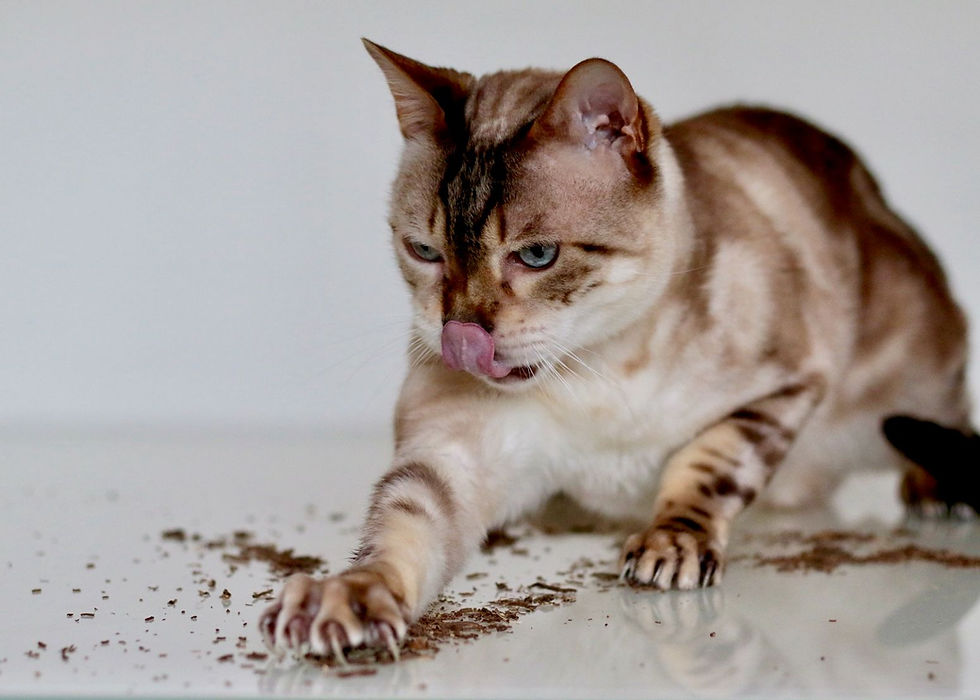
In our efforts to protect them, we can deprive our cats of a sufficient variety of opportunities to express their natural behaviours, such as exploring, scratching, or scent-marking. Our feline friends may become bored, anxious, or withdrawn. While they tend to mask discomfort, these changes can show up over time in their behaviour, health, or interactions with other animals and their humans.
Herbs and flowers can offer a simple but meaningful way to enrich their world. Carefully selected dried medicinal plants invite curiosity, bring comfort, and reintroduce a bit of the outdoors into the home, supporting emotional balance and overall wellbeing.
It's a simple practice but one with deep roots in feline behaviour. And for indoor cats, in particular, it can be a source of joy and satisfaction to bring their world back to life.
The magnificent seven: Herbs to soothe, calm, and enrich
While essential oils are a powerful and effective form of plant medicine, they can be toxic, and great care should be taken, especially around cats. Proper knowledge and professional guidance are key to ensuring the safety of your feline friends.
Dried medicinal herbs, on the other hand, provide a safer and more accessible starting point. They're easy to offer and rich in sensory value, making them ideal for introducing cats to the world of plant medicine in a gentle and safe manner, giving cat owners peace of mind.
In this starter selection, we'll explore dried medicinal herbs that support the kinds of behavioural challenges often seen in understimulated or indoor cats. The following seven plants promote calm, ease stress, and support emotional balance. As a bonus, many of them also offer physical health benefits. These herbs include Calendula, Catnip, Chamomile, Jasmine, Lavender, Rose Buds, and Valerian, each with its unique properties and benefits.
Calendula
Calendula officinalis
Better known as Marigold, Calendula is a gentle all-rounder with well-known skin-healing properties. It's a comforting herb, both emotionally and physically. It can be beneficial in multi-cat households where tension or hierarchy issues leave shyer cats feeling anxious or low in confidence. It encourages confidence and a sense of ease, ideal for cats that have lost their spark.
Catnip
Nepeta cataria
Roughly one in three cats don't respond to Catnip, but for those that do, the reaction can be euphoric. You'll see rolling, flipping, purring, and general "catnip crazy" behaviour. Interestingly, the effect differs depending on its use: when inhaled, it acts as a stimulant; when ingested, it becomes more calming. Great for drawing out shy personalities or encouraging playful activity. It can also be soothing for mild tummy troubles.
Chamomile
Matricaria chamomilla (German chamomile)
Chamomile's soft, apple-like scent makes it a lovely choice for anxious or withdrawn cats. Gentle and calming, it offers both emotional and physical benefits: soothing the skin, easing digestive upsets, and helping the nervous system unwind. It's often a firm feline favourite in herb gardens.
Jasmine
Jasminum officinale
Jasmine is a beautiful, sweet-scented plant that offers emotional support in subtle but profound ways. Particularly helpful in multi-cat homes with tension or dominance issues, it can ease power struggles while also helping cats who may be insecure or emotionally fragile. Cats dealing with emotional neglect or other anxieties often find comfort here. Overgrooming, which frequently results from such emotional stress, can also be soothed by Jasmine's gentle, fragrant presence, like a comforting, fragrant hug.
Lavender
Lavandula officinalis
Known for its calming effects, Lavender is useful for cats experiencing anxiety, timidity, or emotional overwhelm. It can help restore calm after stress or shock and is often beneficial in multi-cat settings where tensions run high. Lavender also supports the skin, easing stress-related flare-ups and promoting healing.
Rose buds
Rosa damascena
Rosebuds offer comfort in times of sadness, grief, or rejection. Their gentle scent reaches into the emotional core, making them beneficial for cats who have experienced upheaval, neglect, or poor treatment. The shape and size of the buds also invite tactile play, engaging the paws and senses in a soft, soothing way.
Valerian
Valeriana officinalis
Valerian is a powerhouse plant with deeply calming properties. It's particularly beneficial in managing conditions like epilepsy, where relaxation of the central nervous system can help reduce the frequency or severity of seizures. Inhaled, it stimulates playful behaviour, while ingestion promotes deep calm and physical ease. Valerian supports cats dealing with anxiety, hyperthyroidism, and behavioural challenges, and can also help with pain, digestive issues, and urinary discomfort, such as cystitis, thanks to its smooth muscle relaxant action. In many homes, it's a firm favourite for both cats and their humans.
A note on botanical names
Included in this list are Latin names (genus and species) to help you source the correct plant. Plants such as Chamomile, Rose, and Lavender can refer to several different species with very different properties and safety profiles. Always check the full Latin name when buying medicinal herbs.
Instinctive healing: When cats choose their medicine
The idea that animals instinctively know how to seek out plants that support their health may sound surprising, but this behaviour has a name: Zoopharmacognosy.
Observed in many wild species, from elephants chewing bitter tree bark to self-medicate to parrots eating clay to neutralise toxins. Even domestic animals, such as dogs and cats, may display similar behaviours, like sniffing or nibbling plants to help soothe discomfort or settle their mood. Outdoor cats eating grass immediately springs to mind.
For indoor cats who don't have access to a natural garden, we can offer gentle support by providing safe, dried herbs that reflect the choices they might make if they had the freedom to forage.
Cats experience the world primarily through scent. While humans have around 5 million scent receptors, cats have roughly 50 to 80 million, giving them an olfactory system up to 14 times more sensitive than ours. This heightened sense of smell makes sensory enrichment, especially with aromatic herbs, potent. It's also why their responses can appear so euphoric: scent doesn't just inform their world, it shapes their mood, behaviour, and emotional state.
We invite them to explore with their senses: sniffing, rubbing, rolling, and resting nearby. By doing so, we honour their instincts and respect their choices, helping them engage in a deeply rooted form of self-care.
Offering herbs to your cat
When offering herbs to your cat, remember that it's an invitation, not an obligation. Your cat should always have the choice to engage with the herbs or ignore them. Respecting their autonomy in this way is crucial for a positive herbal enrichment experience.
The easiest way to offer herbs is on a herb mat or small "herb garden," a towel or fleece blanket large enough for your cat to stretch and roll comfortably. Position the mat in a quiet, low-traffic area where your cat feels safe and relaxed.
Arrange the herbs in small piles, about a heaped tablespoon each, spaced at least 12 inches apart around the edges and corners of the mat. Leave the centre free as a resting spot. This setup allows your cat to explore and choose which herbs appeal to them the most.
Refresh the herbs every 3 to 5 days, and consider introducing a new herb with each refresh. Always use organic herbs sourced from a reputable herbalist to avoid pesticides or contaminants. Be sure to ask for the Latin names listed above.
Typical responses include sniffing, licking, chewing, rolling, rubbing, kneading, scratching, purring, vocalising, or simply sitting quietly among the herbs and processing the scents. Over time, you may notice your cat favouring certain herbs, which can offer clues about their emotional or physical needs.
Enrichment that speaks your cat's language
Offering herbs to your cat isn't about making dramatic changes or claiming miracle cures. It's a simple, sensory-rich activity that invites your cat to do what comes naturally: explore, choose, and interact on their terms.
For some, it may become a new favourite ritual. For others, it adds a quiet layer of interest to their day. Either way, it's a gentle, low-pressure way to support emotional wellbeing, particularly for indoor cats or those living in multi-cat households.
Over time, you may notice your cat becoming generally happier, calmer, and more content – qualities that make a meaningful difference to their daily life and your relationship with them.
While this introduction focuses on enrichment, many of these herbs do offer wider health benefits, something to explore further if your cat shows a strong connection to a particular plant.
A herb garden is a space where your cat can be themselves. It's a simple gesture of care, one that supports their instincts and brings a small piece of the natural world into their everyday life. Seeing your cat happy and relaxed is a simple joy and a rewarding reminder of the care you provide.
Read more from Angela Kearney
Angela Kearney, Holistic Therapist for People and Pets
Angela Kearney is a holistic practitioner and advocate of holistic living for both humans and animals. During a profoundly challenging time in her life, she turned to Reiki and Bach Flower Remedies in search of safe, gentle, and non-addictive healing therapies. When her young cat was diagnosed with idiopathic epilepsy, Angela was determined to support him wholly. This led to a new career path as she expanded her knowledge, qualifying as a Reiki Practitioner and Teacher, Bach Foundation Registered Animal Practitioner (BFRAP), and Registered Animal Healer. Angela’s multimodal approach to pet wellbeing yields transformative results, addressing the physical, mental, and emotional aspects of every animal.