Dr. A. Keith Carreiro Interview on MindWeaving™, Creative Intelligence, and the Making of Meaning
Dr. A. Keith Carreiro is an award-winning author, poet, Harvard-trained educator, creativity researcher, and former concert classical guitar soloist whose work explores how imagination, critical thinking, faith, and human experience converge in the making of meaning. Drawing upon more than five decades in education and several decades of scholarly inquiry, he is the originator of MindWeaving™, an emerging framework for understanding creative intelligence and helping people recognize, integrate, and release their creative potential.
In this interview, Dr. Carreiro explores the origins of MindWeaving™, the relationship between creativity and meaning-making, and the vital partnership between imagination and critical thinking. He also reflects on science and faith, artificial intelligence and transhumanism, the future of human creativity, and what it truly means to “release the genius within.”
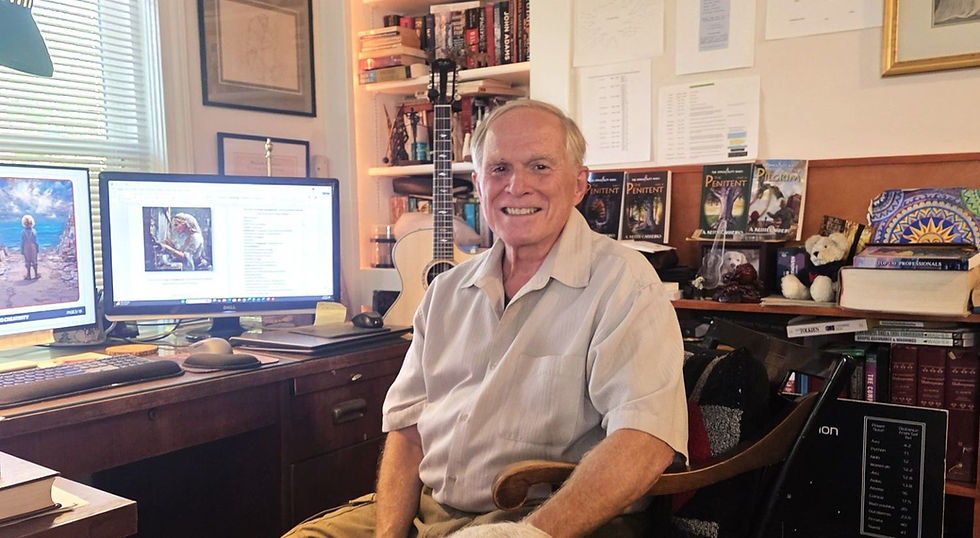
Dr. A. Keith Carreiro, Author, Speaker, Writer, and Creativity Coach
What first drew you to explore creativity as both a lifelong field of study and a personal calling?
Creativity first entered my life not as an academic subject, but as a lived experience. I became an avid reader at a very early age, discovering through literature different ways of seeing the world and encountering lives, cultures, perspectives, and experiences far beyond the boundaries of my own. Reading awakened my imagination, enlarged my understanding of the human experience, and instilled in me a deep and enduring appreciation for the literary arts.
As a young classical guitarist, I also discovered that music could reveal dimensions of thought and feeling that ordinary language could not always reach. During my sophomore year of high school, I began writing poetry, and it soon became an important means of artistic and spiritual expression. As I learned to give language, rhythm, imagery, and form to my reflections on life and spirituality, I developed a deep appreciation for the mysterious and deeply personal processes through which a poem gradually comes into being.
Later, as an educator, I became fascinated by the moments when students moved beyond recalling information and began making unexpected connections, asking deeper questions, and discovering possibilities they had not previously imagined.
Those experiences led me to study creativity and critical thinking at the Harvard Graduate School of Education, where I earned my master’s and doctoral degrees. Yet the longer I studied creativity, the less I understood it as merely a talent, technique, or psychological trait. I came to see it as a way of attending to life, a dynamic relationship among imagination, inquiry, memory, discernment, experience, and meaning.
Over time, creativity became more than a scholarly interest. It became a personal calling: to help people recognize that creative potential is not reserved for a gifted few. It is a profound human capacity, one that can be cultivated, integrated, and released in service to something greater than the self.
After more than five decades as an educator and several decades of scholarly inquiry, what have you discovered about the difference between possessing creative potential and bringing that potential meaningfully into practice?
Creative potential is possibility; creative practice is possibility given form. Many people possess remarkable imaginative, intellectual, artistic, or practical capacities that remain largely unrealized, not because those capacities are absent, but because they have not yet found the conditions through which they can emerge.
Potential alone does not necessarily become meaningful creativity. It must be engaged through curiosity, disciplined practice, sustained attention, critical reflection, courage, and a willingness to remain present during uncertainty. Inspiration may initiate the creative process, but perseverance, discernment, and revision often bring it to maturity.
I have also found that creativity is not simply a matter of generating many ideas. An idea becomes meaningful when it enters into relationship with purpose, truth, context, human need, and consequence. Creative practice therefore requires both openness and responsibility: the imagination to perceive what might be and the critical capacity to determine what deserves to become.
The movement from potential to practice is ultimately an act of participation. We do not merely extract creativity from ourselves. We enter into a process that changes both what we create and who we become.
How did MindWeaving™ evolve from your work in creativity, critical thinking, imagination, and human potential, and what distinguishes it from other approaches to creative development?
MindWeaving™ emerged gradually from decades of teaching, research, artistic practice, writing, and reflection. Again and again, I observed that meaningful creativity rarely arises from a single mental ability. It develops through the interaction of many capacities: imagination, critical thinking, intuition, memory, emotion, experience, inquiry, discernment, knowledge, faith, and purposeful action.
The metaphor of weaving became increasingly important to me because the mind does not always create in a straight line. It gathers threads from different times, disciplines, relationships, questions, and experiences. Some connections are deliberate; others emerge quietly beneath conscious awareness. Meaning is formed as these threads are brought into relationship.
What distinguishes MindWeaving™ is that it does not treat creativity as a formula for producing ideas more quickly or efficiently. Nor does it separate imagination from judgment. It seeks to understand how multiple ways of knowing and perceiving can work together without losing their distinctiveness.
MindWeaving™ is therefore both a framework for creative intelligence and an invitation to deeper participation. Its purpose is not to manufacture creativity, but to help recognize, integrate, and release the creative potential already present within the individual.
Your work often connects creativity with meaning-making. Why do you believe creativity is more than the production of something new and is also a way of discovering, interpreting, and shaping meaning?
Novelty alone is not sufficient to define creativity. Something may be new without being meaningful, truthful, beautiful, beneficial, or worthy of being brought into the world. For me, creativity becomes most significant when it helps us perceive relationships, illuminate experience, deepen understanding, or give form to something that previously remained hidden, fragmented, or unexpressed.
Meaning is not always manufactured by the mind. Often, it is discovered through attentive participation. A writer may begin with an image whose significance is not yet understood. A musician may hear a phrase before knowing where it will lead. A researcher may recognize a pattern only after years of inquiry. In each case, creativity becomes a way of listening as well as making.
This understanding lies near the heart of The Loom of Thought. Human beings continually weave memory, imagination, knowledge, emotion, belief, experience, and hope into evolving patterns of meaning. Yet meaningful creation also requires discernment, because not every possible connection is equally true or valuable.
Creativity, then, is not merely the production of novelty. It is one of the ways we encounter, interpret, and participate in reality, and, through that participation, become more fully human.
In The Immortality Wars, you explore artificial intelligence, transhumanism, faith, power, and humanity’s desire to overcome death. What conversations do you hope the series encourages readers to have about technological progress and the future of what it means to be human?
The Immortality Wars asks what may happen when humanity’s desire to overcome suffering and death becomes inseparable from the pursuit of technological power. The series does not reject science or innovation. Human ingenuity has relieved suffering, expanded knowledge, and transformed civilization in extraordinary ways. Yet every increase in power also raises questions of purpose, responsibility, and moral direction.
Artificial intelligence and transhumanism invite us to ask not only what humanity may become, but what humanity ought to become. If intelligence can be amplified, bodies redesigned, memories preserved, or life radically extended, how will we understand personhood, dignity, freedom, relationship, mortality, and the human soul? Who will guide these transformations, and whose vision of human flourishing will prevail?
Through speculative storytelling, I hope readers will examine the difference between healing and mastery, stewardship and domination, transcendence and escape. The desire to conquer death may reveal both humanity’s deepest fear and its deepest longing.
Ultimately, the series asks whether technological power alone can answer the questions of meaning, love, sacrifice, redemption, and hope that have always stood at the center of human existence.
Why do you believe science and faith can deepen and illuminate one another rather than exist in opposition?
Science and faith ask different but profoundly related questions. Science investigates the structures, processes, and patterns through which the natural world operates. Faith addresses questions of ultimate meaning, purpose, value, moral responsibility, and humanity’s relationship with God. Conflict often arises when either is asked to become something it was never intended to be.
For me, scientific discovery can deepen wonder rather than diminish it. The more we learn about the complexity of life, the vastness of the universe, and the intricate relationships that sustain existence, the more compelling the mystery becomes. Explanation does not necessarily eliminate awe; it can enlarge it.
Faith, in turn, can provide an ethical and spiritual context for the use of knowledge. The question is not merely, “What are we capable of doing?” but also, “What should we do, for whom, and toward what vision of human flourishing?”
Both science and faith require humility. Each reminds us that reality exceeds our present understanding. When they remain open to dialogue rather than competing for total authority, they can deepen our search for truth and encourage a more responsible participation in the world we are continually discovering.
How can writers strengthen both their imagination and their critical thinking without sacrificing either?
I would begin not with pressure to produce, but with attention. Creativity is often obscured by hurry, distraction, fear of judgment, excessive self-criticism, or the belief that every creative act must immediately become useful, successful, or impressive. Before we can create freely, we may need to recover our capacity to notice.
Pay attention to what awakens wonder. Return to the music, stories, places, questions, memories, images, or experiences that once stirred curiosity. Keep a notebook, not initially to create something polished, but to gather fragments: an image, a phrase, a question, a dream, an unexpected connection. Creative life often returns through small acts of receptivity.
It is also important to permit uncertainty. Many people abandon an idea because they cannot yet see its destination. Yet creativity frequently begins before understanding. We discover meaning by remaining in conversation with what is emerging.
Most of all, it’s important to resist comparing our beginning with someone else’s finished work. Creativity is relational and developmental. We can begin with one meaningful question, one attentive observation, or one small act of making. The imagination often reawakens when it is welcomed rather than commanded.
How can writers strengthen imagination and critical thinking together without allowing one to diminish or constrain the other?
Imagination and critical thinking are sometimes treated as opposing forces: imagination generates possibilities, while critical thinking evaluates and restricts them. In healthy creative practice, however, they are partners. Each protects the other from imbalance. Imagination enables writers to move beyond the immediately visible. It asks, “What if?” It creates characters, worlds, metaphors, conflicts, possibilities, and unexpected relationships. Critical thinking asks different questions: “Does this belong? Is it coherent? What are its implications? Is it true to the work that is emerging?” One expands the field of possibility; the other helps shape possibility into meaningful form.
Difficulty arises when judgment enters too early. If writers criticize every idea at the moment of its appearance, imagination may become hesitant. Conversely, if evaluation never enters the process, the work may remain diffuse or undeveloped. I encourage writers to distinguish, when possible, between generative and discerning modes: first allowing possibilities to emerge, then returning with analytical clarity.
Revision is where these capacities often become most deeply integrated. The goal is not for critical thinking to control imagination, nor for imagination to escape judgment, but for both to participate in a creative dialogue that strengthens the work.
You often speak of helping people “release the genius within.” What does that idea truly mean, and what question do you hope readers will continue asking long after they encounter your work?
When I speak of “releasing the genius within,” I am not suggesting that every person is a hidden prodigy or that genius should be measured primarily by fame, achievement, intelligence scores, or public recognition. I use the word in a deeper sense: the distinctive constellation of gifts, experiences, questions, perceptions, relationships, convictions, and possibilities entrusted to each human life.
Too often, people learn to measure themselves by external standards and gradually lose contact with their own capacity to imagine, inquire, create, contribute, and grow. Releasing the genius within means helping those capacities move from possibility into meaningful participation. It requires encouragement, discipline, humility, courage, discernment, and a willingness to serve purposes larger than personal success.
The aim is not self-glorification. Human potential reaches its fullest expression when it contributes to truth, beauty, understanding, compassion, healing, justice, and the flourishing of others.
The question I hope readers continue asking is this, "What has been entrusted to me, and how might I faithfully bring it into the world?"
That question is never answered only once. It changes as we change, inviting us into a lifelong process of discovery, responsibility, creativity, and meaning.
Why is weaving such a powerful metaphor for understanding the human mind, and what does MindWeaving™ reveal about how creativity and meaning emerge?
The metaphor of weaving reflects something essential about the way we think, imagine, remember, and create. The mind does not ordinarily construct meaning from a single thread of information or move through experience in a perfectly linear sequence. It draws continually upon memory, imagination, emotion, knowledge, intuition, sensory experience, relationships, questions, beliefs, and hope. These strands cross and recross, sometimes deliberately and sometimes beneath conscious awareness, forming patterns whose significance may emerge only over time.
MindWeaving™ explores this dynamic process. It proposes that creative intelligence is not merely the ability to generate novel ideas, but the capacity to perceive relationships, integrate diverse ways of knowing, discern meaningful patterns, and bring new possibilities into responsible form.
The weaving metaphor also preserves an important truth: integration does not require uniformity. Distinct threads retain their character while contributing to a larger design. Imagination need not become critical thinking, nor intuition become analysis. Their creative power may arise through relationship.
MindWeaving™ therefore asks us to consider not only what we think, but how the many dimensions of thought and experience are woven into meaning, and how those patterns shape what we create and who we become.
As artificial intelligence becomes increasingly capable of generating language, images, music, and ideas, what do you believe remains uniquely human about creativity?
Artificial intelligence is transforming how people generate, develop, and communicate ideas. It can recognize patterns, synthesize vast amounts of information, produce compelling language and imagery, and become a valuable collaborator in creative work. These capabilities deserve thoughtful engagement rather than either uncritical enthusiasm or reflexive fear.
Yet human creativity involves more than producing novel or technically impressive content. Human beings create from within lived experience. We remember, suffer, love, hope, grieve, believe, question, sacrifice, and seek meaning. Our creative acts arise within relationships and carry moral, emotional, spiritual, and existential significance. We are responsible not only for what we create, but also for why we create it and how it may affect others.
The central question may therefore be not whether artificial intelligence can create, but how its growing capabilities will change our understanding and practice of human creativity.
AI may extend our capacities, reveal unexpected connections, and open new forms of collaboration. But it should also challenge us to cultivate more deeply those qualities that make human creativity meaningful: wisdom, empathy, conscience, imagination, discernment, responsibility, and a sense of purpose that transcends production alone.
Read more from Dr. A. Keith Carreiro