

BrainsZ Is Not a Typo But a Warning Sign
DJ Jesse Hudson is a cognitive health advocate, media creator, and founder of CTEFight.com. Through TheRabbitHole.ca, he documents lived experience with brain injury while exploring how AI, storytelling, and community can support cognitive awareness, recovery, and resilience.

There was a time when we described the brain like a muscle, something you train, strengthen, and push. That idea worked for a while, but it doesn’t fully explain what people are experiencing today. A better analogy now is this, the brain is a hard drive. It has limits. It stores information, processes input, and runs background operations we don’t always see and like any system, it can get overloaded. There’s no clean warning when we’re running out of space. Instead, it shows up as fatigue, brain fog, emotional spikes, and sometimes full shutdown.
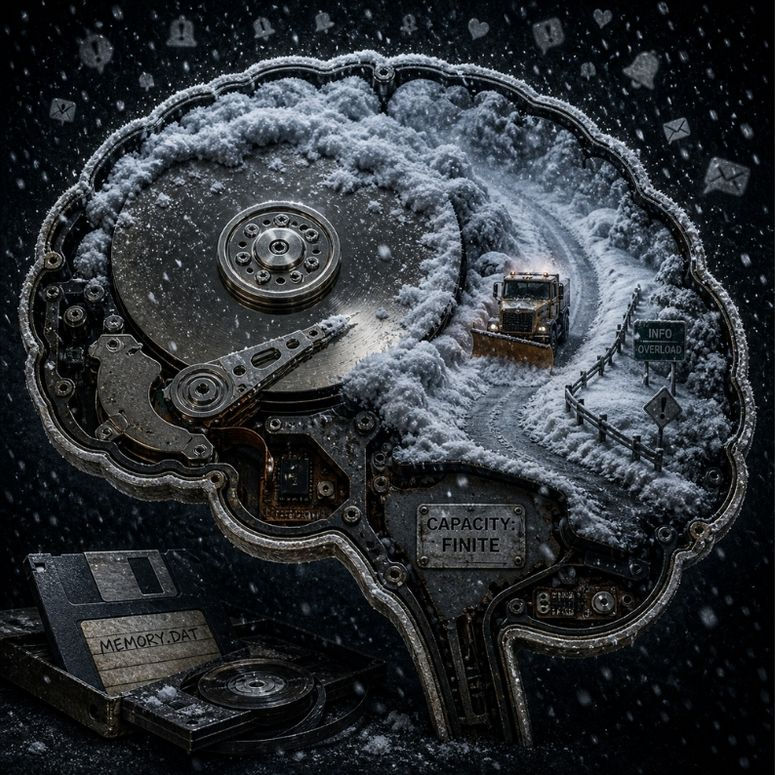
What’s changed isn’t just the individual. It’s the environment. We’re living inside a constant stream of input, notifications, short-form video, rapid-fire content. Not a trickle, a snowstorm. Each alert, each scroll, each clip is small on its own, but together they pile up. The brain doesn’t get time to clear or settle. It just keeps writing and here’s the part that matters, the system doesn’t empty.
The feed keeps coming, faster than we can process or discard it. Over time, something has to give, and it’s rarely the noise that gets pushed out first. It’s the important functions. Focus slips, emotional control weakens, memory gets inconsistent, and decisions get harder. We end up trading long-term stability for short bursts of stimulation.
Then algorithms enter the picture. They aren’t neutral. They’re designed to learn what holds your attention and give you more of it. If you pause, it notices. If you click, it reinforces. If you linger, it adapts and if curiosity leans into something heavier, like stress, fear, or anger, the system doesn’t pull back. It leans in. For adults, that shapes mood. For kids, it shapes development.
Platforms like TikTok have already raised concerns because of how quickly content loops form. It’s not just about screen time, it’s about repetition, patterning, and reinforcement. What people call “TikTok brain” isn’t just shorter attention spans. It’s a brain being trained to expect constant novelty without recovery and when that becomes the baseline, everything slower starts to feel harder.
The real risk isn’t just overload. It’s what fills the space. If the system feeds one emotional tone long enough, that tone starts to dominate. Anxiety feeds anxiety. Anger feeds anger. Validation replaces self-worth. The brain doesn’t just get full, it gets biased. So the question isn’t whether technology is good or bad. It’s how it’s used.
This is where AI can shift roles, from amplification to protection. Instead of pushing more content, it can act as a stabilizer. It can recognize overload, detect unhealthy loops, and interrupt them early. It can rebalance input and adapt to cognitive load in real time, not to control people, but to protect their capacity. For children especially, that matters. Developing brains are flexible, but they’re also more exposed. A system that prioritizes engagement will shape them one way, and a system that prioritizes stability will shape them another.
This connects directly to a broader idea, the No Danger Zone. Originally, that concept applies to physical safety and environmental design, but it extends naturally into cognition. A No Danger Zone for the mind is an environment where input is balanced, overload is reduced, and harmful feedback loops are interrupted early. It doesn’t eliminate complexity, it manages it.
When you look at it this way, the issue isn’t motivation or discipline. It’s bandwidth. People aren’t failing, they’re overloaded. Until we design systems that respect that, we’ll keep blaming the brain for doing exactly what it’s supposed to do.
Read more from DJ Jesse Hudson
DJ Jesse Hudson, AI-Driven Cognitive Health Advocate
DJ Jesse Hudson is a cognitive health advocate, media creator, and founder of CTEFight.com. Living with the long-term effects of brain injury, he uses storytelling and lived experience to raise global awareness around cognitive health and recovery. Through TheRabbitHole.ca, he explores how AI, media, and community can support resilience, continuity, and human dignity. His work bridges advocacy, innovation, and culture to make complex brain health conversations accessible and real.


