5 Lessons From My Father on Building a Lasting Legacy
Updated: Apr 29
Written by Paul Grainger, Founder of Unlock Dynamic
As Founder of Unlock Dynamic, Paul Grainger is a trusted strategic partner to CEOs, COOs, and senior leadership teams navigating pressure, change, and complexity. With over 25 years' experience across startups and multinationals, he helps ambitious organisations thrive by addressing the behavioural realities most leadership programs overlook.

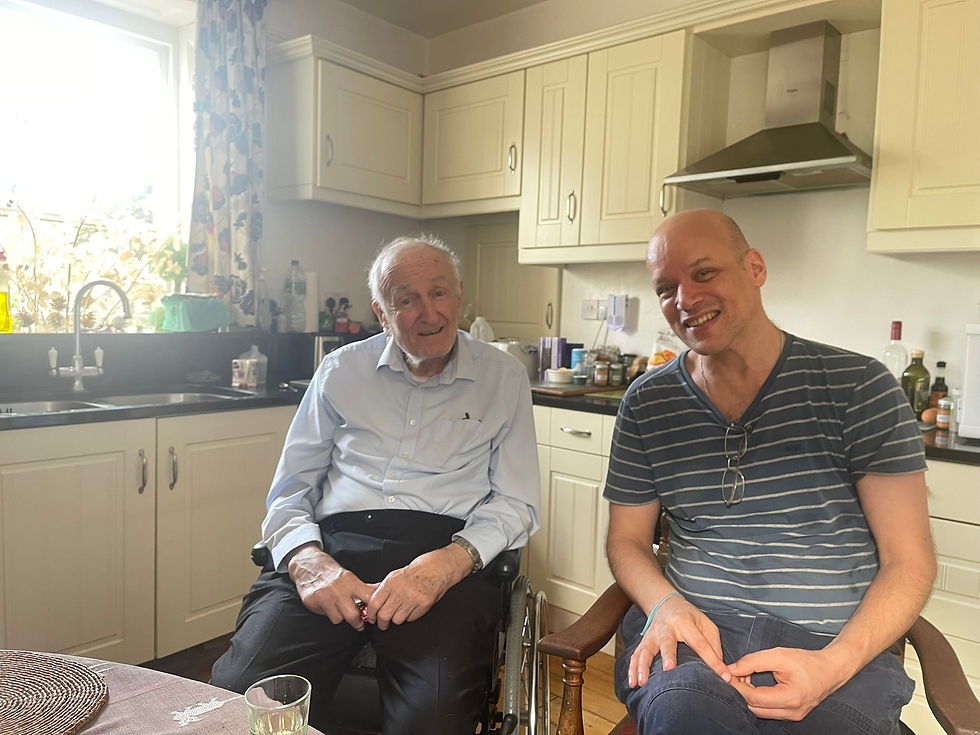
We often think legacy is built through major achievements, titles, or defining moments. My father’s recent passing reminded me that it is more often built quietly, through everyday behaviours repeated over time. A close school friend told me he still remembers his mother describing my dad as “the best father and husband she ever met.” It made me reflect on moments from my childhood that felt ordinary at the time, but looking back, shaped how I think about leadership, relationships, and what it truly means to show up for people.
1. Going the extra mile, literally
When I was at boarding school in the UK, and we were living in Belgium, most parents would have put their children on a short 45-minute flight from Brussels to London at the start of term. He drove me and took the boat instead, adding around eight extra hours each way.
At the time, it felt unnecessarily long and tedious. Looking back, I now understand what he was really giving me, time.
Time to talk. Time to catch up. Time to feel connected. In a world obsessed with efficiency, he chose presence.
Then, in August 1994, just weeks after graduating from university, I left home and moved to Thailand, where I still live more than three decades later. In those early years, long before video calls became normal, I rarely saw my dad and mum, and spoke to them far less than I would have liked.
But the bond we built on those long journeys never weakened. It had given us something distance could never take away.
Lesson: In leadership, people rarely remember how busy you were. They remember whether you made time for them when it mattered.
2. Small things, done consistently
Boarding school could feel extremely isolating, especially for a 9-year-old living in a different country. Back then, of course, there were no mobile phones or instant messaging. Letters were the only real connection to home.
My dad never missed one. Many included hand-drawn sketches of my dog, Pepper, complete with funny captions. At the time, I found them amusing. Now I realize how intentional they were, and how I was probably the only one at school receiving anything like that.
They were a lifeline disguised as humour. He didn’t need grand gestures. He understood something many people miss, consistency creates trust.
Lesson: Trust is rarely built through grand gestures. It is built through small, consistent actions repeated over time.
3. Confidence without noise
My father spoke five languages, was a University of Oxford graduate, and went on to become a successful managing director. In 1985, he was awarded an Order of the British Empire (OBE).
Yet you would barely have known it. He never used the title, never drew attention to it, and treated everyone exactly the same regardless of status, position, or background. That became ingrained in me.
He took time to remember people’s names and would often recall details from previous conversations, making others feel seen and valued.
One story captures his humility perfectly. While on holiday in France, an open bin lorry passed the house. He invited the men collecting the bins in for a drink, then he and his two companions carried on the collection themselves.
Real confidence rarely announces itself. Real achievement doesn’t need constant validation.
Lesson: The strongest leaders often carry their achievements lightly and make others feel important instead.
4. The power of a few well-chosen words
I once made the school football team but was selected in my least favourite position, left back. I complained to my dad. He listened, then simply said, “That gives you an advantage. No one will expect you to use your right foot there.”
In one sentence, he completely reframed how I saw the situation. I still remember how it took less than a second to shift from disappointment to opportunity. In many ways, that moment helped lay the foundations for much of the work I do today.
Lesson: Great leaders don’t need long answers or explanations. Sometimes one well-timed perspective shift changes everything.
5. A life lived for others
If there was a single word to best describe my father, it would be selfless.
After his passing, a close family friend said it was not that he could have been a diplomat, he was one every day through the way he lived. A diplomat, mediator, philosopher, and philanthropist in the quietest and most natural sense of those words.
He had a rare ability to bring calm where there was tension, often using an off-the-cuff remark not only to ease the moment but to add a sense of humour. He moved through life with elegance, and with genuine care and love for others, not least for my mum, expressing himself through thoughtful actions, never through empty words.
He had a level of empathy and patience that helped him connect and understand everyone. Back in 2020, he was the one person who fully understood what I was trying to create with my business. When I was close to calling it "Unlock", he added "Dynamic." It made it whole.
Lesson: Lasting influence comes from how consistently you help others thrive.
What legacy really looks like
I’m still processing the loss, and I miss him deeply already. But reflecting on these memories, I now realise how much of what I do today, in business, leadership, and life, traces back to him. That may be the greatest reminder of all.
In fast-moving organisations and busy lives, we often overlook how legacy is really formed. Legacy is rarely built in dramatic moments. It’s built in small, everyday moments, in car journeys, handwritten notes, timely words, thoughtful actions, and the subtle ways we make others feel seen, valued, and loved.
Love you, Pa. I’ll keep making you proud.
Read more from Paul Grainger
Paul Grainger, Founder of Unlock Dynamic
Paul Grainger focuses on helping capable leaders and teams sustain strong performance over time, beyond conventional approaches that frequently fail to hold under daily pressure. Drawing on decades of experience, he blends human insight and modern science to offer a practical alternative to conventional leadership thinking. A consistent theme in his work is identifying the invisible performance drains that quietly cost organizations time, energy, and focus.