

Your Experience Gives You Confidence – Exclusive Interview with Ankur Nagar
Ankur Nagar is the founder of Saarva and a consumer insights specialist with more than two decades of experience advising organisations across markets, working as an outsourced insights partner that starts from the client’s business problem rather than a predefined offering. In this interview, he discusses which long-held assumptions about the Indian consumer are losing their usefulness, what Saarva’s Gen Z research reveals about the limits of traditional segmentation, the signals startups mistake for readiness to scale, and how becoming a founder changed the advice he now gives others.
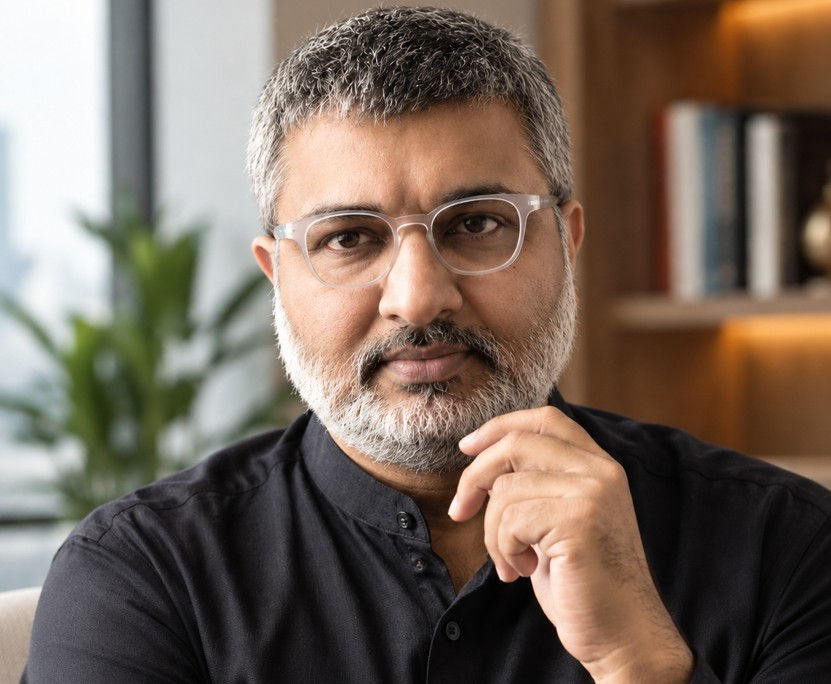
Ankur Nagar, Founder & Principal Consultant at Saarva
After more than two decades advising organisations, what made you decide to build Saarva as your own consulting platform?
After more than two decades in consumer insights, research, and consulting, I felt there was a gap in how businesses were supported. Organisations often don’t need another research report or a traditional consulting engagement. They need someone who can work closely with them, understand the business problem, challenge their thinking when required, and stay with them as they turn insights into action.
That is the kind of relationship I wanted to build through Saarva, more of a trusted advisor and partner than a conventional consultant. Traditional research and consulting models can become sticky, with firms trying to fit client problems into predefined offerings.
Saarva was therefore born from a simple belief: the starting point should be the client’s problem, not the consultant’s offering. The approach should adapt to what the business actually needs.
When you step in as an outsourced consumer insights partner, what do you look at first to understand where an organisation needs support?
I usually start with two things: the business objective and the information already available within the organisation. The first question I ask is, “What decision are you trying to make?” Rather than immediately discussing a research methodology, I want to understand the business challenge, the expected outcome, and the decision leadership needs to make.
The second step is to understand what the organisation already knows. I look at existing customer or consumer data, past research, sales information, feedback, and other relevant inputs. Often, organisations already have useful information, but it sits in different places and has not been brought together to answer the issue they are facing.
Only after that do I identify the real gap. Sometimes the answer is new research. Sometimes it is better use of existing data. And sometimes the organisation simply needs an outside perspective to connect the dots. That is where an outsourced insights partner can add real value.
You have built research systems across markets and significantly improved turnaround times, so what makes an insights process both faster and more reliable?
I don’t think faster should mean cutting corners. In fact, a well-designed process can make research both faster and more reliable. One of the biggest improvements I have made was through automation and standardisation. Instead of starting every report from scratch, I helped create templates where almost 80% of the report structure was already in place, so that the remaining effort could go into the story, interpretation, and implications.
Automation also removes repetitive manual tasks and reduces the scope for human error. But technology alone is not the answer. The important part is knowing what should be standardised and what should remain open to human judgment. Process, formats, and repetitive tasks can be systemised, but interpreting consumer behaviour still needs human thinking.
For me, the ideal insights process is structured enough to be efficient, but flexible enough to think. Speed comes from removing unnecessary work, while reliability comes from the right checks and giving people more time to focus on what the data actually means.
Which traditional assumptions about the Indian consumer are becoming least useful for brands today?
I think three assumptions are becoming less useful. The first is that Indian consumers are primarily price-driven. Price still matters, but consumers are increasingly willing to pay more when they see value in the experience, convenience, quality, or meaning behind a product.
The second is the idea that a consumer has one consistent persona. In reality, the same person can be value-conscious in one category, premium in another, traditional with family and different with friends or online.
The third is the assumption that Tier 2 and Tier 3 consumers are simply following the metros. Increasingly, these consumers are developing their own aspirations, preferences and consumption patterns.
The Indian consumer is becoming more complex, but that complexity is also an opportunity. Brands need to move away from broad labels and understand the context behind the behaviour. The question is no longer just “Who is the consumer?” but also “What is happening around the consumer when they make this decision?”
Saarva’s Gen Z research shows that young Indians can present different sides of themselves across family, work, friends, and digital spaces, so what does that mean for traditional customer segmentation?
One interesting finding from our Gen Z research was that young Indians want two things that may initially seem contradictory: they want to stay connected with parents, family, and friends, but also strongly value privacy.
This tells us something important about segmentation. We often put people into neat boxes: age, income, occupation, city, or lifestyle. But behaviour does not always fit those boxes. A young person can be close to family yet want independence, and can present one side with parents, another with friends, and another online.
None of these personas is necessarily fake. They are different sides of the same individual responding to different contexts. For brands, this means traditional demographic segmentation alone may not be enough. We need to understand needs, situations, motivations, and context.
The opportunity is to move from asking, “Which segment does this person belong to?” to asking, “What need or situation is driving this behaviour right now?”
What is one signal that startups often mistake for proof that they are ready to scale?
One of the biggest mistakes I see is confusing early traction with product-market fit. A startup may have a few hundred or even a few thousand customers, good initial feedback, or strong growth over a short period. That can be encouraging, but it does not necessarily mean the product has found a scalable market.
Before scaling, founders need to understand whether there is a genuine, repeatable need; who has it; what problem they are solving; and whether customers will keep choosing and paying for the solution. I would rather see a founder spend more time understanding the market than spend heavily and discover later that the proposition is not strong enough.
Scaling amplifies whatever is already there. If you have product-market fit, that can be powerful. If you do not, scaling simply makes the problem bigger and more expensive.
For me, the real signal is not just “Are people buying?” It is “Do we understand why they are buying, and will that reason continue to hold as we grow?”
When customer feedback, Net Promoter Score (NPS), and behavioural data point in different directions, how should leaders decide what deserves the most attention?
I would resist the temptation to immediately decide which data point is “right.” When feedback, NPS, and actual behaviour disagree, I see that as a signal that we do not yet understand the full story.
If there is a clear disagreement between what consumers say and what they actually do, I would usually look more closely at the behaviour first. But I would also try to understand the context behind that behaviour through additional conversations, immersions, or qualitative work.
People do not always behave exactly as they say they will, and that does not necessarily mean their feedback is wrong. Practical constraints, emotional factors, habits, or circumstances may be influencing the decision.
An insights leader's role is not to pick one dataset and ignore the others. It is to connect the dots and understand why the numbers and the human story may be different. Data tells us what is happening, consumer understanding helps us get closer to why it is happening.
How has becoming a founder changed the way you think about the advice you once gave other businesses?
Becoming a founder has changed my perspective in ways I did not fully appreciate when I was advising other businesses. The first is how much it matters not to decide on incomplete information. As a consultant, you can recommend a course of action based on what is available. As a founder, you live with the consequences, so I have become more deliberate about gathering relevant information before making important calls.
The second is my understanding of risk appetite. Starting something of your own makes you realise that risk is not abstract. You have to make decisions when there is no guarantee of the outcome, while being thoughtful about what you are willing to risk.
And perhaps most importantly, I have learned the art of saying no. There is always a temptation to take on an opportunity. But if I do not believe I can genuinely deliver what a client needs, I would rather say no than make a promise I cannot keep. For me, that's part of being a trusted partner.
After 20 years in consumer insights, what do you understand about people and decision-making today that you did not understand at the beginning of your career?
After more than 20 years in consumer insights, what I understand better today is that people rarely make decisions in isolation. Their choices are shaped by context, emotion, habit, constraints, and the moment.
Early in my career, experience gave me the confidence to believe I could find the right answer. Today, it has taught me something more valuable: to stay curious when the answer is not obvious. Every business, every challenge, and every new chapter brings a different human context, and that context often changes the decision.
Starting Saarva has reinforced that feeling. In many ways, I have gone back to being a learner again: questioning things I thought I knew, looking at familiar problems differently, and staying open to new possibilities.
That is probably the biggest lesson I have taken from the last two decades: experience should give you confidence, but it should never take away your curiosity. In insights, the moment you believe you already know the consumer is often the moment you stop seeing them clearly.
If the last two decades have taught me anything, it is that the best insights still begin with the humility to ask one more question.
Read more from Ankur Nagar


