How Martial Arts Training Supports Mental Health, Cognitive Function and Neurodiversity
Written by Jade Taussig, Psychotherapist, Coach & CEO
Jade Taussig is an accredited psychotherapist, coach, and entrepreneur dedicated to helping people unlock lasting change, process their emotions, and find their voices. As co-founder of Integrated Wellness, creator of Mood Moved, and CEO of We Are The News, she combines psychological expertise with innovation, creativity, and personal growth.

As a psychotherapist, I’m constantly on the lookout for solutions beyond the couch to combat anxiety, fight depression and build self-esteem. Martial arts have been proven to help in these areas. They can also sharpen mental acuity and decrease cognitive decline. Furthermore, growing research points to benefits for the neurodiverse.
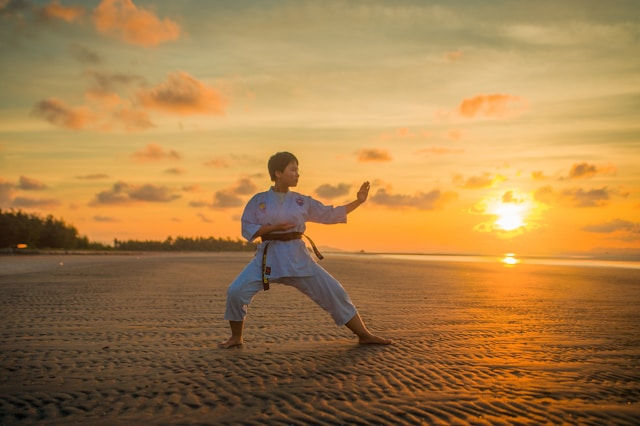
All forms of movement can be valuable for our bodies and minds. However, martial arts possess a clear and distinct edge, irrespective of the practitioner’s age.
Unlike most sports, many classes are multi-generational. The practical appeal of an exercise activity I could do with my children enticed me to try a local karate class. My son and I fell in love with it, and the sessions continue to be a great bonding experience. Achieving our black belts together was a milestone neither of us will forget. This set me on a journey into other martial arts, Taekwondo and Brazilian Jiu Jitsu (BJJ). For my son, he found a hobby that could compete with the draw of the digital world, with a drastic increase in his confidence and social skills. For me, it resulted in significantly less stress, increased patience, and a notable improvement in my problem-solving abilities.
Combating anxiety, stress and depression
My previous article explored how movement has been scientifically proven to address these areas. Martial arts can achieve much more than exercise alone. Usually aerobic in nature, this type of exercise reduces anxiety by increasing our feel-good chemicals, endorphins, and lowering the body’s stress hormone, cortisol. In the long term, the autonomic nervous system, which controls what we do without thinking, is better able to regulate itself. Furthermore, the parasympathetic nervous system, which supports our ability to sleep, is improved.
For anyone suffering from depressive symptoms, access to a meaningful community with regular social contact can do wonders for staving off the blues. As anyone who has felt down for a sustained period would attest, the desire to stay in bed, avoid the outside world and the people in it can be deeply attractive. However, social isolation is probably the single worst thing a person in a depressive state should endure.
Martial arts spaces necessitate social connection, and a regular schedule can ensure we commit. When people do not attend, they’re usually missed. Therefore, those who may not have a strong sense of self-worth know their absence is felt by the group, and they’re valued.
Progression helps to foster confidence and self-esteem, which goes a long way to ward off depression. One aspect all martial arts share is the accumulation of knowledge and practical skills, this creates a sense of achievement. Add to this the ability to protect yourself, which in itself is valuable. Styles like karate, judo, BJJ and Taekwondo have belt progression systems. A new belt is a tangible development marker, this can increase confidence and self-esteem.
Time is productively filled, thereby reducing overthinking, negatively ruminating on the past, or worrying about the future. Instead, it grounds us in the present.
Mindfulness and meditation in motion
It is undisputed that mindfulness and meditation can do wonders for our mental state, calming the mind, reducing stress, and keeping us grounded. However, many people struggle to sustain a regular practice of these. Myself included. If I’m being honest, I find meditation a bit boring to incorporate into my daily life, and I frequently forget to be mindful.
The beauty of martial arts is that mindfulness is baked into the process. When sparring, for example, being present in mind and body is a necessity.
As for meditation, drilling a kata, form or technique induces a rhythmic flow state, integrating the mind and body. The conscious use of breath can aid the meditative process. Utilising the breath effectively is also valuable for remaining calm under pressure or when experiencing a panic attack.
In an increasingly digitally distracted world, devices need to be out of sight to be out of mind. A physical space to regularly train, with phones on silent, allows our minds and bodies to be truly present.
Positive impacts for the neurodiverse
Anecdotally, I’ve found that martial arts classes have a high proportion of students who present as neurodiverse. Emerging research supports the idea that regular practice can help with areas such as executive function. I’ve noticed this effect myself. As someone diagnosed with dyslexia and dyspraxia, spatial awareness and knowing left from right require a great deal of cognitive effort. Remembering and repeating sequences, even more so. Working memory? Forget it. Karate and Taekwondo have significantly improved these areas. Brazilian Jiu Jitsu has particularly challenged my brain, I understand why it has been likened by many practitioners to physical chess.
In adults and children with attention deficit hyperactivity disorder (ADHD), I’ve observed students sustain focus and concentration for long durations. In fact, martial arts training is similar in function to the therapeutic interventions used in ADHD treatment. Executive function deficits are worked on in a fun way, holding attention by engaging the mind and body, as well as providing short-cycle goals and feedback.
Likewise, similar impacts have been reported for those on the autistic spectrum. As anxiety and depression are often comorbid conditions, the mental health benefits are not to be underestimated. The camaraderie of martial arts groups helps with feelings of belonging and acceptance. Furthermore, socialisation is structured and time-bound, so it complements any desire for set routines and clear rules, ensuring that social situations are not overstimulating. Topics of conversation can be focused around shared interests, thereby lowering anxiety and decreasing disengagement.
Improve mental acuity and decrease cognitive decline
Regular martial arts training can strengthen our cognitive skills because the brain is required to work alongside the body, thereby challenging working memory and processing speed. The prefrontal cortex, which is responsible for executive functions such as decision-making, planning and emotional control, is regularly stimulated. The basal ganglia, associated with regulating motor movements, procedural learning and cognition, are also tested, as well as the cerebellum, which helps to coordinate and control movement. As the practitioner increases in rank, movement sequences increase in complexity and thereby become more difficult to memorise and execute.
Systems such as Tai Chi can be incorporated well into later life and have been proven to increase healthy cognitive function, among other benefits, such as decreasing the risk of falls in the elderly.
Where martial arts practice incorporates sparring, the ability to read and react to an opponent heightens our ability to make decisions under pressure. Alongside this, conflict resolution skills are honed.
It’s never too late to start
With participants ranging from children to grandparents, there are many reasons to try martial arts. As evidence supports, the benefits go way beyond the physical. Stress, anxiety, depression, and social isolation may all be decreased. Furthermore, martial arts increase our cognitive function and may improve some symptoms of neurodiversity. However, it should be emphasised that it is important to find the right martial art for you. Some may find the close contact of BJJ or Judo too intense, perhaps even triggering. For others, this may be the case with striking arts. A Cobra Kai style dojo would, in reality, be a nightmare. It is important to find a class with a good culture and instructors who are supportive, respect your boundaries, and allow you to progress at your own pace.
Experience the benefit for yourself
My experience of the positive relationship between movement and mental wellness inspired me to create Mood Moved, a workshop series where I collaborate with martial artists, dancers, actors, art therapists and holistic health practitioners. Each workshop has been designed to facilitate emotional healing and stress relief.
Come and join us at our next Mood Moved workshop, with Arianna and me. Arianna is a 3rd dan karate instructor, women’s self-protection facilitator and actor. We’ve created a fun experience to release stress, increase confidence and help you connect with your inner strength.
Read more from Jade Taussig
Jade Taussig, Psychotherapist, Coach & CEO
Jade Taussig is a United Kingdom Council for Psychotherapy (UKCP) accredited psychotherapist, coach, and co-founder of Integrated Wellness, with over 17 years’ experience supporting mental health, emotional wellbeing, confidence, and personal growth. Her holistic approach draws on Psychodynamic Psychotherapy, Eye Movement Desensitization and Reprocessing (EMDR), Emotional Freedom Techniques (EFT), coaching, and movement-based practices. She is also the creator of Mood Moved, a workshop series combining psychotherapy, movement, creativity, and self-expression, and CEO and co-founder of We Are The News, a community-driven social media platform focused on freedom of expression, transparency, and informed discussion.