

Why the Tremendously Expensive DARE and Just Say No Campaigns Failed So Badly
Updated: May 22
For nearly 14 years, I've helped individuals navigate the complex landscape of addiction in order to achieve recovery. Nicknamed "The Casual Counselor", my approach is unconventional but undeniably effective.

Many or most Americans who haven’t the slightest clue still believe in this year of our lord, 2026, drug abuse is a simple matter of willpower, or lack thereof. I grew up as a wee, curious lad during the 80s & 90s, most notably on the receiving end of First Lady Nancy Reagan’s "Just Say No" campaign, crystallized in our classrooms in the form of banners & brochures and TV commercials with cracked eggs burning on a hot stove, admonishing the viewer into remembering and believing that “this is your brain on drugs”.
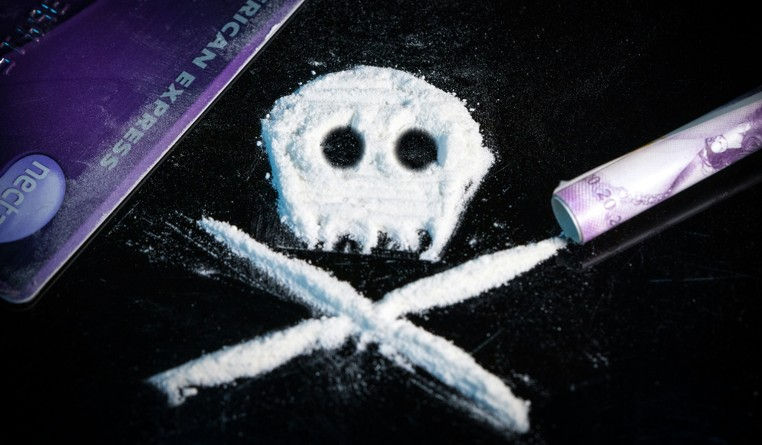
Any questions? I don’t care who you are, it’s not up for debate. The banners, the brochures, the melodramatic commercials and after school specials about the dangers of drugs were simply ridiculous.
I recall one particular flyer. It was a cartoon picture. Kids, innocent and laughing at a fenced in playground. Lurking in a trench coat, a shadowy figure in the alley beside it offering a youngin’, “the first one for free,” implying that these were very real scenarios that we’d be confronted with. High on the swing set one minute, high on drugs the next.
How much fucking money would an actual street dealer expect a ten year old to have anyway? Kids still jazzed by playgrounds do not make a robust business model.
Our job, when this happened, would be to “Just Say No!” We’d surely have nothing to worry about if we stood confidently in Mr. Trench Coat’s face and told him to beat it. Surely he’d run off into the shadows, intimidated and deterred by a bunch of little people standing four feet tall and imposing their will without any trepidation! Easy peasy!
Simultaneously, this was a campaign that had been launched during the height of the crack cocaine epidemic. Much of the product was being funneled into urban enclaves by our very own government through Central American countries into our very own communities, mind you, the poorest places and the neighborhoods whose residents were not a whiter shade of pale.
Must’ve been a different department doing the anti drug nonsense, I suppose. The “Drug Abuse and Resistance Education” (DARE) program wasn’t any better. I never got a close up look at it. I’d already aged out and grown into a drug enthusiast by then, but I’ve researched it plenty, and my younger clients are intimately familiar with the approach they took.
Drug abuse was framed within a moralistic, zero tolerance framework. Add to that, with Bill Clinton now sitting at the Resolute Desk, some of the most severe and draconian punishments were being instituted for people discovered to be in possession of any federally scheduled substance.
From crack cocaine to cannabis, if you were even found to have paraphernalia in your possession, you’d likely be looking at some pretty serious punitive consequences within our rotten justice system. A roach in your ashtray discovered during a traffic stop in a place like Utah or Nevada back then? You might find yourself doing hard time for three to five years. No kidding.
Everyone knows about these campaigns. They are both relegated to the zeitgeist of American history as a byproduct of how hard they pushed their agendas. They’ll always be remembered. But not everyone knows what profound failures they actually proved to be, hard data confirms that teen drug use increased exponentially attributed to either or both.
The fatal flaw was a short sighted pipe dream that the root of dangerous drug abuse was built upon a mythology of morals, self will, and simple choice. We could just teach our way out of it! Incredibly, there are still many policy makers in our government who buy into that BS approach.
What drives dangerous drug use? Widen your lens and you will discover articles of the human condition that are biological, psychological, social, familial, and environmental, powerful predictors of drug abuse.
Scarcity, poverty, mental health difficulties, generational trauma, systemic racism, abuse, housing insecurity, domestic violence. Unmet needs, neglect, sexual assault. Feelings of worthlessness. Body image issues. Growing up around other users. Shame. Guilt. Hopelessness. Many of these predictors were cultivated by DARE itself as they bolstered the stigma associated with drug users with their immortality trip.
It’s not Trench Coat Man that introduces vulnerable and young people to drug use. The ones who do are the ones we love and trust the most, our friends, our peers, sometimes our siblings or other family members. I had friends in high school and we’d pass joints around a room with their parents, watching Cheech and Chong movies, snacks all around. The good ol’ days.
That’s what the propaganda never “warned” us about. Instead, they created dishonest, creepy boogeyman tall tales, when in all actuality, sitting in a circle and passing a pipe with people who you love, and who love you back, is actually a beautiful and sacred experience when you’re first “turned on.” It’s very ritualistic and it brings people together in joy and goodwill and laughter.
Think of an adolescent kid in a dangerous part of an urban environment. Maybe they’re living in a group home, CPS shuffling them through an often harmful and chaotic foster care merry go round. Can you imagine how full of fear and angst that teen feels on a 24/7 basis? They live in a constant state of high stress hormone driven survival mode.
They’re old enough to know that smoking some weed is going to give them fast relief from the reality of their unlucky lives. Are you going to tell that kid, “Hey, kid, just say no!” with any real expectation that they’re going to suddenly understand that this might snowball into more dangerous use over the course of the next several years? Please.
Further, do you really think that teen is going to give a shit? I mean, as things stand, their life functions in a maelstrom of awful circumstances without any pleasure chemicals onboard. Are you going to even ask yourself the question, “What do they have to lose by taking a puff?” C’mon now. Let’s get real.
Teens aren’t stupid. My own teen has never encountered a drug, and they know the inherent dangers they pose to some individuals. Those two stupid programs, all of Nancy Reagan’s hyperbolic “Reefer Madness” rhetoric, the school assemblies, the aforementioned banners and brochures, they only provided distrust.
It’s a very rare thing that when a teen gets stoned for the first time with their bffs, they suddenly suffer terrible consequences. It’s so rare it’s barely even likely. But that’s not what Nancy said! That’s what DARE told us would happen!
But, wait. If they were selling us a lie regarding cannabis, might they not also be deceiving us about some of the other drugs they tried so hard to teach us about? And that’s all they offered, didactic information. And buttons and t shirts and billboards and bumper stickers.
What they neglected to provide? It offered zero tools for harm reduction in the offering of resources to help vulnerable young people with hope and tangible benefits that could serve them to feel safe, contained, cared for, regulated, fed, sheltered, and loved.
The failure of DARE and “Just Say No” serves as a cautionary tale. A study by the American Psychological Association (APA) back in the late 90s concluded that, cumulatively, on a wide scale, dangerous drug use in many American communities actually rose to rates as high as 75% higher when compared to communities that were not offered the option to participate in the program. I’m no mathematician, but that seems an awfully high rate, no?
If you’re looking for more successful campaigns to help people who struggle with dangerous drug use, gaze eastward over the Atlantic Ocean to “Portugal’s Decriminalization Model” and the burgeoning rise of harm reduction informed care models that promote and emphasize empathy, actual science, medical intervention, and community mutual aid efforts.
We have learned, at a not great social and financial cost, that shaming and lecturing and simply educating young people about the potential risks associated with drugs, and alcohol too, is a fool’s errand.
And when it comes to American drug policy? Our so called “War on Drugs,” or rather, people who use drugs, we are fools. We’re the culture of dumb in the kingdom of vice. And I’ll let you in on a secret, the young people? They know this. They see through all the BS propaganda, and they tell me things like, “I was in the DARE program. It actually made me more curious.”
Read more from Joshua Bennett-Johnson
Joshua Bennett-Johnson, Licensed Counselor & Owner of JBJ Counseling
After working for 7 years in an amazing clinic, I launched into private practice in 2018. I love my job. I can say that without reservation. Watching people rebuild their lives is something that is worth more than any dollar amount.





