Why Postpartum Mental Health Support Must Begin Before Mothers Reach a Crisis
Written by Sarah Pearce, Certified Doula
Sarah Pearce is a nationally recognized full-spectrum doula, former pediatric nurse, placenta specialist, and midwifery student. With nearly a decade of experience, she supports families through fertility, birth, postpartum, and newborn care. She is the founder of Trinity Doula Services, one of the largest doula agencies in the St. Louis region.

Right now, with the Lindsay Clancy trial bringing postpartum mental health into the national conversation once again, many people are hearing terms like postpartum depression and postpartum psychosis and asking questions they may have never considered before, but these conversations shouldn't only happen when there is a tragedy in the headlines.
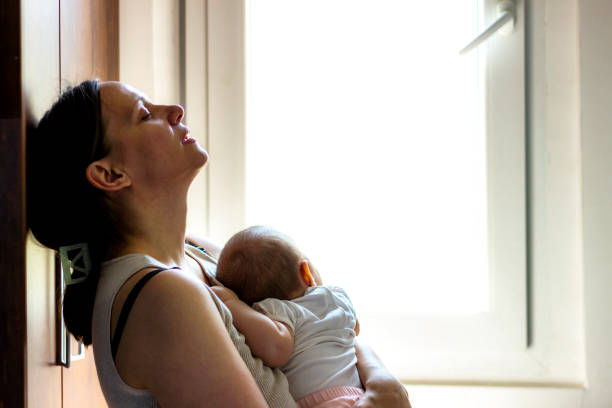
We spend months preparing for a baby. We create registries. We choose car seats. We decorate nurseries. We discuss feeding, diapers, swaddles, pediatricians, and birth plans, but somewhere in all of that preparation, we often forget to make a plan for the person who is about to give birth.
Who is going to take care of the mother?
Postpartum depression, postpartum anxiety, and postpartum psychosis are very different conditions, but they have something important in common, families deserve to know about them before they are experiencing them. Maternal mental health shouldn't become a conversation only after someone is already struggling.
The postpartum period is more than six weeks
There is still a tendency to treat postpartum recovery like a short chapter. Have the baby. Go home. Attend a postpartum appointment. Resume normal life.
The postpartum period is a massive physical, hormonal, emotional, relational, and social transition. Perinatal mental health conditions can begin during pregnancy or emerge during the first year postpartum.
While we often use the phrase "postpartum depression" as a catch-all, maternal mental health is much broader than depression.
A mother may experience depression. She may experience overwhelming anxiety. She may have intrusive thoughts that terrify her. She may experience panic attacks. She may develop obsessive or compulsive behaviors. Much more rarely, she may develop postpartum psychosis.
Knowing the difference matters.
Postpartum depression doesn't always look like sadness
When people picture postpartum depression, they often imagine a mother crying while holding her newborn. Sometimes it looks exactly like that, but sometimes it doesn't.
It can look like anger and irritability. It can look like feeling completely disconnected from the baby. It can look like going through the motions of caring for everyone while privately feeling empty.
It can look like guilt, hopelessness, loss of interest in things she previously enjoyed, difficulty concentrating, changes in appetite, or feeling like everyone would be better off without her.
This is also different from the "baby blues." Mood changes, tearfulness, overwhelm, and emotional sensitivity are extremely common during the first days after birth. Symptoms that are severe, worsening, interfering with daily functioning, or simply making a mother feel like something isn't right deserve attention.
A mother does not have to wait until she is suicidal or unable to care for her baby before she deserves help.
Postpartum anxiety can hide in plain sight
Postpartum anxiety can be especially difficult to recognize because some anxiety after having a baby feels almost socially expected.
Of course you're checking whether the baby is breathing. Of course you're worried about germs. Of course you're researching everything, but there is a point where vigilance becomes debilitating.
Postpartum anxiety can include racing thoughts, constant feelings of dread, panic attacks, physical tension, inability to relax, difficulty sleeping even when given the opportunity, repeatedly checking the baby, or becoming consumed by fears that something terrible will happen.
Some parents also experience intrusive thoughts. This is an incredibly important distinction, having an intrusive thought is not the same as wanting to act on that thought.
Intrusive thoughts can be unwanted, frightening, and completely inconsistent with what a mother actually wants. Parents can become so horrified or ashamed by them that they are afraid to tell anyone.
That silence can make an already frightening experience even more isolating.
We need to create an environment where mothers can tell their providers what is happening inside their heads without immediately fearing judgment.
Postpartum psychosis is different, and it is an emergency
Postpartum psychosis is rare, but every family should know what it looks like because it requires immediate medical attention.
Symptoms can include hallucinations, delusions, paranoia, severe confusion, bizarre or dramatically changed behavior, extreme mood changes, disorganized thinking, and significant insomnia.
A person experiencing psychosis may not recognize that what they are experiencing isn't real. That is one of the major differences between frightening intrusive thoughts and psychosis.
If a postpartum parent appears to be experiencing hallucinations, delusions, severe confusion, mania, or a significant break from reality, this is not something a family should simply monitor at home.
Postpartum psychosis is a medical emergency. Immediate professional evaluation is necessary.
If there is an imminent danger to the parent, baby, or anyone else, call emergency services.
Can we prevent postpartum mental health conditions?
Not entirely. I think it is important to say that clearly. Postpartum depression, anxiety, and psychosis are medical conditions influenced by many factors. No amount of meal trains, sleep schedules, doulas, supportive partners, or prenatal education can guarantee that someone won't experience them.
There is a lot we can do to reduce some risk factors, recognize symptoms earlier, and make sure a mother isn't left to deteriorate unnoticed.
Instead of asking only, "What will we do if Mom develops postpartum depression?" we should also ask, "What can we put into place now to protect and support her mental health after this baby arrives?"
Protect her sleep
Sleep is not a luxury. Yet extreme sleep deprivation is treated almost like an initiation into parenthood. "Just wait. You'll never sleep again." We joke about it. Perhaps we shouldn't.
Before the baby arrives, families should discuss what nighttime care will actually look like. Who can take a feeding? Who can settle the baby afterward? Can a partner handle diaper changes and bring the baby to a breastfeeding parent? Can family members take a shift? Could the family hire an overnight postpartum doula if that's financially accessible? Could responsibilities be divided so that each parent gets a protected stretch of sleep?
"Sleep when the baby sleeps" is often useless advice. A better question is: How are we going to make sure you actually get opportunities to sleep?
Sleep protection becomes particularly important when someone has a history that puts them at higher risk for serious postpartum psychiatric illness. A history of bipolar disorder or previous postpartum psychosis, for example, warrants proactive conversations with qualified medical and mental health providers during pregnancy.
Don't wait until the baby is born to figure out what the plan will be.
Stop making Mom manage her own help
"Let me know if you need anything." It's one of the most common things we say to a new mother. We mean well. We've just given an exhausted person another job, identifying what she needs, figuring out who can do it, reaching out, and asking.
Try something different. Bring dinner. Wash the dishes. Refill her water. Walk the dog. Fold the laundry. Take the older children somewhere fun. Hold the baby while she showers. Ask whether she'd like to sleep while you care for the baby.
Support should reduce her workload rather than require her to coordinate it.
When you visit a postpartum family, remember that you're not only visiting a new baby. You're visiting someone who just gave birth. Take care of her, too.
Create a postpartum plan, not just a birth plan
Families can spend weeks creating detailed birth plans while giving almost no thought to what happens after they bring the baby home.
Before birth, talk about it. Who will provide meals? Who can help overnight? Who are the people Mom feels emotionally safe calling? How will household responsibilities change? What happens when a partner returns to work? Who will notice if Mom stops acting like herself?
Does she already have a therapist or mental health provider? Does she have a history of depression, anxiety, bipolar disorder, trauma, or previous postpartum mental health challenges? What symptoms should prompt a phone call to her provider? What symptoms mean the family should seek emergency care?
Where are those phone numbers? Put them somewhere everyone can find them. The person experiencing a mental health crisis should not have to research resources while experiencing that crisis.
Screen and then actually follow up
Mental health screening should be a routine part of prenatal and postpartum healthcare. The American College of Obstetricians and Gynecologists recommends screening for depression and anxiety at the initial prenatal visit, later in pregnancy, and at postpartum visits using standardized, validated tools.
Tools such as the Edinburgh Postnatal Depression Scale (EPDS), Patient Health Questionnaire 9 (PHQ 9), and Generalized Anxiety Disorder 7-item scale (GAD 7) can help identify people who may need further evaluation.
Screening only works when something happens after a positive screen. A checkbox isn't treatment. Families need pathways to further evaluation, therapy, medication when appropriate, community resources, follow-up, and emergency care when necessary.
Mental health also shouldn't be assessed at one postpartum appointment and then forgotten. The transition into parenthood continues long after that appointment.
We need to ask better questions
Sometimes "How are you doing?" is too easy to answer with "fine." Ask something more specific.
Are you sleeping when someone else has the baby? Are you able to eat? Do you feel like yourself? Are you enjoying anything right now? Do you feel connected to your baby? Are your thoughts ever frightening you? Do you feel safe being alone? Do you feel like you're constantly waiting for something bad to happen?
Perhaps most importantly, "Do you want to tell me how you're really doing without me trying to fix it or judge you?" Then listen to the answer.
Don't immediately minimize it. Don't tell her every new mom feels that way. Don't remind her how lucky she is.
Listen. If what she's telling you concerns you, help her connect with someone qualified to help.
National resources every family should know
National Maternal Mental Health Hotline: Call or text 1-833-TLC-MAMA (1-833-852-6262). The National Maternal Mental Health Hotline provides free, confidential mental health support 24 hours a day, seven days a week, for pregnant and postpartum people and their families. Counselors can provide support, information, and referrals to local or telehealth providers.
Postpartum Support International (PSI): Call 1-800-944-4773 or text HELP to 800-944-4773 for English language support. Spanish language text support is available at 971-203-7773. PSI provides information, peer support, online support groups, and connections to perinatal mental health providers. The PSI HelpLine is not an emergency crisis line.
988 Suicide and Crisis Lifeline: Call or text 988 for free and confidential crisis support throughout the United States. If someone is experiencing symptoms of postpartum psychosis, appears disconnected from reality, is in immediate danger, or may harm themselves or someone else, seek emergency medical care.
Taking care of the baby means taking care of the mother
Our culture is remarkably good at rallying around a new baby. Everyone wants to meet the baby. Everyone asks how the baby is sleeping, how the baby is eating, how much the baby weighs, and whether the baby is "good."
I want us to become just as interested in the person who brought that baby into the world.
How is she sleeping? Has she eaten? When did she last shower? Does she feel supported? Does she recognize herself right now? Does someone know what to do if the answer is no?
Supporting maternal mental health isn't simply telling mothers to practice self-care. We cannot bubble bath our way out of a postpartum environment where someone is chronically sleep deprived, isolated, overwhelmed, unsupported, or afraid to admit that she is struggling.
Sometimes self-care looks like therapy. Sometimes it looks like medication. Sometimes it looks like an uninterrupted stretch of sleep. Sometimes it looks like someone else washing the bottles. Sometimes it looks like a postpartum doula walking through the door at 10 p.m. and saying, "I've got the baby. Go sleep."
Sometimes it means recognizing that what we're seeing is an emergency and helping a mother access care immediately.
We cannot promise that every case of postpartum depression, anxiety, or psychosis can be prevented, but we can build families and communities where mothers are educated before birth, screened appropriately, supported practically, protected from unnecessary exhaustion, taken seriously when something feels wrong, and connected with treatment before they reach a breaking point.
We spend so much time preparing mothers to take care of their babies. Maybe it's time we put just as much effort into preparing to take care of them.
Read more from Sarah Pearce
Sarah Pearce, Certified Doula
Sarah Pearce is a highly sought-after birth and postpartum expert, a former Licensed Practical Nurse (LPN) specialising pediatrics, a placenta encapsulation specialist, and the founder of Trinity Doula Services, a rapidly growing full-spectrum doula agency serving Missouri and Illinois. With over a decade of hands-on experience in fertility, labor support, physiologic birth, postpartum recovery, newborn care, and high-pressure pediatric nursing, she has become known for combining evidence-based education with deeply intuitive support. Sarah has supported families through all types of birth settings and is working towards becoming a Certified Professional Midwife. Her work empowers families during life's most transformative moments.
Sources and Further Reading:
American College of Obstetricians and Gynecologists (ACOG). Screening and Diagnosis of Mental Health Conditions During Pregnancy and Postpartum and Patient Screening: Perinatal Mental Health. ACOG recommends standardized screening for depression and anxiety during pregnancy and postpartum, systems for appropriate assessment and follow-up, and immediate medical attention for postpartum psychosis.
Health Resources and Services Administration (HRSA), Maternal and Child Health Bureau. National Maternal Mental Health Hotline. Free and confidential 24/7 support for pregnant and postpartum people and their families: 1-833-TLC-MAMA (1-833-852-6262).
Postpartum Support International (PSI). Provides perinatal mental health education, support, provider referrals, peer resources, and online support groups. HelpLine: 1-800-944-4773.
988 Suicide and Crisis Lifeline. Free, confidential 24/7 crisis and emotional support throughout the United States. Call or text 988.
WBUR, Associated Press, Reuters (August 2026). Current reporting regarding the Lindsay Clancy trial and the ongoing discussion surrounding postpartum psychosis and maternal mental healthcare.