When Hair Speaks, Science Listens
Written by Vanessa Rose Chykerda, Hairstylist Educator
Vanessa Rose Chykerda is a rising hairstylist whose passion for hair and educating fellow industry professionals is propelling her career to new heights. In January 2025, she accepted a job where she shares her expertise in product knowledge for Matrix and Biolage.

Hair doesn’t fail without reason. When hair becomes dry, oily, brittle, thin, or suddenly unmanageable, most people assume they need a new product. Stronger formulas. Faster results. Immediate correction. But hair doesn’t work that way.
Hair operates in cycles, responds in patterns, and communicates through signs and symptoms, and those symptoms often have multiple possible causes. Without understanding the difference, people end up treating the wrong problem. And that’s why it feels like you’re spending money constantly without a proper fix. On the other side of the spectrum, you may buy a product that works, but a few months down the road, your hair stops responding well to it.
Hair lives in a narrow window of balance, and it constantly moves in and out of balance. I desire to create better understanding for my clients and people everywhere.
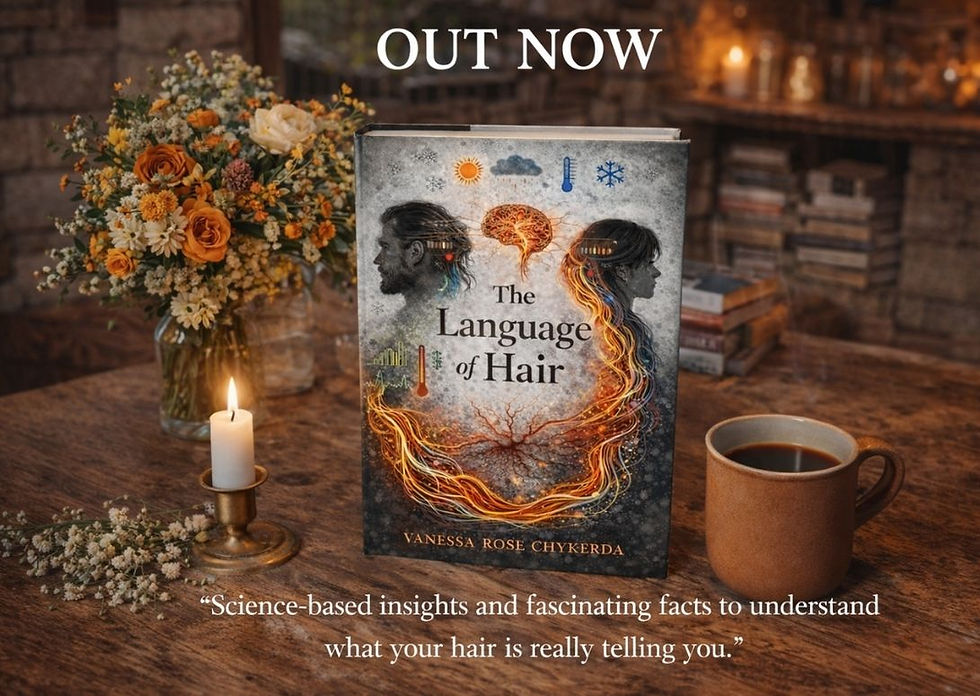
This misunderstanding is exactly why The Language of Hair book and educational platform were written and created.
Signs, symptoms, and the cost of guessing
A symptom is what you see or feel. A sign is what the hair is telling you underneath. Dryness, shedding, oil imbalance, breakage, and scalp irritation are not diagnoses. They are signals that require interpretation. When people treat symptoms as conclusions, they often end up correcting the wrong problem.
The same symptom can come from environmental exposure, such as weather, water quality, or seasonal change. Hair is highly responsive to its surroundings, and shifts in climate or routine can alter how it behaves long before damage is visible.
That same symptom may also be caused by product buildup or overuse. Layers of residue can block moisture, disrupt the scalp environment, and create the illusion that hair needs more when it actually needs less. Overcorrecting in these moments often worsens the issue rather than resolving it.
In other cases, symptoms reflect nervous system stress, hormonal shifts, nutritional depletion, or lifestyle inconsistency. These internal influences change how hair grows, sheds, retains moisture, and responds to care. Treating every issue as a surface level problem leads to frustration and wasted money. The Language of Hair teaches readers how to slow down and identify why something is happening before trying to correct it.
External hair problems vs. internal hair problems
One of the most important distinctions people are never taught is this, if your hair problems are caused by your internal state, no product can change or fix them. Products work on the outside of the hair, not the systems that support hair growth and regulation from within.
External hair issues, such as buildup, residue, mechanical damage, or improper cleansing, can often be supported through routine changes and thoughtful product choice. These problems respond well when the external environment is corrected with intention and restraint.
Internal hair issues do not respond the same way. Hair is a biological output. When the internal system is under stress, depleted, or dysregulated, no topical solution can override that state. In these cases, products can only mask symptoms temporarily.
When the root cause is internal, topical solutions may hide the problem, overuse of products can worsen the imbalance, and frustration increases while results stall. The Language of Hair explains how to recognize when hair is reflecting something deeper and why the solution requires support, not correction.
Hair cycles, patterns, and time
Hair does not respond instantly. It reflects past conditions, not just present actions. This is why people often feel confused. They change products, routines, or habits, yet the hair seems unchanged or worse.
Hair operates in cycles and delayed response patterns. What you see today is often the result of what was happening weeks or months earlier. Without understanding this timeline, people expect immediate results from changes that require consistency and recovery.
The Language of Hair introduces readers to the concept of hair cycles and time based feedback. Once people understand how time, consistency, and internal recovery affect hair, they stop expecting overnight fixes and start making decisions that actually work.
Why this book comes first
This Amazon release is the entry point. The book gives readers a framework to understand hair behavior, the ability to identify patterns over time, clarity around signs versus symptoms, and the confidence to stop guessing.
It creates awareness, not dependence. Readers learn how to think about hair instead of being told what to buy.
The upcoming Podia platform will expand on this foundation, offering deeper education into personal hair cycles, pattern tracking, internal support, and long term strategy. But without the book, people lack the language needed to apply that knowledge correctly.
From reaction to regulation
Most hair damage doesn’t come from neglect. It comes from urgency. Quick fixes feel productive, but they often interrupt the body’s ability to rebalance itself.
Understanding the language of hair shifts people from reaction to regulation. Decisions become calmer, product use becomes intentional, expectations become realistic, and internal health is respected.
Hair improves when the system improves.
Education changes outcomes
This book isn’t about telling people what to buy. It’s about teaching people how to think.
Once someone understands whether their hair issue is internal or external, short term or cyclical, reactive or adaptive, the right decisions become obvious. And that understanding lasts far longer than any product ever will.
What comes next
The Language of Hair is now available on Amazon as a foundational guide. It can be downloaded on Kindle or purchased as a paperback or hardcover.
The Podia platform will follow, offering deeper, structured learning for those ready to explore their personal hair patterns, cycles, and internal and external connections in greater detail. But it starts here. Because hair doesn’t need fixing. It needs understanding.
Read more from Vanessa Rose Chykerda
Vanessa Rose Chykerda, Hairstylist Educator
Vanessa Rose Chykerda was born with a passion for beauty, education, and helping others. Inspired by her father’s words – “Pick a job you love, and you’ll never work a day in your life” – she’s built her career on purpose and passion. Her mission is to bring out the beauty in every client while empowering fellow professionals through education, mentorship, and meaningful connection. Vanessa believes everyone deserves to feel their best, look their best, and achieve their best, both in the salon and in life.