

What Trauma Taught Me About Love
Therese Lyander is a Transformational Coach within Holistic Health and Mindset. Through her program, Finally Free, she helps women reconnect with their inner Genius by combining Human Design with holistic health practices. She guides them in releasing trauma, finding balance, and creating a life that feels true on their own terms.

I believed trauma therapy would teach me how to stop reacting so strongly. How to stop taking everything in. How to become a more “manageable” person. Instead, I saw something completely different. How much love I had held back in order to survive.
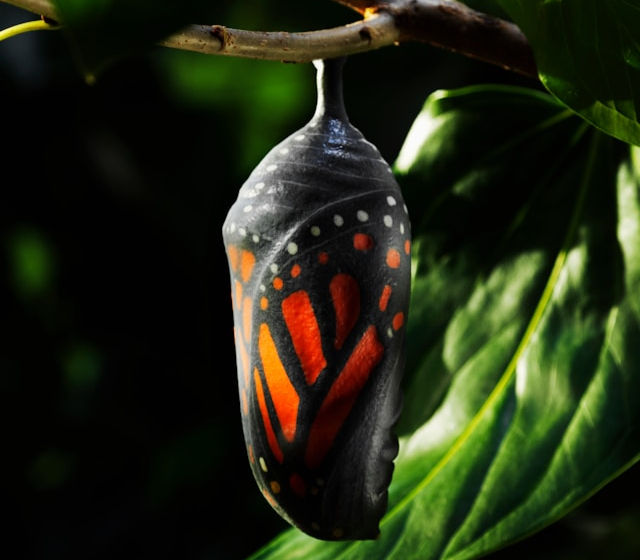
Being “too much”
When I started trauma therapy, I thought I would learn how to fix myself. How to soften my reactions, turn off what felt like too much, and stop taking in the world with my whole body. But what came up was something entirely different. I had been holding back almost all my love.
Under all the pain my body had protected me from feeling, there was a love so strong it frightened me. When I finally felt it, I was shocked that it had been there the whole time, locked away. Then came the grief. The grief of remembering when and why I abandoned love for the first time. When it became too risky to show it. The shame of sharing it with the world.
My way of expressing love, ever since I was little, has always been through my seeing and my feeling. Projectors in Human Design have a particular way of seeing, we notice things others do not. This can make things difficult for a Projector child who naturally corrects their parents or picks up on completely different details than the children around them. Having an emotional authority on top of this did not make anything easier. Even though half of humanity has an emotional authority, it is not necessarily appreciated. Most people have suppressed their emotions from an early age and therefore lost contact with their inner guide.
Early on, I understood that my perspective was not welcome. But I had no other way of being. So I adapted. I tried to understand which versions of myself were most appreciated. I held back everything that was me. The rest became a kind of charade, a performance I eventually believed in. The few times my real self slipped through only motivated me to tighten my protection even more.
From performance to listening to the body
Eventually, hardness and achievement became my identity, both outwardly and inwardly. A highly functioning, high-achieving girl with panic attacks, unprocessed emotions, no appetite, and physical symptoms that grew stronger with time.
In hindsight, everything becomes clear, but when you are in it, it is hard to make sense of anything. We also do not live in a society with a holistic view of the body, even though that is exactly what is required to understand and resolve these complex health situations.
I see now that this was never me. My persona was a symptom, not my true self. It was the expression of a long internal battle. A battle to fit in. A battle that kept me in constant survival mode.
When you live for a long time in a nervous system stuck in low-level activation, fight, flight, fawn, freeze, the body builds a life based on protection. You become an expert at reading rooms, controlling energy, and holding back emotions so you do not take up too much space. Everything becomes about staying alert.
When the body has carried pain for too long without expressing it, it stores it somewhere else:
The jaw that never relaxes
The stomach that tightens
The voice that goes quiet
The appetite that disappears
The love that is held back in the form of caution. For me, this was literal.
It was not until I began working with my jaw, my voice, and my nervous system, everything that had been locked for almost my entire life, that I started to understand what my body had been protecting me from. Behind the tension, there was not only pain. There was love. So much love it was almost overwhelming.
The hardest part of healing was not meeting the pain. The hardest part was the softness. Allowing myself to be open, speaking with my real voice even when it trembled with fear. Showing how much I actually feel. Eating in the way my body needs instead of holding on to an ideology I lived in for more than ten years. Resting. Releasing control and allowing love to exist in my body without negotiating for it first.
Waking up to love and yourself
I realized that my deepest capacity for love had been hidden under everything I thought I needed to shut down. Like a room I avoided because the light inside was too bright when I was still living in darkness.
When the protections began to fall away, I changed, but not through sudden breakthroughs. It happened through small movements:
The jaw releasing when I spoke the painful truth out loud
The stomach softening when I stopped attacking myself
The voice returning when I no longer silenced it
The heart expanding when I stopped shrinking myself
The relationship with food is becoming soft again
The female body beginning to heal when it finally felt safe
It was a return to myself. My body came home first. My self followed. The love had been intact the entire time.
Love is not something waiting for us on the other side of healing. Love is the foundation that makes healing possible. We cannot use the same patterns that made us unwell to become whole. We cannot perform healing. Healing is what remains when all defenses finally fall. When the nervous system no longer has to protect itself. When the body is no longer at war with itself.
Letting go is a process. It is not linear. Inner conflicts rise until we surrender to the truth. With each layer we release, it becomes easier to live in our new pattern. With every breakthrough, with every surrender, we need to grieve. But right after the grief comes something else. New blooming, new inspiration, a new story of who we are.
Read more from Therese Lyander
Therese Lyander, Transformational Holistic Health & Mindset Coach
Therese Lyander is a pioneer within Holistic Health and Mindset Coaching, with a passion for awakening the inner Genius in every woman. She guides women who have lost touch with their power, purpose, or zest for life—not by focusing on what's “wrong,” but by helping them return to the wisdom of the body and the clarity of the soul.
After more than a decade of struggling with physical and mental health challenges, she found her own path to healing through detox, fasting, trauma healing, and Human Design. Today, she shares that journey with others—not just to help them function again, but to live freely, truthfully, and in alignment with who they really are.



