What Leadership Development Really Means (Hint – It’s Not About Titles)
Jan Turner works at the intersection of leadership, resilience, and conscious transformation. As an executive coach, former C-suite leader, and 2x burnout survivor, she brings the human back to organizations and guides leaders home to themselves.

Leadership development is often misunderstood. In many organizations, it’s tied to promotions, certifications, formal programs, or high-profile projects. While those experiences can be valuable, they only touch the surface of what it really means to grow as a leader.
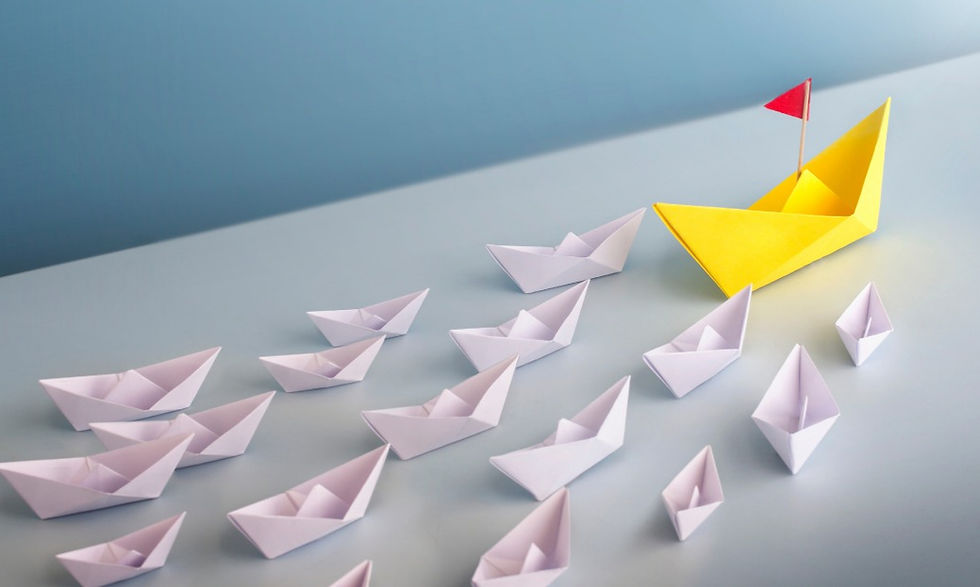
Through more than 25 years in senior roles across global financial services companies and my own journey through overextension, reinvention, and renewal, I’ve learned that sustainable leadership starts from within. Real leadership development is about building the inner capacity to navigate complexity with clarity, presence, and integrity. It’s not about adding more skills or frameworks, but about becoming more grounded, self-aware, and fully yourself in how you lead.
What leadership development actually looks like
The most effective leadership development often takes place behind the scenes, revealing itself in subtle moments that we might easily miss.
Becoming more present with yourself
Leadership growth starts with the courage to sit with discomfort instead of rushing to find quick fixes. It’s about being aware of your emotional and habitual responses and making the conscious choice to pause rather than react out of habit. This kind of inner work resonates with what followers say they truly need from their leaders: hope, trust, and stability. Gallup research shows that leaders who inspire hope significantly boost the likelihood that their teams will flourish rather than flounder.[1]
Staying grounded when the path is unclear
Leadership isn't just about how someone performs when everything is going smoothly. It's really about how well they can navigate through uncertainty, ambiguity, or pressure. According to the 2024 Global Leadership Development Study by Harvard Business Publishing, organizations are stepping up their investment in development across all levels. They understand that true growth comes from building a wider range of capabilities and capacities, not just focusing on basic skills.[2]
For individuals: How are you growing your leadership?
Whether or not your job description includes the word leader, you are influencing people every day. Leadership is not a title, it is a way of showing up. These questions can support your reflection:
Where are you slowing down to reflect? When was the last time you paused to consider your values, your leadership patterns, or the impact you are having on others?
Where are you leading from habit or fear? Most of us have areas where we react automatically rather than respond thoughtfully. Noticing these patterns is the first step toward shifting them.
What feedback have you avoided? Feedback often reveals the edges of our growth. The places we resist the most tend to hold the information we need the most.
Are you making space for curiosity and creativity? Growing as a leader means working at the edges of your discomfort. It means replacing reactivity with presence and choosing responses that align with who you want to become. These edges are different for each of us and are where meaningful development happens.
For organizations: What kind of leaders are you growing?
Organizations that want sustainable success must ask deeper questions than “Who is next in line?” They must consider the kind of leaders they are cultivating.
1. Are you supporting inner development and not only skill development?
Leadership isn't just about how someone performs when everything is going smoothly. It's really about how well they can navigate through uncertainty, ambiguity, or pressure. Prioritizing employees’ development of such capacities, as well as the necessary capabilities, is essential. Such vertical human development can be supported through on-the-job learning, coaching, and reflection.[2]
2. What behaviors are you rewarding?
If systems reward only performance under pressure, leaders will learn to sacrifice self-awareness and collaboration. Culture shifts and employee retention can increase when organizations value resilience, emotional intelligence, and decision-making that honors the human experience. Performance evaluation and calibration, along with rewards and recognition, need to reflect a full set of essential leadership qualities.
3. Are senior leaders modeling what you want others to grow into?
Leadership development cannot be delegated to a department or be the sole charge of people managers. It must be visible in the behavior and presence of senior teams. Role modeling the expectations and ensuring there is credible, systemic accountability around them are key.
4. How are you supporting growth in the face of complexity?
Investing in leadership development has measurable returns. Research indicates that companies see positive outcomes and ROI when they build leadership capacity systematically rather than reactively. One analysis shows that for every dollar invested in leadership development, organizations can receive three to eleven dollars in return.[3]
This research helps explain why the most effective organizations make development a priority at all levels.[3]
Why this matters now
Organizations today are navigating accelerating complexity, shifting expectations, and rising employee burnout. Performative or reactive leadership is no longer sufficient. What is needed are leaders who can hold nuance, communicate clearly, connect emotionally, and remain grounded through ongoing change. They need not only to be comfortable with the space of ‘not knowing,’ but also must learn to relish it.
This is the deeper work of leadership development:
To lead with clarity when the path is unclear
To choose a connection when pressure creates a disconnection
To lead from purpose rather than fear
To bring compassion into the moments that matter most
While this work is not easy, it is the foundation of strong leadership and healthy organizations.
Final thoughts
What if leadership development were not a checklist mindset about skill-building, but rather an ongoing process of becoming more grounded, more self-aware, and more fully yourself so you can lead with intention and create meaningful impact alongside others?
It doesn’t matter if you are an individual wondering how to grow or part of an organization hoping to cultivate stronger leaders. This is the moment to ask different questions. How we develop our leaders shapes not only their future and potential business outcomes, but also the culture, resilience, and humanity of our workplaces today.
Read more from Jan Turner
Jan Turner, Executive Coach and Strategic Advisor
Jan Turner is an executive coach, strategic advisor, and former C-suite leader with over 25 years of experience in global financial services. Having led teams across 11 different functions and survived burnout twice, she guides leaders and teams through significant transitions, helping them build trust, grow in confidence, and move beyond self-defeating habits. Jan’s approach combines whole-person development, mindfulness, business acumen, and practical leadership techniques that deepen presence, resilience, and overall impact. She helps organizations and teams to navigate complexity and drive results by fostering personal growth and transformative leadership. Her mission: bring the human back to organizations and leaders, home to themselves.
Sources: